John Kirby on the status of the JCPOA revival: We haven't gotten anywhere yet
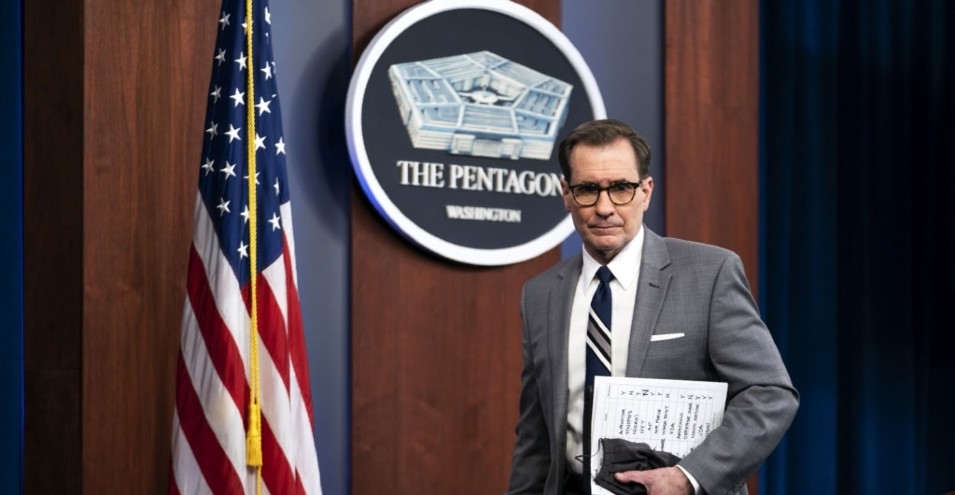
As the situation regarding the revival of the nuclear deal with Iran continues to be unclear, the White House National Security Council spokesman said on Tuesday, September 5, that gaps remain and that much work remains to be done before an agreement is reached.
Speaking at a briefing, John Kirby explained the state of negotiations with Iran: "Suffice it to say that there are still gaps and we are not getting anywhere yet."
"This does not mean that our commitment to the agreement has diminished or that we no longer want to see it done. We want to get results, but there is still a lot of work for our diplomats," he added.
Mr. Kirby's new emphasis on the fact that many issues remain on the path to reviving the JCPOA comes after he said last Sunday that due to Tehran's waiver of some of his demands, Iran and the United States are now closer to an agreement than they were "a few weeks ago."
The Islamic Republic has repeatedly demanded that the International Atomic Energy Agency's investigation into Iran's nuclear materials and undeclared sites be closed simultaneously with the agreement to revive the JCPOA.
This comes at a time when Washington has warned that Tehran should not link the issue of the Agency's investigation of its nuclear materials and undeclared locations to a possible agreement to revive the JCPOA.
The spokesman for the Islamic Republic's Foreign Ministry announced on Monday that "closing the file on safeguards issues in the negotiation process" is part of the "guarantee" that the Islamic Republic is pursuing to make this potential agreement "stronger."
White House National Security Council spokesman John Kirby continued his remarks Tuesday, reiterating the US president's assertion that the United States "will not allow Iran to obtain a nuclear weapons capability." He added that Joe Biden "strongly believes that the best way to do that is through diplomacy."
In response to a reporter's question, Mr. Kirby also said that "the JCPOA is not about confronting Iran's other malign activities. The goal is to confront the problem of [Iran] acquiring a nuclear weapons capability."
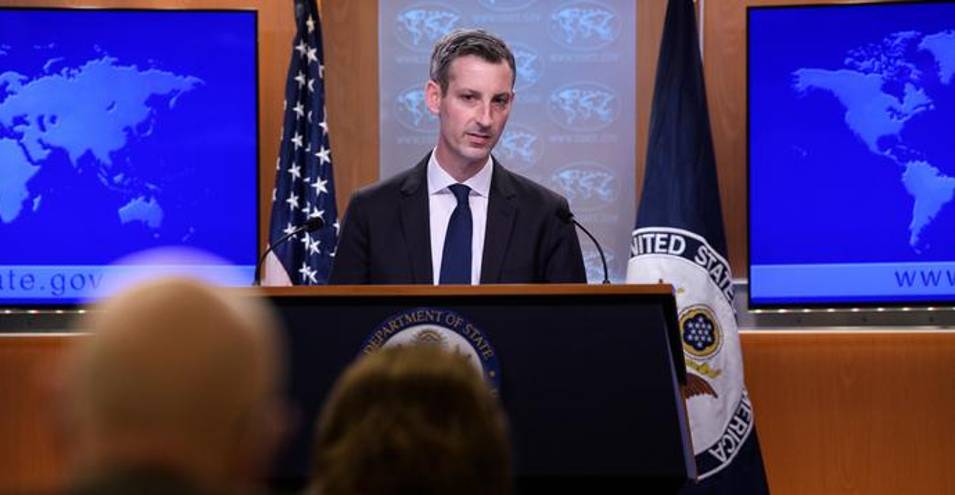
Patel: "Iran's response did not put us in a position to close the deal"
Also on Tuesday, at a weekly State Department press briefing, US State Department Deputy Spokesperson Vedant Patel was asked about the future of the JCPOA, and a reporter asked him, "Over the weekend, Josep Borrell, the EU's foreign policy chief, said that the entire process of revitalizing the JCPOA is in jeopardy. Then on Thursday, you called Iran's latest response constructive. How would you describe the current state of the process?"
Mr. Patel responded that “Iran’s response did not put us in a position to close the deal. We have consistently said that gaps remain and it is clear from Iran’s response that these gaps still remain.”
In addition to various issues related to the future of sanctions, the Islamic Republic has called for the closure of the safeguards file during the negotiations to revive the JCPOA. Iranian President Ebrahim Raisi also stated on Sunday that one of Tehran's conditions for the revival of the JCPOA is the "closure of political claims regarding safeguards issues."
This is despite the fact that IAEA Director General Rafael Grossi has repeatedly warned in recent months that Iran is not cooperating on the origin of uranium discovered in its undeclared sites.
In recent months, a resolution in this regard has also been adopted by the Agency's Board of Governors.
Source: Radio Farda