Three European powers: Iran's 20 and 60 percent enrichment has no acceptable civilian justification
In a joint statement, the three European powers involved in the JCPOA expressed deep concern about the Islamic Republic's increasing development of its nuclear program and warned about the consequences of Iran's 20% and 60% enrichment.
At the same time, the United States, criticizing "Iran's increasing actions beyond the limits of the JCPOA," has warned Iran against provocative actions in this regard and called for the implementation of verification and monitoring measures within the framework of the nuclear agreement.
A joint statement by France, Britain, and Germany addressed to the Board of Governors of the International Atomic Energy Agency emphasized that "Iran has no acceptable civilian justification for 20 percent and 60 percent enrichment, and the production of enriched uranium at this level is unprecedented for a country that does not have a weapons program."
The statement also expressed deep concern that Iran has "permanently and irreversibly" advanced its nuclear capabilities, "putting the international community at serious risk."
The statement by the three European countries emphasized that "as a result of the worrying pace of production, Iran's total stockpile today contains enough fissile material that, if further enriched, could be used to produce more than one nuclear weapon."
The three European countries have also warned that "the accumulation of enriched uranium with 20 and 60 percent enrichment will further reduce the time to produce the first nuclear weapon."
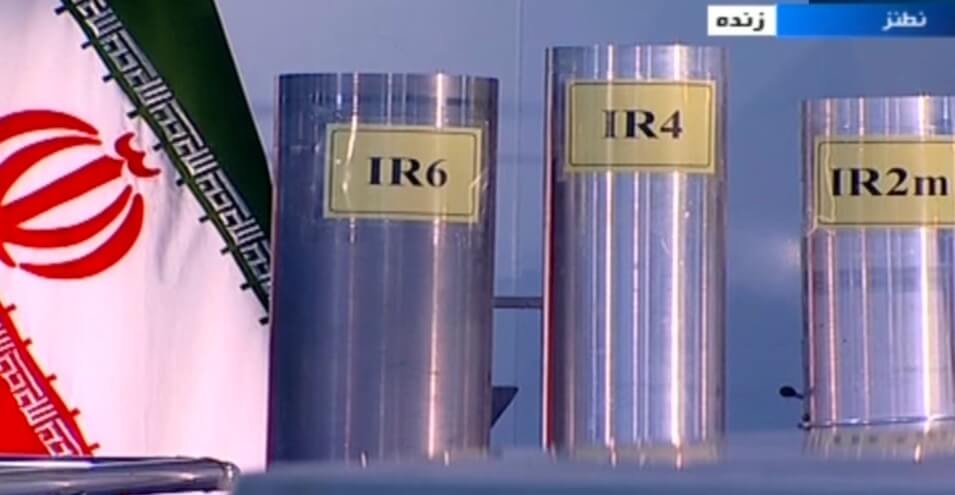
The statement described the “installation of modular infrastructure for advanced centrifuges” as a worrying move that would allow Iran to “easier operational configurations of such cascades” and access higher levels of enrichment.
"Developing the knowledge necessary for the production of nuclear weapons, particularly in the field of uranium metal" and "research and development with natural and enriched uranium metal" is another issue that is described in this statement as "lacking any acceptable civilian justification in Iran"; an issue that, from the perspective of the three European powers involved in the nuclear deal, "provides Iran with knowledge that can be used in weapons."
The three European countries have warned that research and development in this area and the widespread use of advanced centrifuges have “permanently improved” Iran’s enrichment capabilities, and thus continued Iranian escalation “irreversibly diminishes the JCPOA’s anti-proliferation value.”
In the statement by France, Britain and Germany, the coincidence of Iran's expansion of nuclear activities with a significant reduction in vital cooperation with the Agency, the nine-month halt to transparency and verification measures on the JCPOA and the suspension of the Additional Protocol, and Iran's continued refusal to formally extend the transparency measures are other issues that are of concern and they strongly call on Iran to "restore access to the International Atomic Energy Agency and cooperate fully."
The three European countries have called it necessary for Iran to return to full implementation of the IAEA's monitoring arrangements, including the implementation of the Additional Protocol, and have stated that the return of full transparency and monitoring arrangements will help build the international community's confidence in the peaceful nature of Iran's nuclear program.
At the same time, all three countries have emphasized that they will return to Vienna in good faith to negotiate, so that work can resume from where it was left off in June during the sixth round of negotiations.
At the same time, the US mission to the IAEA also stated in its statement that "only nuclear-weapon states have taken such actions in relation to enrichment," referring to Iran's increasing actions beyond the limits of the JCPOA, including working with uranium metal and producing metal enriched to 20 percent and using advanced centrifuges to enrich uranium to 60 percent.
The statement noted that the continued significant development of Iran's nuclear program beyond the limits of the JCPOA, and the continued escalation of nuclear tensions, "will move us further away from returning to mutual compliance with the JCPOA, not closer to it."
The statement referred to the US Secretary of State's statement that "the opportunity to return to full mutual compliance with the JCPOA does not last forever."
The US statement emphasizes that if Iran is truly interested in returning to compliance with the nuclear deal, it should “cease provocative actions that go far beyond the limits of the JCPOA,” and instead, “implement the verification and monitoring measures included in the agreement.”
The US mission stated in this statement that if Iran resumes its adherence to all of its obligations under the JCPOA, the United States is prepared to lift all sanctions that are inconsistent with the JCPOA.
The International Atomic Energy Agency's Board of Governors began its regular meeting on Wednesday, including to review the Islamic Republic's nuclear program, and according to reports, Rafael Grossi told the IAEA's Board of Governors that no specific results had been achieved from the talks he held in Tehran this week regarding Iran's nuclear program.
At the same time, he emphasized that he would not give up "trying to reach some kind of understanding with Iran."
Mr. Grossi's statements about the inconclusiveness of his trip to Tehran were followed by a reaction from a US State Department spokesperson, who described the impasse in Iran's cooperation with the Agency as a "bad sign" of the seriousness of the Iranian side in achieving a successful conclusion to the Vienna talks.
Iranian officials claim that during the IAEA Director General's visit to Tehran, the two sides reached "an agreement in principle to resolve technical problems with the Agency," and the Islamic Republic's Foreign Minister has noted in this regard that "we are pursuing the issuance of a joint statement [with the Agency] at the earliest possible opportunity."
Nuclear talks between Iran and the remaining powers in the JCPOA, which have been suspended since June of this year due to the election of Ebrahim Raisi as president, are scheduled to resume in Vienna on December 29. The United States has been indirectly involved in these talks so far due to its withdrawal from the JCPOA.
The goal of these negotiations is to persuade Iran to resume fulfilling its obligations under the JCPOA and lift Washington's sanctions against Tehran.
On Wednesday, National Public Radio (NPR) aired an interview with Robert Malley, the US special representative for Iran, in which he emphasized that the United States will not stand idly by if Iran does not agree to return to the JCPOA and comes "very close" to building a nuclear bomb during next week's nuclear talks.
Mr. Mali clarified that if he continues the trend he is currently following, that is, leaving the diplomatic table and accelerating the nuclear program, he will receive a proportionate response.
Source: Radio Farda