Significant subsidence in western Tehran; "silent time bomb" threatens the capital
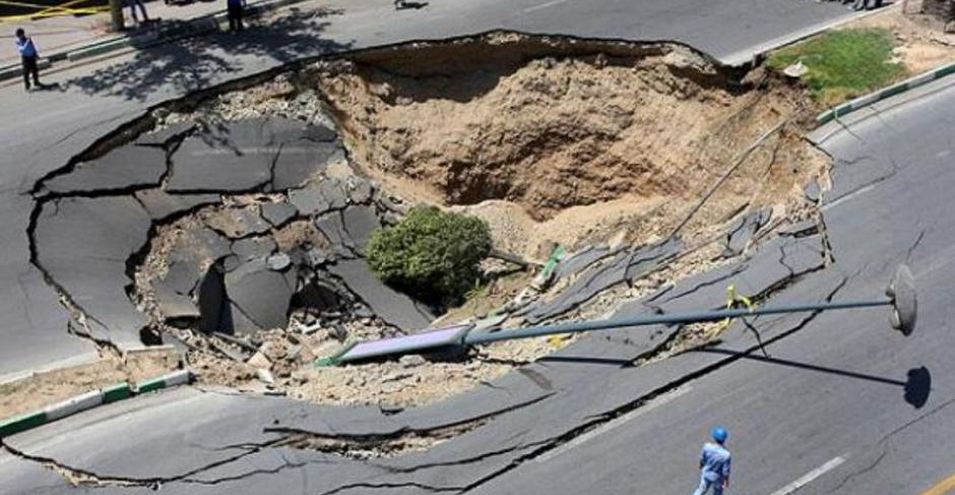
Land subsidence has become one of the major environmental problems in Iran in recent years. However, the problem has accelerated in the Iranian capital, and many experts are calling it a silent bomb.
According to the Sharq newspaper, quoting the head of the Geological Organization, 609 plains in the country are currently struggling with the problem of land subsidence, with more than 400 plains located in critical subsidence zones.
Now, once again, the head of the Tehran City Council's Civil Engineering Committee has announced the impact of land subsidence on Tehran, saying that the Varamin Plain from Karaj, the south, and the southwest is affected by this issue; an issue that has been warned about for years, but has intensified in recent months and has become the focus of media attention.
The head of the Tehran City Council's Civil Engineering Committee says that cracks have been seen in the walls and floor of the Mehr housing complex in Hassanabad.
He also added that there was no specific mission for the organizations and institutions involved in this issue.
A number of Tehran City Council members say that southwest Tehran is experiencing 30 millimeters of subsidence per month.
The head of the Tehran City Council's Safety Committee has said that the only place where "significant" subsidence has been observed is in the southwestern part of Tehran.
He attributed the subsidence to "excessive water extraction" for agricultural purposes.
According to Shargh newspaper, there are 50,000 authorized wells and 40,000 unauthorized wells in Tehran that draw groundwater and cause the groundwater table to drop.
Not long ago, Mehdi Zare, a geology professor at Tehran University, called the subsidence of the earth "a silent time bomb for Tehran Province" in an interview with domestic media.
Experts believe that continued uncontrolled extraction of groundwater will further reduce the level of aquifers in the country, and as a result, the risk of subsidence will turn into a crisis in various regions of Iran, especially the central provinces.
This problem is not limited to the capital, however. In September, a video from southern Isfahan was posted online showing deep holes near the Isfahan-Shiraz railway.
Not long ago, the governor of Isfahan announced the evacuation of 100 schools in the province due to land subsidence. In recent years, with the intensification of the effects of water shortages in the country, the number of protests against "wrong water policies" and "mismanagement of water resources" has increased in many cities, which have always been faced with the suppression and arrest of some protesters and critics by the security apparatus of the Islamic Republic.
Although experts have long warned about the destructive effects of land subsidence, evidence suggests a lack of fundamental and urgent determination to solve this problem.
Environmental crises in Iran have grown increasingly severe in recent decades, to the extent that Ahad Vazvi, head of the National Drought and Crisis Management Center of the Iranian Meteorological Organization, told the Tehran-based newspaper Hamshahri on April 21, comparing "the country's rainfall statistics for the last 50 years" that "Iran has become warmer" and reported the "beginning of migration" of residents of the south, southeast, and central desert of Iran due to "climate change."
The attempt to point beyond Iran's borders comes at a time when, according to experts, the water crisis in Iran, which began as a result of mismanagement by the Islamic Republic's authorities over the past decades, continues. This phenomenon has also been accompanied by climate change and widespread drought in recent years.
Source: Voice of America