Netanyahu: Iran had another secret nuclear facility
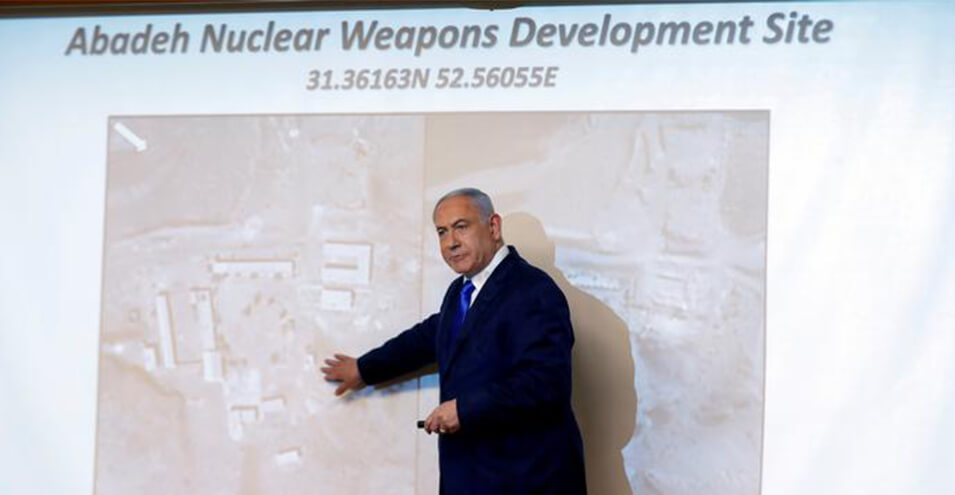
Israeli Prime Minister Benjamin Netanyahu said that Iran has been developing nuclear weapons at “secret nuclear facilities in Abadeh.” The Israeli prime minister also said that Iran has conducted nuclear tests at these facilities for military purposes.
According to Reuters, on Monday, September 9, Israeli Prime Minister Benjamin Netanyahu spoke at a news conference about the existence of "secret nuclear facilities in Abadeh" in Fars Province.
Netanyahu said that he obtained this information from a collection of important information about Iran that had previously reached Israel.
At the Israeli Foreign Ministry headquarters, Netanyahu showed aerial images of a location in the city of Abadeh in Fars Province and said that Iran "acted to destroy this secret nuclear facility after learning about Israel's knowledge of it."
The Israeli Prime Minister stated at the press conference that the Islamic Republic of Iran should know that we are following it and that we know what it is doing. He said: “Israel knows what you are doing, Israel knows when and where you are doing what.”
Netanyahu's previous statements about " Iran's secret nuclear center "
A year ago, the Israeli Prime Minister said that Iran had a "secret nuclear stockpile."
Last September (2018), Benjamin Netanyahu said that Iran had removed 15 kilograms of radioactive material from a facility in August. According to this claim, Iran had spread the material in various areas in Tehran to hide it. The Israeli Prime Minister had mentioned “Toqozabad” on the outskirts of Tehran.
At a press conference on Monday, the Israeli Prime Minister emphasized, while showing aerial photos of "Iran's secret nuclear centers," that after Iran realized that Israel knew about the existence of secret centers, it tried to destroy evidence and documents about these centers.
همزمان با سفر کرنل فروتا، رئيس موقت آژانس بینالمللی انرژی اتمی، روز یکشنبه ۱۷ شهریور خبرگزاری رویترز به نقل از دیپلماتهایی که نام آنها فاش نشده خبری را مبنی بر نمونهبرداری بازرسان بینالمللی از محلی در ایران (توقوزآباد) منتشر کرد. در این خبر آمده بود که بازرسان با این نمونهبرداری پی بردهاند که در این محل اورانیوم وجود داشته است.
Using new centrifuges
The International Atomic Energy Agency (IAEA) announced in a statement on Monday, September 9, that the agency's inspectors in Iran, after observing nuclear facilities, confirmed the country's installation of a newer generation of uranium enrichment centrifuges.
“These centrifuges have either been installed or are being installed,” the agency’s statement said.
The installation of these centrifuges will allow the Islamic Republic to enrich uranium at a higher rate. By installing and operating these devices, Iran has reduced another part of its commitments in the nuclear agreement with world powers.
Two days earlier, on Saturday, September 6, the Atomic Energy Organization of Iran announced that it had installed 20 IR-4 model centrifuges and 20 IR-6 model centrifuges at its facilities.
The International Atomic Energy Agency has said that Iran has installed or is installing 22 IR-4, 30 IR-6, and three IR-6s models at the Natanz facility.
Under the nuclear deal, Iran is only allowed to use the older IR-1 centrifuges. The International Atomic Energy Agency announced that Iran intends to restart its research program.
کرنل فروتا، رئيس موقت آژانس بینالمللی انرژی اتمی، روز یکشنبه ۱۷ شهریور در دیدار با مقامهای ایران تاکید کرد که وظیفه این نهاد راستیآزمایی است و رویکرد آن مستقلانه است.
Behrouz Kamalvandi, spokesman for the Atomic Energy Organization of Iran, also said in a press conference on Saturday, September 7, that Iran is no longer committed to the timetable set out in the JCPOA, adding that if the other parties to the JCPOA implement their commitments, Tehran will return to its commitments.
After the US unilaterally withdrew from the nuclear deal, Germany, Britain, and France are trying to preserve the agreement.
German Foreign Minister Heiko Maas also said on Monday that Europe cannot be expected to find a solution to the conflict alone, while other countries are moving in the opposite direction.
Source: DW