MP: We are lagging behind other countries in gender equality
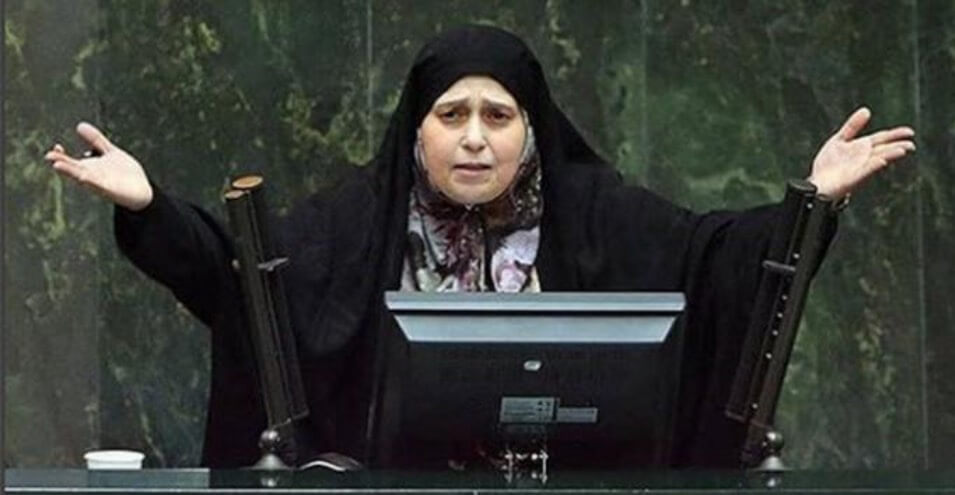
A member of the Women's Faction in the Parliament says that according to international statistics, Iran is one of the last countries on the list in terms of gender gap. Based on this statistics, Iran is ranked 16th among 19 Middle Eastern countries in terms of gender equality.
Parvaneh Salahshouri, during a questioning of Mansour Gholami, Minister of Science, Research and Technology, said that despite the promises of the Hassan Rouhani government, nothing has been done in recent years to improve the status of women, and if the minister is not allowed to employ women, he should announce this issue.
According to ILNA news agency, a Tehran representative and member of the Women's Faction of the Islamic Consultative Assembly expressed regret in a public meeting on Monday, January 2nd, that "incomplete and distorted statistics" are being published regarding the presence of women in the Ministry of Science.
He says there is a lot of criticism about the way women are used in the Ministry of Science, and for example, "the Sabzevar Institute of New Technologies, which is a women's university, is run by a man, or the director of Al-Zahra University is also a man."
Referring to the discrepancy in statistics between the Employment Affairs Organization and the Ministry of Science regarding the presence of women, Salahshouri said: "Different statistics are presented, such as 5,800 or 12,000 women on the faculty of universities, but based on our study, the actual figure is around 5,700."
The “catastrophic” state of women’s presence in the Ministry of Science
A member of the women's faction criticized the failure to implement the president's recommendation to use women in deputy ministries and senior management positions, adding: "Currently, there are a total of six female officials in the Ministry of Science, which is a catastrophic situation."
Gender inequality in the Islamic Republic remains widespread, despite Hassan Rouhani's election promises in 2013 and 2017, and statistics from international organizations also confirm this issue.
Parvaneh Salahshouri, while recalling reports on the gender gap index in 2019, emphasized that these indicators show that the status of women has not been improved during Rouhani's presidency.
A Tehran representative in the parliament said: "International statistics place Iran among the bottom five countries, meaning that the gender equality gap between men and women in Iran is on par with the world's most backward countries."
At the bottom of the world and Middle East charts
According to the World Economic Forum's latest report on international gender gap indicators, which was published a week ago, the Islamic Republic ranks 148th out of 153 countries surveyed.
The Islamic Republic also does not fare well among Middle Eastern countries, ranking 16th out of 19. Israel ranks 64th globally and is ranked at the top of the list in the Middle East in terms of gender indicators.
In this report, Iran ranks 118th in terms of gender equality in education, apparently the main reason for this is the significant presence of Iranian women in universities and higher education centers.
The use of female ministers in the cabinet and the presence of women in parliament are other indicators in which the Islamic Republic is in an unfavorable position compared to Arab countries in the region.
Women's political participation: Iran lags behind Saudi Arabia and the UAE
Two years ago, when Hassan Rouhani, despite promises, did not include any women in the proposed cabinet of the 12th government, Sheikh Mohammed bin Rashid, Prime Minister of the United Arab Emirates, introduced 31 members of his new cabinet, including nine women. In the previous UAE government, there were eight women in the cabinet.
The presence of women in the parliaments of countries such as Saudi Arabia and the UAE is also not comparable to Iran. In Saudi Arabia, almost a quarter of the parliamentary seats are held by women.
The 10th Islamic Consultative Assembly, with 17 female representatives, is a record for women in parliament throughout the life of the Islamic Republic. The number of women in this term has almost doubled compared to the 9th Assembly, but the share of Iranian women in parliamentary seats is still no more than about six percent.
In the 2019 Gender Equality Index, as in previous years, Scandinavian countries, including Iceland, Norway, Finland, and Sweden, are at the top, and the Islamic Republic is at the bottom of the table, alongside Syria, Pakistan, Iraq, and Yemen.
Source: DW