Marco Rubio's warnings as Washington holds peace hostage to Israeli policies
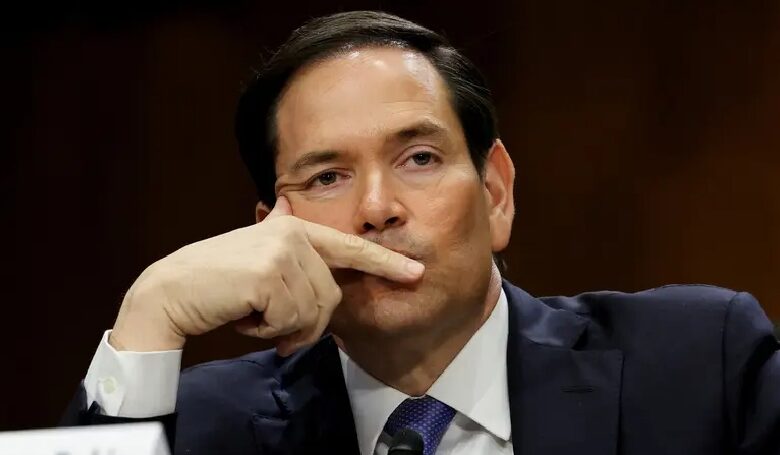
While Washington holds peace hostage to Israeli policies, Marco Rubio warned against recognizing Palestine.
US Secretary of State Marco Rubio claimed in statements that recognizing the state of Palestine would deepen the crisis, but critics say that Washington's policies themselves are the main factor in the continuation of the war and mistrust.
During a visit to Ecuador and meetings with officials there, the US Secretary of State once again took a position clearly aligned with Israel and warned against the decision of some European countries to recognize the state of Palestine. He said bluntly: "We have told all these countries that if they recognize the state of Palestine, this is all fake and unreal. If you do this, you will create problems."
His remarks come as the Gaza war has claimed thousands of lives since October 7, 2023, and calls for an end to violence and a political solution are growing. However, instead of supporting the formation of an independent Palestinian state, Washington has once again prioritized Israel's concerns, warning that such a move would only lead to harsher reactions from Tel Aviv.
In another part of his speech, Rubio emphasized, referring to the issue of Israel's annexation of parts of the West Bank: "Such a move would trigger reactions and make it more difficult to achieve a ceasefire in the Gaza Strip. It could also lead to actions like the ones you've seen, or at least attempts at such actions."
Although he claimed that the matter had not yet been finalized, his description of the process as a completely predictable issue showed that the US government is aware of Israel's expansionist policies and continues to be content with silence or complicity.
Rubio continued to insist that unilaterally recognizing Palestine would not be the path to creating an independent state, adding: “A Palestinian state is not going to emerge this way. A Palestinian state is not going to be established this way, not by holding a press conference somewhere.” But critics point out that this same logic has been an excuse for years to delay the formation of a Palestinian state, and has resulted in nothing but continued occupation and an escalation of the crisis.
Analysts believe that Rubio's remarks reflect a long-standing US policy of justifying Israel's actions and preventing any serious international pressure on Tel Aviv, rather than an attempt to resolve the crisis. In their view, although Washington claims to be a mediator, it has actually shown that it is at the forefront of obstructing peace by threatening and warning European countries not to recognize Palestine.
On the eve of the UN General Assembly meeting in New York, a number of European governments have announced that they will move towards recognizing the state of Palestine, but the US warnings indicate the continuation of a policy that has postponed peace for years and turned the Palestinians' right to self-determination into an issue completely dependent on Israeli interests.
The fact is that the United States has once again shown no will to reduce the violence in Gaza or create a real path for the formation of a Palestinian state. Rubio’s warnings to Europe are nothing more than a continuation of the traditional policy of holding peace hostage for Israel. Instead of using its position of power to end the massacre and occupation, Washington is effectively acting as Israel’s political shield. This approach not only prolongs the crisis, but also further undermines global trust in America’s claims to democracy, human rights, and mediation.