German Minister: Conditions in Greek Island Camps Are a Shame for Europe
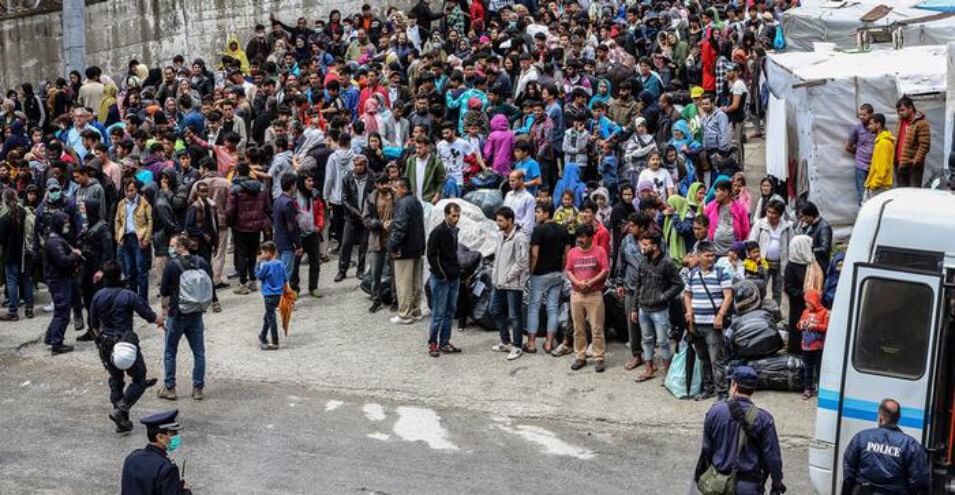
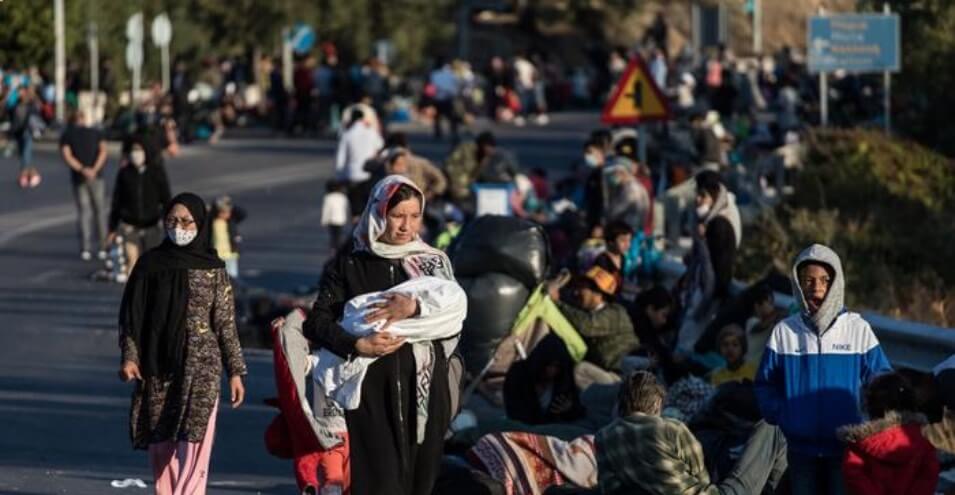
Tens of thousands of people are living in camps designed to accommodate a maximum of 3,000 people. Germany’s Development Aid Minister, visiting the Lesbos and Moria camps, described the overcrowding and living standards of refugees as shameful.
Gerd Müller, Germany’s Development Aid Minister, traveled to the islands of Lesbos and Moria to witness firsthand the inhumane conditions facing thousands of refugees. He saw with his own eyes how 20,000 children, women, and men are crammed together in one of these camps in an environment lacking the most basic amenities.
Müller described the conditions in these camps as “shameful” and called for support for camp residents and ensuring their human rights. He said that transferring children to European countries is not a solution to their problems.
The camps on Greek islands were originally built to accommodate 3,000 people. Now a population seven times that capacity is living there day and night, without even meeting United Nations minimum standards in their rooms, tents, and sanitary facilities. This situation has become unbearable, particularly in the context of the coronavirus outbreak.
A UNICEF staff member in the city of Bonn, describing the catastrophic sanitary conditions in Moria, said: “In this camp, there is one shower for every 500 people and one toilet for every 160 people.”
Earlier, a group of refugees living in these camps sent letters to Germany’s Chancellor and the President of the European Commission describing the inhumane conditions in the camps and asking them for help.
In total, ten European Union countries have announced their willingness to accept approximately 1,600 unaccompanied minors and children from the Greek camps. The German government has agreed to host 350 unaccompanied minors. France and Portugal’s quotas have been set at 300 and 250 people respectively. Finland, Bulgaria, Ireland, and Luxembourg are also among the accepting countries. In the first phase, fifteen days earlier, 47 children and adolescents from the islands of Lesbos and Moria entered Germany, with their quarantine period ending on Monday, May 4.
Transferring Children Is Not a Solution
The newspaper “Rheinische Post” quotes Germany’s Development Aid Minister as saying: “Our duty is to help all people living in the camps. It is shameful that such conditions exist in the middle of Europe.”
Gerd Müller has pointed out that evacuating Greek camps of children is not the solution: “There is a pressing need to build small units in these camps that meet United Nations standards and respect human dignity.”
The date for the next transfer of unaccompanied minors to Germany is still unknown. Torsten Frey, Deputy Director of the Health Faction in the German Parliament, says: “Berlin is waiting for other European countries to fulfill their commitments in this regard. No new admissions from Greece will take place before that.” He has warned the parties against accepting refugees on a large scale, saying: “Only those in the most urgent situations should be transferred; otherwise, the capacity for hosting will be weakened.”
Torsten Frey has warned that unplanned admissions could also serve as an incentive for new migrations.
The European Union’s Commissioner for Refugees previously stated that the transfer of unaccompanied refugees from Greek islands is a demonstration of human solidarity in Corona conditions. They are not orphans, but they have been forced to leave their homeland alone.
Meanwhile, the support/relief organization SOS in Germany does not consider accepting 350 unaccompanied children appropriate to this country’s capabilities and has criticized such a quota. A spokesman for the organization said: “We ourselves can provide 50 to 100 accommodations for these children alone, and if necessary, we are capable of doing even more.”
The Greek island of Lesbos is notorious as the refugee hell, and Germany’s action to accept 47 children has been described as “a drop of water on a burning stone.”
Source: DW