Israeli Defense Minister: Iran Policy Determined by Government, Not Intelligence and Security Agencies
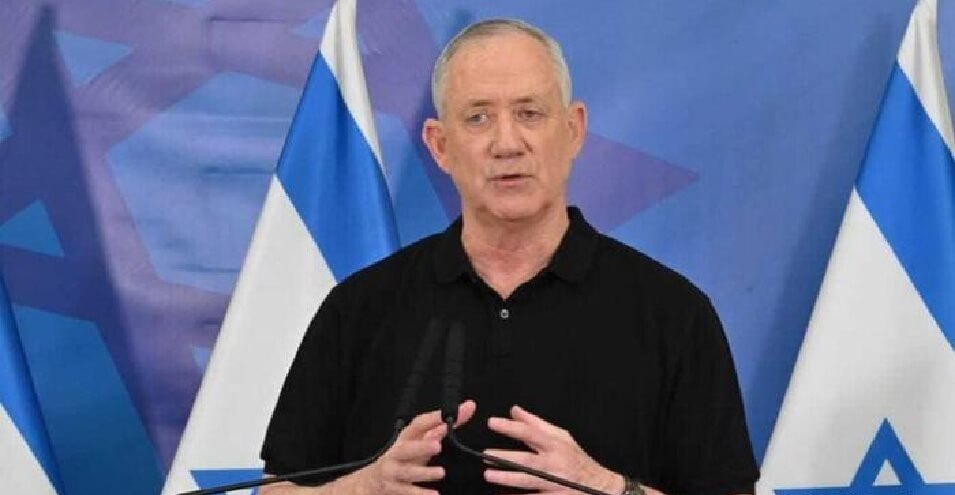
Following the publication of a report by an Israeli newspaper regarding “support” from senior army commanders for reviving the JCPOA, Benny Gantz dismissed the report, stating that policy related to nuclear negotiations is determined by the Israeli government, not intelligence and security forces.
After an Israeli newspaper reported that key Israeli military commanders support the finalization of a nuclear agreement between Tehran and world powers, Benny Gantz, Israeli Defense Minister, warned on Sunday, June 26 (Tir 5) that policy regarding Iran’s nuclear negotiations is determined by the government and not by intelligence and security forces.
According to Reuters, Benny Gantz wrote in a tweet: “While Israeli security forces have something to say about Iran policy, making this decision is within the government’s authority.”
Based on a report from the newspaper “Yedioth Ahronoth” published last Friday, high-ranking generals from Israeli military intelligence and strategic planning believe that reviving the 2015 agreement known as the “JCPOA,” which limited Iran’s nuclear program, will be to Israel’s benefit.
These intelligence and security commanders believe that by reviving the JCPOA, Israel can buy time and prepare itself for a possible military attack on Iran aimed at preventing the Islamic Republic from obtaining nuclear weapons.
The Israeli Defense Minister said regarding these statements: “We will continue open and deep discussions only behind closed doors. Any other method damages Israel’s national security.”
According to Reuters, Gantz’s warning apparently also targeted the Mossad intelligence service, which, according to Yedioth Ahronoth, is opposed to any new nuclear agreement with Iran.
The Times of Israel writes that, based on an unattributed report on Sunday in Hebrew-language media, senior Israeli defense officials disagree over the country’s position on reviving JCPOA negotiations.
According to the news site “Ynet,” several Israeli generals, including the head of military intelligence, contrary to Israel’s official policy, have begun supporting the revival of the JCPOA between Iran and world powers.
Israel officially says it is strongly opposed to returning to the JCPOA agreement. Israel, at the time of the 2015 nuclear agreement, considered Iran unreliable and incapable of fulfilling its JCPOA commitments.
Successive Israeli governments have warned for decades that Iran seeks to build nuclear weapons.
However, “Ynet” says that senior intelligence officials now believe that a bad deal is better than no deal, as it gives Israel time to prepare for extensive military action against Iran.
Over the past year, Israeli defense forces have increased their efforts to prepare a serious military threat against Iran. Dozens of Israeli Air Force fighter jets conducted air maneuvers over the Mediterranean Sea in early this month and simulated an attack on Iran’s nuclear facilities.
The Times of Israel adds that the news site mentioned high-ranking generals who support the revival of the JCPOA, including Aaron Haliva, head of the Israeli army’s military intelligence, Brigadier General Amit Saar, commander of the military intelligence research division, General Oren Setter, commander of the Israeli army’s strategic division, and Tal Kalman, a senior military official responsible for military affairs regarding Iran.
The report states that generals in the intelligence field believe Benny Gantz also supports the revival of the JCPOA. Gantz had previously said he supports a “broader, stronger, and longer-lasting” agreement.
The media outlet “Ynet” adds that the Mossad organization believes that the JCPOA revival agreement is detrimental to Israel and at most can prevent the advancement of Iran’s nuclear capabilities for two and a half years.
The report adds that Mossad believes the purpose of publicizing the positions of intelligence officers was to influence Yair Lapid, the future interim prime minister, to support the JCPOA revival process.
The Israeli Defense Minister said on Sunday in response to these reports that discussions related to the nuclear agreement with Iran should remain behind closed doors.
Benny Gantz wrote on Twitter that Israel’s defense force “is dealing day and night with the Iranian threat as the most important and urgent strategic issue currently for Israel’s security.”
The Israeli Defense Minister wrote: “This is done in coordination among all security branches, and while respecting freedom of opinion, decisions are made by political leadership.”
The European Union and Iran agreed last Saturday to resume nuclear negotiations that had been at a standstill for weeks.
Although Israel is not a party to the negotiations, this country’s concerns about the outcome of the talks and its long-term threats for unilateral military action against Iran is one of the concerns of Western countries.
These developments come as Israel faces political instability and Naftali Bennett, Israeli Prime Minister, has recently announced early elections.
Source: DW