UN Fact-Finding Committee Report on Widespread Human Rights Violations in Iran
The UN fact-finding committee has begun its oral presentations regarding widespread human rights violations in Iran.
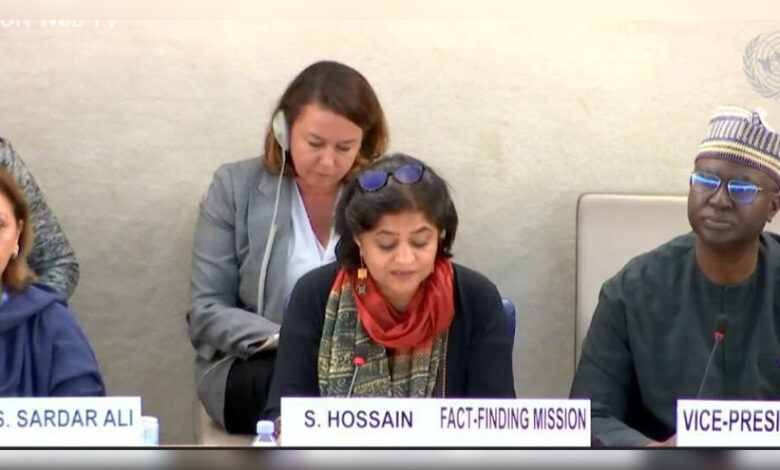
On Wednesday, July 5 (Tir 14), the Independent International Fact-Finding Committee on Iran presented its oral report on findings concerning widespread human rights violations by the Islamic Republic of Iran to member states at the Palace of Nations in Geneva, the European headquarters of the United Nations.
Sara Hossain from Bangladesh, as head of the delegation, along with Shahin Sardaralian from Pakistan and Veona Kristisvic from Argentina, the two experts of the committee, presented this report to the 47 members of the Human Rights Council. Following this, representatives of interested governments can express their country’s position on the report for a maximum of one and a half minutes.
The international fact-finding committee was formed to investigate cases of human rights violations in the Islamic Republic of Iran in connection with the protests that began in September 2022. The committee’s task is to report on violations of citizens’ rights, particularly regarding women and children, once in July 2023 and another report in late this year to the council.
In a report read by Sara Hossain as head of the committee to those present, she considered the execution of 7 detainees arrested during the protests shocking and announced to the member states of the Human Rights Council and monitoring organizations that based on received reports, obtaining forced confessions from detainees under torture and violence continues.
The reported cases of human rights violations date from September 2022 onwards and, unlike other fact-finding committees established for other countries’ affairs, have no end date for investigating human rights violations and therefore face no limitations in this regard.
Also, according to the news agency “Iran Wire,” the fact-finding committee may in today’s report provide recommendations to the Islamic Republic of Iran regarding the prevention of human rights violations, protection of victims and witnesses, remedial measures, and addressing impunity for government armed forces personnel.
The aforementioned recommendations may include political and legal measures, measures to ensure accountability of perpetrators and guarantee victims’ right of access to justice, knowledge of truth, and reparation. It should be noted that the implementation of these recommendations or violations that have occurred and potential future violations will also be included in the written report of the fact-finding committee, which will be presented in approximately eight more months.