An Iranian MP: What's wrong with people in need selling their kidneys?
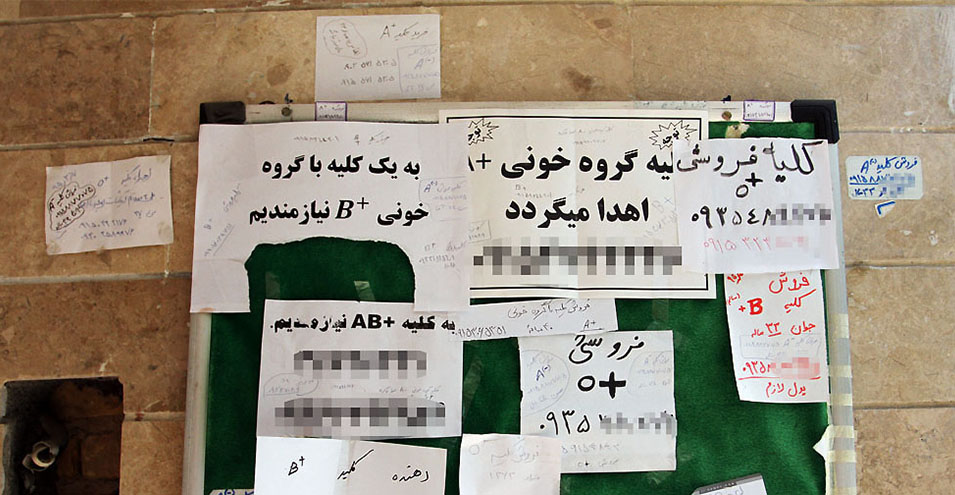
A member of the Iranian Parliament's Health and Medical Commission has said, "What's wrong with selling a kidney when someone is living in poverty and their life changes when they receive 20 to 30 million?"
The buying and selling of kidneys has been prevalent in Iran for years due to the financial needs of the sellers, and kidney sale announcements are seen in abundance, especially around hospitals.
The Shafa Online website published an interview with Hossein Ali Shahriari, a representative from Zahedan and a member of the Parliament's Health and Treatment Commission, in which he stated that some people are profiting from the ban on living-to-living kidney transplants, and their profits are in purchasing and importing dialysis machines and related expensive equipment.
He argued that you should think about people, not the interests of some: "It seems that there are factors that want to ban kidney transplants from volunteers. In addition, in this process, there is not always buying and selling, but in many cases organ donation takes place, but some people would like to stop living-to-living transplants because they have a benefit in this work and buy and import dialysis machines and equipment."
Mr. Shahriari, who is introduced as "Doctor", in response to comments about the consequences of buying and selling kidneys, said that given that the government and stakeholders have been able to almost eliminate the queue for kidney transplants and that all people who need a kidney transplant are transplanted on time, some of the criticisms raised cannot be considered unfounded: "I ask my friends to think about the people and patients before thinking about the interests of a specific group to buy dialysis machines and not create an atmosphere."
This MP considered preventing kidney transplants from a living person to a living person, despite the donor's consent, as a prerequisite for the emergence of irreparable complications and said: "When we talk about the resistance economy, the best thing is kidney transplants because the costs are also reduced, since dialysis has very high costs and a large number of machines must be purchased."
After several years, a kidney transplant may cause problems for the recipient, and in a phrase used by the general public, the patient's body may reject the kidney. However, Hossein Ali Shahriari has said that the transplant does not have any specific complications or problems, and many people live with one kidney: "On the other hand, there are many people who need a kidney, and if the kidney does not reach them, they will suffer complications and lose their lives."
Hossein Ali Shahriari, member of the Parliament's Health and Medical Commission:
"Organ transplantation is not a problem from a religious perspective and is permitted, and the Imam has also given permission, and the authorities do not object. So, in my opinion, everyone should pursue their own work and expertise, because when specialized tasks are entrusted to specialists in the same field, they achieve better results."
The Iranian government gives a "gift of sacrifice" to those who donate their kidneys.
شهریاری در پاسخ به اینکه خرید و فروش کلیه در ایران از نظر اغلب کشورها غیراخلاقی و غیرانسانی است، گفته است که چهطور آنها انسانها و کودکان را میکشند و این غیراخلاقی نیست: «{اینکه آنها زنان و پیرمردان و پیرزنان را بمباران میکنند غیر انسانی نیست؟ این مخالفتها تنها منافع مالی گروهی را در بر میگیرد که به دنبال خرید دستگاههای دیالیز هستند.»
However, the Tabnak website published a note in response to the MP's remarks, calling his remarks a strange comment.
The note mentions that there are people who gain financial benefits as the kidney buying and selling market heats up: "People who play the role of liaison between the seller and the patient in need in this process and gain significant profits by performing brokerage activities."
In the opinion of the author of this note, the important and worrying point in Hossein Ali Shahriari's speech is a question that is raised in a denialist manner:
"Shahriari has asked: What is wrong with a person living in poverty and whose life changes when he receives 20 to 30 million? This question, regardless of who asked it, is a painful confession that proves that in our country, some people are forced to sell their body parts to escape poverty and economic pressure. What is more painful is that an official like a representative of the people in the Islamic Consultative Assembly, without considering the social and economic damages of this type of prostitution, calls it okay and, relying on the religious ijtihad of the religious authorities, tries to show this social harm in an unproblematic way."
This member of the Parliament's Health and Medical Commission has not taken into account that selling a kidney, especially by people who are facing economic difficulties, not only cannot bring about a change in their lives, but will also create numerous problems for them in the future due to economic and social restrictions. A person who lives with one kidney naturally has to take more care of his health throughout his life and avoid many heavy social activities.
Tabnak has written, but what is even more bitter is that instead of trying to promote a culture of selflessness and organ donation, he insists on calling kidney sales okay (despite its social and economic losses), and in a way encourages the needy to do so, while it is expected that he will try to provide a way to solve the economic problems of the needy and seek a way to confront those profit-seeking and profit-seeking individuals who view dialysis patients as a benefit.
Source: Radio Zamaneh