A Man Between Politics and Faith; A Figure Who Internationalized Assyrian Identity, Passes Away
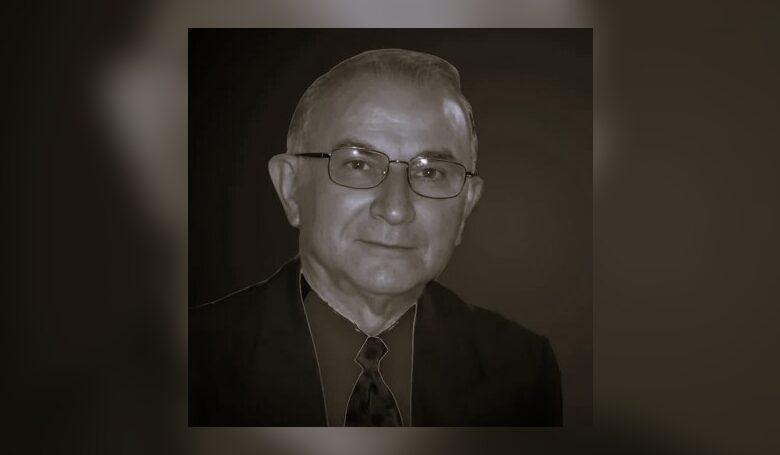
The passing of “Daniel Odisho Crispi,” an Iranian-Assyrian diplomat, once again reminded the world of the importance of preserving Assyrian Christian identity on the global stage.
“Daniel Odisho Crispi,” a recognized figure in the Assyrian Christian community and former Iranian diplomat, closed his eyes to the world at the age of 90; a personality whose life gained meaning at the intersection of government service and the preservation of the cultural and spiritual heritage of the Assyrian people.
He was born in May 1936 in “Habbaniyah” in Iraq; an area that at the time was home to a significant population of Assyrian Christians. His childhood coincided with political developments and widespread population displacements in the Middle East. His family migrated to Iran in the mid-1940s and settled in the city of Kermanshah; a city that at that time was considered one of the important centers of Assyrian life. In this setting, churches, schools, and religious gatherings played a vital role in preserving faith and ethnic identity.
Crispi showed special attention to his native language and cultural roots from his early years of youth. During a period when the teaching of ethnic languages faced limitations, he painstakingly learned the Assyrian language and later devoted himself to teaching it to younger generations. These activities were not limited to the classroom; he also played a role in distributing Assyrian publications and strengthening the cultural movement of the community.
With his migration to Tehran in the mid-twentieth century decades, his presence in cultural spheres became more prominent. He participated in the formation and strengthening of cultural, sports, and church institutions and became one of the active figures in reviving Assyrian identity in the capital. These efforts took place at a time when many ethnic and religious minorities faced serious challenges in preserving their identity.
One of the most important turning points in his activities was his participation in the formation process of the “Worldwide Assyrian Union” in the early 1960s; an organization established with the aim of convergence and defense of Assyrian rights at the international level. Within this framework, the concept of “one name” was approved as a symbol of ethnic unity. Crispi believed that linguistic diversity among Assyrians was not a threat, but an opportunity for enriching a shared identity.
After studying literature at Tehran University, he began his career at the National Iranian Oil Company, but soon joined the Ministry of Foreign Affairs and entered the field of diplomacy. His missions in various countries including Japan, Finland, the United States, and Iraq gave him extensive experience in international interactions. In the late 1970s, with his appointment as Deputy Ambassador of Iran to Sweden, he became one of the first senior-level Assyrian-descended diplomats in the country’s formal structure.
After the end of his government service, he remained in Sweden and continued his cultural activities in the form of teaching Persian and Assyrian languages. His role in transmitting language and culture to new generations of immigrants, particularly in diaspora communities, was of special importance. He remained present in social programs until the final years of his life, but from 2020 onwards, due to physical problems, he withdrew from public activities.
Following his death, various Assyrian institutions around the world paid tribute to him. The “National Federation of Assyrians of America” stated in a statement: “Mr. Crispi carried his Assyrian identity throughout his life with clarity and purpose, and despite being far from his homeland, he fought to preserve it. His commitment and discipline ensured that our language, culture, and national awareness remained alive and guaranteed their purposeful transmission to future generations.”
Daniel Crispi’s life was an example of the connection between faith, culture, and social responsibility; a path that shows how one person can remain faithful to the preservation of his Christian and ethnic identity while being present in formal structures.