Islamic Republic’s Maritime Extortion: Strait of Hormuz Tolls or Global Trade Hostage-Taking?
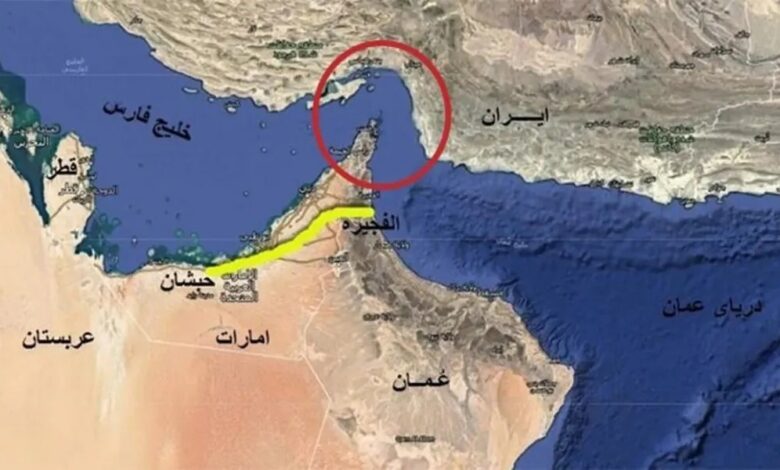
The Islamic Republic’s maritime extortion through Strait of Hormuz tolls will transform into a tool for holding global trade hostage and destabilizing the international economy.
While the Strait of Hormuz has always been recognized as one of the world’s most vital energy arteries, recent reports show that the Islamic Republic has created an informal toll collection mechanism, effectively transforming this international passage into a tool of pressure and revenue generation; an action that many analysts describe not as economic policy, but as a form of “organized extortion.”
According to a report from the Telegraph, since late February, the passage route for tankers through this strategic waterway has changed, and ships have been forced to approach Iran’s shores instead of following conventional routes and to pass through corridors under direct supervision of forces affiliated with the Islamic Revolutionary Guards Corps.
In this mechanism known as “Tehran’s tolls,” ship owners must enter a complex and costly process; including providing complete information about cargo and ownership to networks linked to the Guards. Then, according to sources such as Bloomberg, at least one dollar per barrel of oil is collected as a toll; a figure that increases depending on countries’ political relations with Tehran.
These payments are also made in an unusual manner and outside the formal financial system, mostly in Chinese yuan or digital currencies; an issue that has increased concerns about circumventing sanctions and strengthening the Islamic Republic’s financial resources.
The cost of passage for a tanker in this system averages approximately two million dollars, and upon approval, Iranian military vessels escort the ships. According to analysts, this process not only contradicts international law principles, but also constitutes a direct threat to the principle of “innocent passage” in international waterways.
Meanwhile, Donald Trump has announced that any ceasefire with Iran is conditional on “complete, immediate, and safe reopening of the Strait of Hormuz.” In response, Tehran has emphasized that ship passages must be conducted in coordination with Iranian military forces; a position that effectively questions the principle of freedom of navigation.
An Iranian official has also confirmed in a conversation with the Associated Press that even within the framework of potential agreements, the possibility of continuing to collect these tolls would exist.
Warnings suggest that if this process continues, its consequences will extend beyond the region. Petros Katinas from the Royal United Services Institute think tank stated: “Iran has learned how to hold the global economy hostage.”
On the other hand, Hugo Dickson, a Reuters analyst, estimates that Tehran could generate up to $500 billion from this source over the next five years; a figure, even a portion of which could lead to rebuilding military capabilities and increasing the Islamic Republic’s regional influence.
This situation has created deep concern among countries in the Persian Gulf region. Countries such as the United Arab Emirates, Qatar, and Bahrain, which have no access to alternative routes, may be forced to pay these costs in the short term; an issue that effectively strengthens the government financially, which many consider destabilizing to the region.
In this regard, Ellen Wald from the Atlantic Council think tank has emphasized that the continuation of such a situation, after the end of conflicts, is unlikely, and regional countries will ultimately be forced to take military action.
From a legal perspective, this action faces serious challenges. According to international maritime law conventions, no country has the right to collect tolls from ships in natural international straits, and such fees are only permitted in artificial channels such as Suez or Panama. However, Iran has claimed in correspondence with the International Maritime Organization that these fees are collected for inspecting suspicious vessels; a claim that experts have described as unacceptable and akin to extortion.
Many international observers also warn that if this process becomes established, it could become a dangerous precedent, and countries such as Russia and China might also resort to controlling and collecting tolls from other strategic straits; a situation that would lead to the collapse of the legal order governing the seas.
Nevertheless, the severity of the economic and security consequences of this policy is such that many analysts believe such a mechanism will face severe, even military, reactions before it becomes fully established.
In sum, what is taking shape in the Strait of Hormuz today is not merely a regional dispute, but a test of the global economic order and the fundamental question of whether vital routes of international trade can be transformed into tools of political and financial pressure by a government or not.