Wave of Iranian Gatherings Worldwide; Response to Prince Reza Pahlavi’s Call and Protest Against Islamic Republic
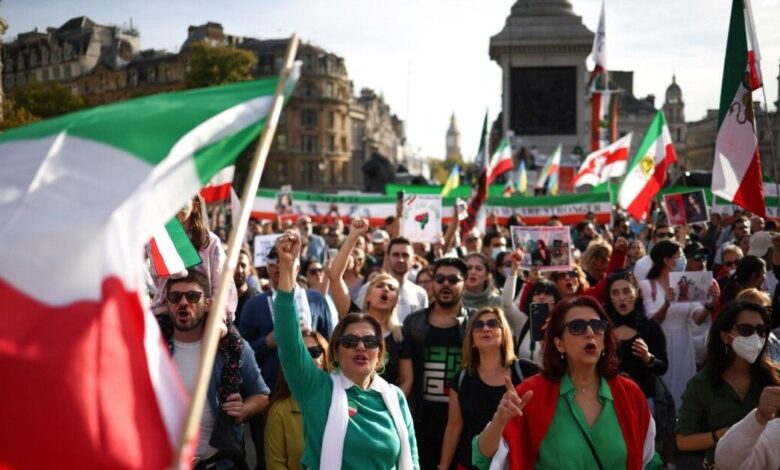
Iranians outside the country gathered in response to a call from Prince Reza Pahlavi, forming a political wave abroad and protesting against the Islamic Republic.
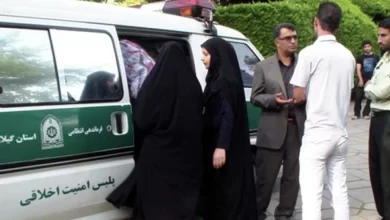
On Saturday, April 11, corresponding to Farvardin 22, coinciding with reports of ongoing political talks between the Islamic Republic and the United States in Pakistan, a series of protest gatherings of Iranians outside the country were held in different cities around the world. These gatherings centered on protesting the political and security situation inside Iran, including widespread internet shutdowns, arrests, executions of protesters, and suppression of demonstrations.
These rallies were organized following a call issued by Prince Reza Pahlavi’s communications office on the social network X. The published message stated: “Tomorrow we gather in front of American embassies and consulates around the world and voice the wishes of the Iranian nation.”
Based on reports from various cities, Iranians residing in Britain held gatherings in London, Denmark in Copenhagen, Spain in Barcelona, Austria in Vienna, Germany in Düsseldorf, South Korea in Seoul, Japan in Tokyo, and New Zealand and Australia in Sydney, simultaneously. Protesters at these gatherings primarily chanted slogans opposing the Islamic Republic and in support of changing Iran’s political structure.
At some gatherings, including those in Europe and East Asia, participants called on the United States to continue its support for the Iranian people until the political situation changes. Additionally, at some demonstrations, protesters, referring to internet shutdowns and suppression of protests, emphasized the continuation of protests outside the country as the “voice of people inside Iran.”
During these gatherings, groups of protesters in Germany announced they want the “Pahlavi family” to return as part of Iran’s political future. In New Zealand as well, slogans were chanted in support of international political figures and opposing any agreement with the Islamic Republic.
In such circumstances, the analysis of some participants and supporters of these gatherings is that the widespread presence of Iranians in different countries reflects increased political convergence among a segment of the opposition outside the country. However, in independent analyses and media perspectives, these gatherings are evaluated more as a symbol of the diversity of political views among Iranians outside the country and increased organized protest activities in the diaspora, rather than necessarily representing the entire Iranian society.
Overall, these events demonstrate that the political sphere of Iranians outside the country continues to actively respond to developments inside Iran, and issues such as the political fate of the country’s future, the type of government, and the course of Iran’s international relations remain at the center of discussions and protest actions.