Alarm Bells in the Capital: Mysterious School Closures Near the Supreme Leader’s Residence and Signs of a Hidden Crisis
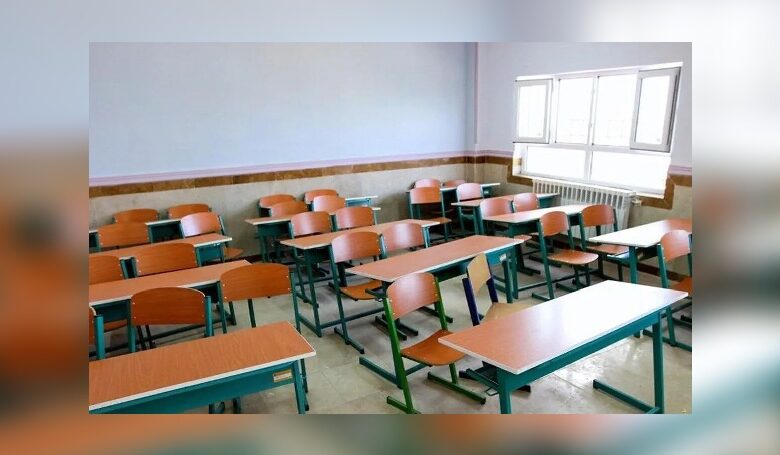
The sudden closure of schools in the vicinity of Ayatollah Khamenei’s residence, concurrent with military reports and regional isolation of the Islamic Republic, indicates a serious and concealed crisis.
In the early morning hours of Monday, Esfand 4, corresponding to February 23, Tehran families encountered an unusual scene. Schools in a sensitive zone near the center of the country’s political power were closed without prior notice, and students were sent back home mid-day. No official announcement was issued, no explanation given for the decision made, and not even the possibility of virtual classes was provided.
This sudden decision occurred in an area adjacent to the Presidential Office and Ayatollah Khamenei’s residence; an area where any change in status raises serious security questions. Reports have also emerged of the presence of emergency vehicles and special forces in the same area during the late evening hours the previous night. Nevertheless, official authorities have remained silent.
While Tehran remains shrouded in uncertainty, the Hebrew-language media outlet Maariov has published a report stating that a major portion of Israel’s operations against the Islamic Republic during the recent 12-day conflict was carried out by drones. The report emphasizes that approximately 80 percent of attacks were conducted through unmanned systems.
In this report, following the downing of a Hermes drone, Israel’s Air Force confirmed that these tools played a decisive role in operations. Maariov wrote: “These drones were active for extended hours in Iran’s airspace. They then dominated the region and were able to destroy significant quantities of ballistic missiles and launchers.”
Additionally, Israeli defense company Elbit Systems announced it has developed an upgraded version of the Hermes 650 drone; a matter that demonstrates future potential military confrontation will be more dependent than ever on technology and intelligent operations.
If this information is accurate, the fundamental question is: “How were these systems able to remain active in Iran’s airspace for hours without transparent communication being made to the public?”
On the regional level, signs of shifting equations are also evident. The National newspaper reported that with increased likelihood of American military action, some Iraqi political figures previously close to Tehran are now reconsidering their positions.
The outlet wrote, citing analysts, that some Iraqi actors describe the Islamic Republic as a “sinking ship”; a phrase that reflects concerns about the consequences of being too closely aligned with Tehran.
Within this framework, attention has been focused on Donald Trump’s positions; a figure who has repeatedly spoken of the possibility of taking strong action against Iran. Realization of such a scenario could affect the Islamic Republic’s regional influence and aligned groups including Lebanon’s Hezbollah and Yemen’s Houthis; although the reciprocal response of these groups could also escalate the crisis.
Domestically, concurrent with these security developments, the government’s approach toward the narrative of protest victims remains restrictive. Alireza Kazemi, Minister of Education, in response to the publication of a video of a teacher who asked students to observe silence in memory of 40,000 dead, declared: “Certainly, this colleague who did this made a mistake and error, and the matter will be examined and addressed within the framework of regulations and rules.”
This is while the government’s official figures for deaths in the protests are significantly lower than estimates published by independent sources. The gap between the official narrative and the narrative of victims’ families has become one of the deepest social rifts in recent years.
The sudden closure of schools in one of Tehran’s most sensitive points, concurrent with military reports about drone infiltration and signs of regional allies distancing themselves, forms a series of alarming signs.
The Islamic Republic today faces not only external pressures, but internally it confronts a society whose trust in official narratives has been severely eroded. When transparent communication gives way to silence, rumor and anxiety fill the public sphere.
But the essential question is this: Can a government that is not accountable to public opinion and does not act transparently in the face of crises overcome these simultaneous pressures? Or is the sudden closure on a winter morning merely a small sign of a greater crisis unfolding behind the walls of power?