Taliban Seeks Christian Aid to Support Construction of 25 Migrant Settlements
The Taliban has formally requested assistance from the Catholic Relief Services organization to support development programs related to the construction of 25 migrant settlements.
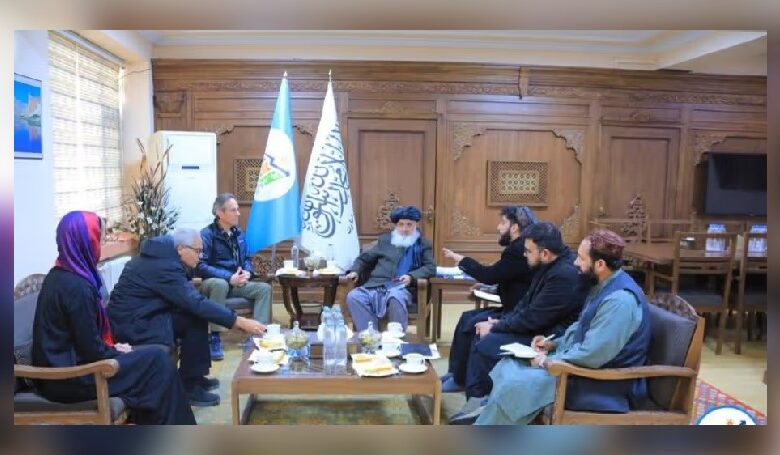
In a striking development in Afghanistan’s international relations and domestic affairs, “Din Muhammad Hanif,” the acting minister of economy of the Taliban government, met formally with senior officials of the Catholic Relief Services (CRS) organization to request the participation of this Christian institution in Afghanistan’s development programs. This request includes support for the project to build “25 settlements for migrants,” which the Taliban has declared as one of its priorities.
In this meeting held in Kabul, the acting minister of economy of the Taliban emphasized the necessity of CRS participation in infrastructure and development projects while discussing the continuation of humanitarian aid, and asked the organization to cooperate alongside humanitarian services in improving living conditions and creating basic facilities in these settlements.
The Taliban has stated that these settlements must be equipped with clean drinking water, medical centers, schools, and other essential facilities, and has asked CRS to participate actively in planning and implementing these projects.
According to published reports, the Taliban’s ministry of economy has announced that addressing the problems of migrants and returnees is one of the government’s priorities, and that providing adequate infrastructure in their resettlement areas is among the issues that require cooperation from international organizations.
This formal request for aid comes at a time when independent reports show that the Taliban government exercises significant control and influence over humanitarian activities and has imposed restrictions on the work of aid organizations, including prohibitions on women working in some humanitarian programs, which has caused many aid efforts to be suspended or carried out under difficult circumstances.
At the international level, various institutions, including the United Nations and some countries, have pointed to the escalating migrant crisis and widespread need for humanitarian assistance in Afghanistan. According to previous reports, the World Bank and humanitarian agencies have allocated significant funds to address the problems of migrants and those in need in Afghanistan in recent years.
Although this meeting and request for assistance from a Christian organization can be seen as a sign of the Taliban’s effort to attract international support and improve its image on the global stage, the human rights situation inside Afghanistan remains critical. Multiple reports from human rights organizations and independent media have shown that the Taliban government carries out severe repressive activities against women’s rights, religious minorities, and other vulnerable groups, and restricts civil and religious freedoms.
Meanwhile, the persecution of Christians in the Islamic Republic of Iran, particularly members of Persian-speaking Christian communities, continues. Multiple human rights reports, including by independent international groups, have shown that Christians in Iran face severe restrictions on religious freedoms, arbitrary arrests, and pressure on minority communities; an issue that has been repeatedly criticized by human rights organizations.
These events in two neighboring countries—the Taliban’s request for aid from a Christian institution for development programs and the continued persecution of Christians and other minorities in Iran—present a contrasting yet simultaneous picture of the state of religious freedoms and engagement with international communities: one seeking to gain legitimacy and international support, and the other on a path of intensifying restrictions and repression.