“Noor Pahlavi”: A Clear and Credible Transition Between Hope for Freedom and Global Uncertainties, the Only Path to Iran’s Future
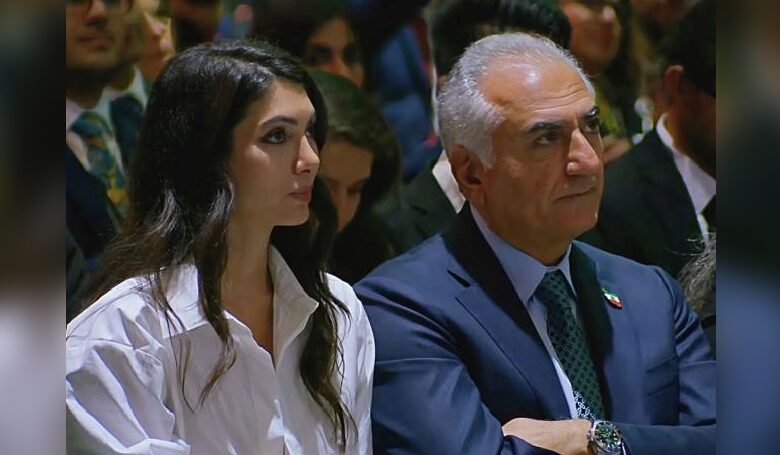
“Noor Pahlavi” emphasized the inability of repression to silence the convictions of the people, calling on the world to support a clear and credible transition; a demand that simultaneously faces both welcome and doubts about the path and future actors in Iran.
Noor Pahlavi, the eldest son of Prince Reza Pahlavi, in an article published in “New Statesman,” attempted to echo the voice of a generation that has both experienced repression and envisages a different future. In this piece, distancing himself from purely emotional rhetoric, he emphasizes that Iran’s fundamental problem cannot be reduced merely to one government or a temporary crisis, but rather lies in a structure that has remained alienated from the will and dignity of its people for years.
He writes: “Iranians have lived under a system that does not represent their dignity, ideals, and heritage. Nevertheless, repression has been unable to extinguish their fundamental belief.”
This sentence, in a sense, forms the core of Noor Pahlavi’s perspective: the belief that violence and coercion, though temporarily silencing voices, cannot destroy the collective will for change.
Noor Pahlavi subsequently brings the international community into the discussion; a point where his text enters a sensitive and controversial domain. He explicitly states: “The world must support a clear and credible transition. My father has presented a framework for a transitional government based on unity and democratic choice, and the Iranian people are ready. Will the world stand with them?”
In this section, his perspective meets with welcome from some international observers who believe that world indifference has reduced the cost of repression for the Iranian government. From this group’s perspective, political and diplomatic support for a democratic transition can prevent the repetition of violent scenarios.
In contrast, critics warn that the line between “support” and “intervention” is very thin, and any form of foreign role-playing, if not transparent and limited, could call into question the legitimacy of the change process or fuel new rifts in Iranian society.
In another section of his article, Noor Pahlavi paints a clear picture of Iran’s future: “Iranians want a free, pluralistic, and united country, not one fragmented by extremism, ideological monopolies, or territorial division.”
This vision, according to many, aligns with the general desire of protesters; yet at the same time, the question arises about what mechanisms could guarantee such a future and who should play the primary role in guiding this path.
Within this framework, Reza Pahlavi’s recent positions also gain importance. He has repeatedly emphasized that Iran’s future must be determined by the hands of Iranians themselves and told “The Jerusalem Post”: “In late December and early January, the people of Iran once again took to the streets with exemplary courage. They asked me for leadership and direction.”
He has also stated that he is prepared to return to Iran and participate in the “final struggle” even before the fall of the Islamic Republic; a position that his supporters interpret as a sign of commitment and courage, but from the perspective of critics could create expectations and responsibilities beyond a symbolic role.
In summary, the message of Noor Pahlavi and Reza Pahlavi’s positions reflect two simultaneous realities: “On one hand, an unprecedented level of dissatisfaction, the courage of protesters, and the erosion of the government’s legitimacy, and on the other hand, ambiguity about the transition path, the role of leaders, and how to support from the world, without imposing foreign will.”
By emphasizing a “clear and credible transition,” Noor Pahlavi seeks to elevate the discussion about Iran’s future from the level of slogans to the level of frameworks and responsibility. At the same time, reactions to his message show that Iranian society and international observers are simultaneously thirsty for hope and concerned about repeating costly experiences of the past. Iran’s future, more than ever, stands at the intersection of hope, caution, and difficult choices.