Resumption of Unit 400 of Quds Force’s Overseas Missions in Europe and America
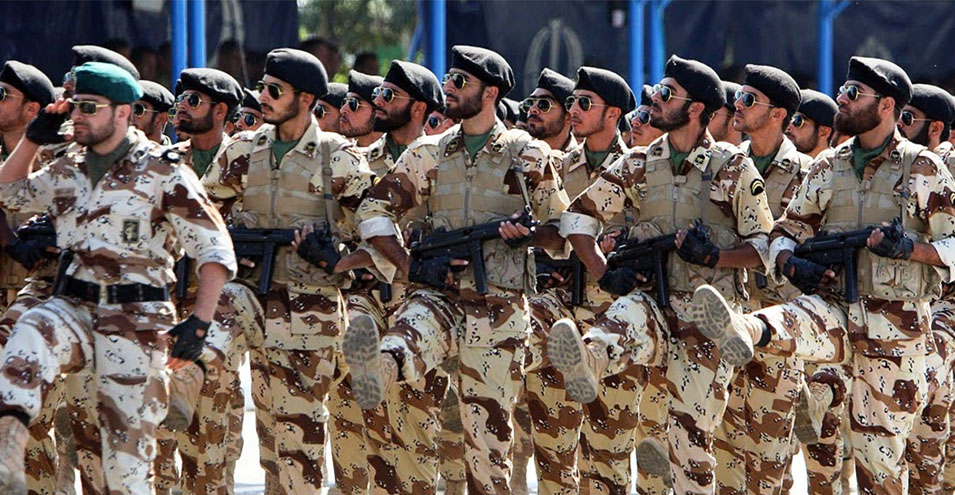
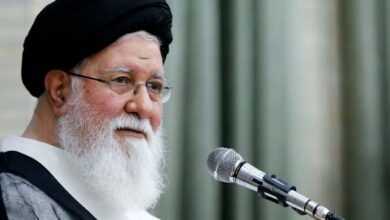
On Thursday, October 27, Brigadier General Salar Abnoosh, Deputy Coordinator of the Khatam al-Anbia Headquarters of the Revolutionary Guards, said in a speech at the Nahavand prayer ground in Hamadan Province, referring to the protection of the Velayat-e Faqih for the Guards having no borders: “Let all the world be assured that the Islamic Revolutionary Guards will soon be formed in America and Europe as well.”
In remarks that also had international resonance, he stated that devotees of the Velayat are always under command, saying that Iran’s Islamic Revolution is not like the revolutions of Algeria and France, and the Islamic Revolutionary Guards is an unparalleled institution in the world and similar to the group “Shurtat al-Khamis” during the rule of Imam Ali, who were pioneers in assisting that Imam.
Although the overseas activities of the Guards is not a new subject, the question of where the source of this ideology lies in the Guards and on what basis it intends to begin a new chapter of its overseas operations are questions that must be answered by returning to the past.
“Shurtat al-Khamis” were a group of armed companions and devotees of the first Imam of Shiites who assisted him in governmental affairs, and besides their constant presence in wars, their main duty during non-war periods was implementing divine laws, maintaining the security of the city of Kufa and controlled areas, and protecting the life of the first Imam of Shiites. They also had another important mission, which was the identification and recruitment of fighting forces within the boundaries of covenanted provinces or outside of them. In fact, one of the missions of this group was an overseas mission (read more).
Since the establishment of the Islamic Republic system, the government has always planned to gather intelligence, identify activities of regime opponents and assassinate them. With the end of the Iran-Iraq War, a large portion of the intelligence and operational forces of the Revolutionary Guards were absorbed by the intelligence organization of this force. In subsequent years, with the creation of the “Quds Force” as an overseas arm, most of these missions were transferred to this organization.
The committee or “Unit 400” is an organizational title formed for special missions within the Quds Force. This unit consists of experienced and talented forces that had previously been active in intelligence and operational activities, as well as younger forces who are trained under them.
The first time the name Unit 400 was formally mentioned was in 2011 when it was said that agents of the Iranian regime played a role in assassinating a Saudi diplomat in Karachi, Pakistan. Less than a year later, Kenyan police arrested two Iranians for planning operations against Saudi Arabia, Britain, America and Israel. Investigations showed that they were affiliated with Unit 400 of the Quds Force.
Some of these forces do not directly participate in assassination or sabotage operations, but instead identify capable and competent individuals in the target country and convince them or pay them to carry out missions on their behalf.
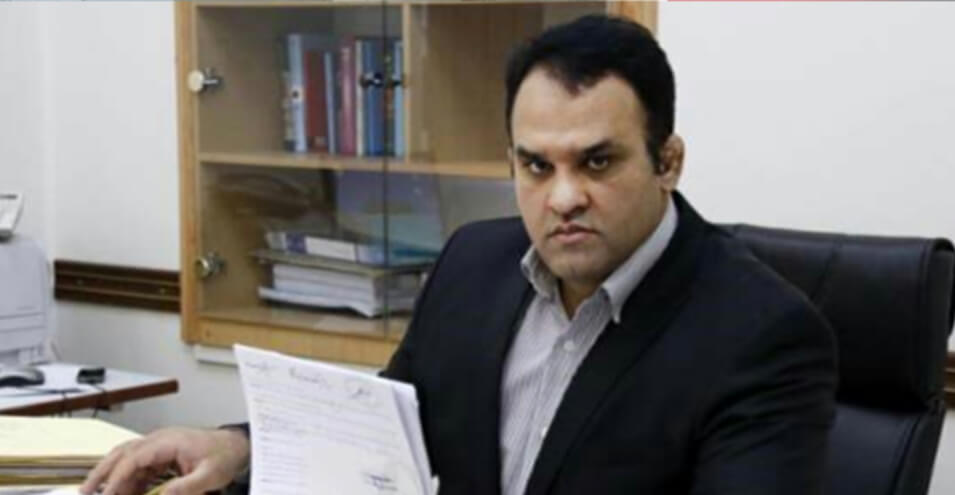
The most prominent figure of Unit 400 is Brigadier General Hamed Abdollahi, the head of this unit. Before his appointment, he was commander of the Zahedan Corps and when Qasem Soleimani was commander of the 41st Tharalah Legion in Kerman, he became deputy of this legion. In 1376 (1997) when Ayatollah Khamenei assigned the command of the Quds Force to Soleimani, shortly afterward Abdollahi was appointed as head of the intelligence department of the Quds Force.
According to Abdollahi’s former colleagues who left the Guards, in addition to severely suppressing armed groups opposed to the system in Sistan and Baluchestan Province, he also successfully carried out several sabotage operations to advance in the Guards’ organizational chart (read more).
During his tenure at the Quds Force intelligence, the “Archive Room” which is specifically for keeping files of Iranians active abroad was organized. It is recalled that Abdollahi is on the list of American sanctions.
Alongside him was Majid Alavi, another member of the Quds Force, who was appointed as deputy minister of intelligence by Ahmadinejad in 2009 during the crisis of the government amid protests following the presidential election, so that his experiences and his team could be used in suppressing protesters.
This organization has offices at several points in Tehran, but its main headquarters is located in the “Iranshahr” building on Pasdaran Street in Tehran, and some of its administrative and operational offices are also located in the “Shahid Iraqi” complex within the Shahid Sayyad and Pasdaran highways. The core nucleus of the Quds Force is composed of senior members of the 41st Kerman Legion who served with Soleimani, and their main experience after the war, in addition to fighting armed groups in eastern Iran, has been combating drug smuggling and organized transit.
One of the main characteristics of this unit is the facilities and privileges available to its members. These privileges, including the right to overseas missions and organizational apartments awarded to them, have created a competitive environment among Guards forces for joining this organization.
The activities of this committee are not always in the form of “military missions,” but many times members of a scientific, industrial or investment team from Iran travel to target countries. In this case, sabotage or assassination operations are not necessarily on their agenda, but identification and gathering of intelligence for possible future operations is their main mission.
In 2011, a weapons warehouse was discovered in the port of Lagos, Nigeria, and an Iranian merchant who was a member of the Guards named Azim Aghajanizadeh was behind their smuggling. Two years later, Nigerian intelligence services identified an Islamist group in the same city whose leader was a man named “Abdullah Mustafa” who had traveled to Iran twice and was planning operations against tourist and commercial centers affiliated with America and Israel in that country.
In recent years, several operations have taken place in countries such as Kenya, Thailand, Georgia, Azerbaijan, India and various cities in Turkey, with the perpetrators being members of the Quds Force. They were tried and imprisoned in those same countries.
As mentioned, in addition to military and terrorist operations, weapons smuggling, money transfer, identification of capable sabotage groups, contact with mafias and criminal groups willing to carry out operations for payment are among the operational activities of this unit. Along with that, demographics and sociology, understanding fault lines and ethnic and religious differences in these countries, and gathering and compiling statistical information are considered part of the duties of this organization.
Source: Kayhan