Converting from Imam to Disciple of Jesus Christ: The Story of Patras Paul
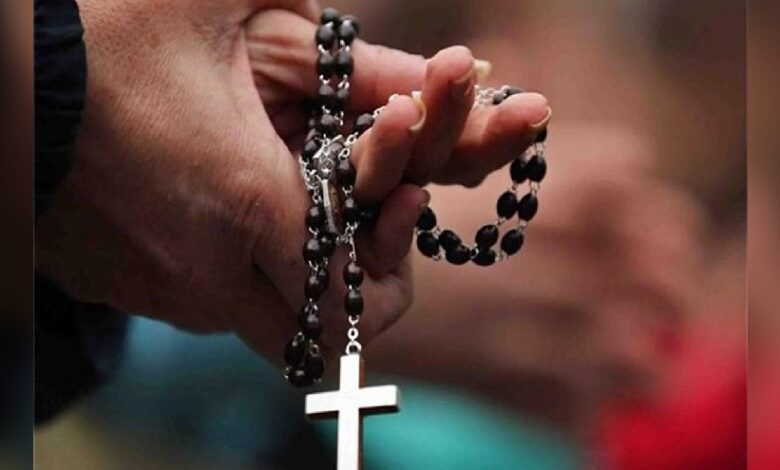
The life story of “Patras Paul” tells the narrative of transformation from an imam to a disciple of Jesus Christ.
“Patras Paul,” known as “Peter Paul,” was a Muslim imam who converted to Christianity. He was born in 1968 in a poor neighborhood in Pakistan into a devout and committed Sunni Muslim family. In 2000, at the age of 32, he became a Quranic reciter and was simultaneously appointed as the imam of a mosque. He traveled to various cities in Pakistan to preach Islam, but in 2003, he began to doubt his beliefs.
Peter, who has now become a disciple of Jesus Christ, lives in a hidden location in Pakistan due to the severe hardships and persecution he has endured. Recently meeting with Stephen George, a correspondent for Asia News, he shares his eventful life story.
He tells Stephen about his life: “It was the week of Eid al-Adha, and I was reading the story of Abraham and Ishmael’s sacrifice. The Quran says that Abraham closed his eyes and cut the throat of Ishmael, but when he opened his eyes, a sacrificial lamb had been offered instead. A question formed in my mind: Where did this lamb come from? This lamb was greater than Ishmael, who sacrificed his life for it. The search for an answer led me to the Gospel, a book that one of my friends had given me. There I encountered the words of John: ‘For God so loved the world that he gave his one and only Son, that whoever believes in him shall not perish but have eternal life’ (John 3:16) and ‘Look, the Lamb of God, who takes away the sin of the world’ (John 1:29). In secret, I accepted Jesus as my savior and eagerly began reading the Holy Bible. From that point on, I performed my prayers only in the name of Jesus.”
As his faith in Jesus Christ strengthened in 2005, he continued: “I was an imam in a mosque in Kashmir. In my heart, I was following two different faiths, and I asked God to show me the right path. One night in a dream, I heard a voice saying: ‘I am the way, the truth.’ Early the next morning, when I went to the mosque to call the adhan, one of my students noticed that I was saying something different instead of the adhan. He accused me of blasphemy, and along with others, they attacked me. They beat me with fists, kicks, and sticks, and ultimately threw me in prison. I spent a year in prison.
In prison, I experienced a miracle. I felt an inner strength, and my faith in Christ became even more steadfast. On my first day in prison, a stranger gave me clean clothes and supported me. Despite all the dangers, Jesus was always with me.”
Patras spoke about his wife’s appeal to a judge and how she managed to prove his innocence and secure his release. However, after his release from prison, life became much harder for him and his family. He said about this: “We were forced to leave our village because our family, friends, and relatives became our enemies. On a cold winter night, my wife, six children, and I were left homeless on the street without adequate clothing. But our faith in Jesus kept us steadfast.
We now live in a small house on the outskirts of the city and survive through the help of other Christians. However, my greatest fear is for my three daughters, who may become victims of forced conversion or persecution. My only wish is that they remain steadfast in their faith in Jesus and convey his message to others.”
In his remarks, he spoke of other Muslim families who had secretly converted to Christianity but could not openly reveal their faith. Although he was attacked again in 2020 by Islamic extremists for having a Bible and a Christian prayer book in his bag, he stated that he loves Jesus and believes that salvation is only possible through Jesus Christ.
Now Peter intends to change his identity document against Pakistani law, seeking to register his Christian identity and ensure security and freedom for himself and his family.
Joseph Jansen, a minority rights activist, also speaks about this Muslim-majority country: “Pakistan’s Constitution guarantees freedom of religion, but in practice, religious conversion for Muslims is impossible. Official policies and unwritten laws put apostates at risk of violence, threats, and even murder.”