Iran News

1591 Days in Prison; Calls for Release of Environmental Activists in Iran Continue
Nine former political prisoners issued an open letter on Sunday, June 5, criticizing the Islamic Republic’s treatment of imprisoned environmental activists in Iran.

These political prisoners, who were previously cellmates with Sepideh Kashani and Niloofar Bayani, wrote in their letter: “Rulers who want to sever every connection between people and each other and with their environment, and silence the truth, are imprisoning individuals who are attempting to save nature and preserve its vitality and survival with the weapons of knowledge and awareness.”

The letter was written simultaneously with World Environment Day on June 5, and was published by BBC Persian. The signatories of the letter are Kylie Moore Gilbert, Nazanin Zaghari, Ares Amiri, Athena Daemi, Parisa Rafiei, Nazi Askouei, Shokofeh Yadollahi, Negin Ghadamyan, and Sepideh Farhan.

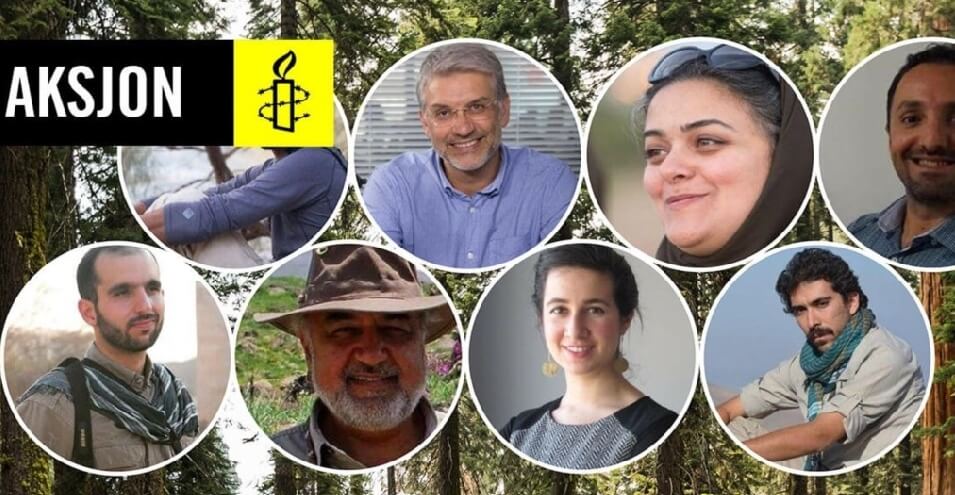
Eight environmental activists were arrested in Iran in February 2018, with seven of them still serving their prison sentences.

During this period, the United States, the United Nations, and human rights defenders have repeatedly called for the release of these individuals and described their prison sentences as “unjust.”

Meanwhile, Inger Andersen, Executive Director of the United Nations Environment Programme, also called for the release of Iranian environmental activists from prison. She wrote on her Twitter in Persian: “We have only one Earth and no one should be prosecuted for protecting it.”

Murad Tahbaz, Niloofar Bayani, Houman Jokar, Taher Ghadiryan, Amirhossein Khaleghi, Sepideh Kashani, Sam Rajabi, and Abdolreza Koohpayeh, eight environmental activists, were arrested in February 2018 by the Islamic Revolutionary Guard Corps Intelligence Organization.

These individuals were held in solitary confinement for several months without access to a lawyer and denied visits from their families, and were ultimately sentenced to a total of 58 years in prison.

The sentence was issued by Branch 15 of the Tehran Revolutionary Court by Judge Abolqasem Salavati. The charges against these individuals were “espionage” and “gathering and conspiracy with the intent to act against the country’s security.” Environmental activists have repeatedly denied these charges.

Issa Kalantari, the then-head of Iran’s Environmental Protection Organization, also stated that there was no evidence or documents supporting the “espionage” charges against these individuals.

During the more than four years since the arrest of these individuals, multiple accounts of physical and psychological torture of these environmental activists have been published. Including Niloofar Bayani, who in February 2020 revealed in letters to Islamic Republic officials about “the most severe psychological and mental torture, threats of physical torture, and sexual threats” during her detention.

Abdolreza Koohpayeh, one of these environmental activists who had been sentenced to four years in prison, was released in 2020 based on a circular on “the release of political prisoners with sentences under five years.”

Seven other activists continue to serve their sentences in prison, and despite multiple calls for their release, judicial authorities have not agreed to their freedom.

Kavous Seyed-Emami was also one of these environmental activists who was arrested simultaneously with these individuals in February 2018, but two weeks later it was announced that he had committed “suicide” in prison.

Kavous Seyed-Emami’s family rejected this claim and considered his death in prison “suspicious.”

However, to date, no clear and independent investigation has been conducted into the death of this environmental activist in prison.


Source: Voice of America

Related Articles

Back to top button