Islamic Revolutionary Guard Corps: Transition from Islamic Fundamentalism to ‘Gangsterism’
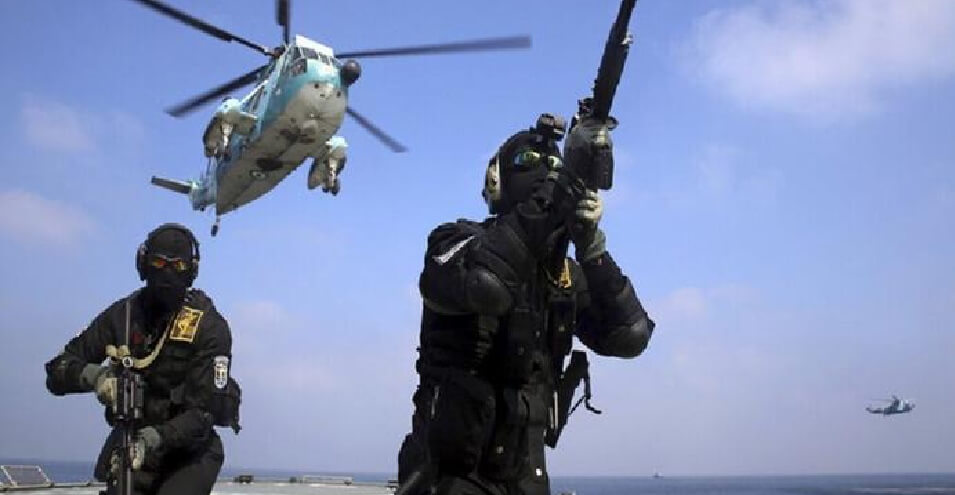
The Islamic Revolutionary Guard Corps (IRGC) has turned 43 years old. This most controversial official military force in the Middle East region—what history has it gone through, and to what extent have its actions served the national interests of Iran? An analysis by political analyst Ali Afshari:
The Islamic Revolutionary Guard Corps of the Islamic Revolution has passed its forty-third anniversary. On the 22nd of Ordibehesht 1358 (April 12, 1979), a new revolutionary institution was formally established under the name “Islamic Revolutionary Guard Corps of Iran.” The idea to establish the IRGC was proposed by the provisional government and, with the approval of the Revolutionary Council, was initially defined under the supervision of the provisional government and within Ibrahim Yazdi’s portfolio (Deputy for Revolutionary Affairs). However, shortly thereafter, it came under the oversight of the Revolutionary Council and its organizational connection with the provisional government was severed. According to some claims, with Ayatollah Khomeini’s approval, the IRGC became a subsidiary of the Revolutionary Council, and the word “Iran” was also removed from the provisional government’s proposed name for it.
Regarding how the IRGC was formed, there is still no comprehensive and documented account. The differences in narratives are considerable. However, it can be said with near certainty that its structure took shape in two phases. In the first phase, the IRGC was formed with initial leadership based on the provisional government’s view in the month of Esfand 1357. The initial leadership was composed of members of the Liberation Movement, members of Islamic associations of students in America, and some forces referred to as the “Imam’s Line,” proposed by Ayatollah Seyyed Mohammad Hossein Beheshti. Hojjat al-Islam Hassan Lahuti was also selected as Ayatollah Khomeini’s representative. The interesting point is that the IRGC, at its inception, did not hold the same importance as the “Committees of the Islamic Revolution of Iran” in the eyes of the clerical members of the Revolutionary Council. Lahuti, who at that time had close relations with Seyyed Ahmad Khomeini and Ayatollah Khomeini, was to be the “representative of the Imam” in the committees, but this was canceled due to the strong intervention and opposition of Ayatollah Morteza Motahhari, and Ayatollah Mohammad Reza Mahdavi Kani replaced him.
Despite Ayatollah Khomeini’s proclamation of the order to establish the IRGC, revolutionary armed groups with an inclination toward Islamic fundamentalism were active in Tehran and were not willing to obey or coordinate with the IRGC. Their parallel activities had created problems. According to the claim of Mohsen Rafighdoost, through his negotiations and by threatening to put weapons to the temples of leaders of groups such as the “Guardians of the Islamic Revolution (PASA)” led by Mohammad Montazeri, the “Revolutionary Guard” composed of some members of the “Islamic Nations Party,” and the “Organization of the People’s Mujahideen of the Islamic Revolution,” they reluctantly agreed to join the IRGC. Of course, the Organization of the People’s Mujahideen of the Islamic Revolution continued its parallel and independent military activities.
From this point onward, fundamental changes were made to the IRGC, it departed from the plan envisioned by the Revolutionary Council, and the nucleus of its current structure took shape. Concepts such as “affiliation with Shiite-centered Islamic fundamentalist discourse,” “authoritarian governance,” “perception of ownership of the February 1979 Revolution,” “independence from the institution of the clergy,” “institutionalized connection with the institution of wilayat al-faqih,” “ideological approach,” “inclination toward activities outside Iran’s borders and defense of fundamentalist Islamic movements in the Middle East,” “anti-Americanism,” “irreconcilable enmity with Israel,” “jihadi activity contradictory to modern bureaucracy,” aspiration for the liberation of “Holy Quds,” “opposition to modernity,” “indifference to legalism,” “negative view of the military and claims of superiority over it,” “active presence in politics,” “suppression and security dealings with revolutionary dissenting trends and those outside the Imam’s Line,” and “cultural reaction,” “defense of the oppressed,” and “justice without freedom”—from this point onward became the identity components of the IRGC. Additionally, the “Islamic Republic of Iran Party” began attempts to control the IRGC, which, of course, never achieved complete success. However, the presence of Akbar Hashemi Rafsanjani as the Revolutionary Council’s liaison with the IRGC strengthened the IRGC’s political inclination toward the Imam’s Line faction.
Lahuti, who sought unity among all revolutionary forces’ orientations and gradually drew closer to national-religious forces, encountered problems with the new IRGC leadership and was ultimately sidelined with Ayatollah Khomeini’s approval, and Hojjat al-Islam Fazlollah Mahallati replaced him. Subsequently, during the presidency of Abolhassan Banisadr, disputes formed within the IRGC, which saw its leadership majority, contrary to the delegation of supreme commander authority by Ayatollah Khomeini to Iran’s first president, continue in opposition and confrontation with the presidency. Morteza Rezaei, who received the order of command from Banisadr, was never able to actually assume the management of the IRGC, and effectively the IRGC, aligned with the Islamic Republic Party and the Organization of the People’s Mujahideen of the Islamic Revolution, created disruptions in Banisadr’s programs and command during the war and was instrumental in his removal. Furthermore, the main intelligence apparatus of the Islamic Republic of Iran at that time was “IRGC Intelligence,” which carried out security measures and elimination of all revolutionary groups outside the Imam’s Line, including leftist, socialist, liberal, and nationalist ones. After Banisadr’s impeachment, in coordination with Seyyed Ahmad Khomeini, Mohsen Rezaei became the commander of the IRGC. During this period, purges were carried out within the IRGC. Some individuals and forces supporting Habibollah Payam were sidelined, as were others who did not have complete alignment with Imam’s Line governance.
It should be noted that the IRGC has never been monolithic since its inception and there have always been competitions and internal conflicts in it. Dualism and pluralism in various periods have overshadowed the decision-making processes and life of the IRGC. In fact, the IRGC did not proceed based on a specific plan and program, but rather the path traversed has been the product of competitions, waves of purges, and interference by other power institutions.
The next wave of purges occurred after the illegally imposed resignation of Ayatollah Hossein-Ali Montazeri, who was the deputy leader, and the forces supporting him were either sidelined or removed from command positions.
The next major event was the end of the war, which, due to the submission of false reports and their adventurous approach to continuing the war, angered Ayatollah Khomeini, who ordered that their violations be investigated in a military court. Ayatollah Khomeini’s death prevented both those courts from being held and the plan to merge the military and IRGC from being implemented.
Ali Khamenei’s leadership was a turning point in the life of the IRGC and its expansion in non-military domains. Initially, another wave of purges began with the sidelining or weakening of forces close to the “left faction.” The IRGC had previously been active in the political arena, but during the leadership of Hojjat al-Islam Seyyed Ali Khamenei, the IRGC’s role in the political sphere gradually transformed both quantitatively and qualitatively. Not only did the level of political interventions increase, but their nature also increasingly shifted toward factional and security directions to safeguard Khamenei’s policies and decisions. With the shared view of Khamenei and Hojjat al-Islam Akbar Hashemi Rafsanjani, the IRGC, after the war, extensively entered economic activity, which expanded over time. Furthermore, the Basij, which had not previously had much organizational structure, during Khamenei’s leadership underwent organizational expansion throughout all sectors of society, moving away from voluntary and self-initiated activity and assuming a paramilitary character. Subsequently, in a gradual process, the IRGC extensively became active in cultural, artistic, social, and commercial spheres, such that today, in addition to being the main military, defense, and strategic institution of the system, it is a vast economic, commercial, financial, cultural, and media conglomerate that has considerable control over the pillars of society.
Beyond formal activities, the IRGC is accused of being the largest player in smuggling, money laundering, and black market economy in Iran, which extends beyond goods outside customs supervision to include narcotics and alcoholic beverages. There are no precise statistics on the volume of the IRGC’s assets and the scope of its economic activities. The IRGC’s economic activity is conducted through three institutions: the “Khatam al-Anbiya Reconstruction Headquarters,” the “IRGC Cooperative Foundation,” and the “Basij Cooperative Foundation,” each of which has numerous subsidiaries and operates in virtually all commercial and financial sectors. The IRGC is also active in the stock market and possesses a large volume of real estate and capital assets. According to some assessments, the volume of money in circulation in institutions under full or partial IRGC ownership is around 18 percent of the country’s total liquidity.
There are no precise reports on how the IRGC’s revenues are spent. However, what can be definitively observed based on files existing in the judiciary and at the media level is the high volume of economic corruption and waste of public funds in the IRGC.
This is where the change in the IRGC’s nature over time, especially during the leadership of Ayatollah Khomeini and Khamenei, becomes apparent. Militarism, disregard for the institution of the clergy, and coordination with the person of the Supreme Leader—moving from the status of a devoted servant to a leader of a totalitarian movement and active presence in politics—are long-standing matters in the IRGC. However, the IRGC in the first decade after the revolution, on the whole, had an idealistic and ideological approach, and its active forces were primarily pursuing the implementation of Islamic values within the framework of Shiite-centered Islamic fundamentalist discourse, in which anti-corruption, justice, and assistance to the deprived and oppressed played a prominent role. But engagement in economic activities and implementation of patronage recommended by Khamenei, and the recruitment of forces for regional expansionism combined with the absence of strict oversight and legality, gradually caused the IRGC to distance itself from the ideological approach, become tainted with mafioso relations, and currently become a gangster organization. It is not incorrect to say that the Islamic Revolutionary Guard Corps is one of the world’s largest current gangster organizations with a transnational scope of operations, while simultaneously being the largest military and security formation of a United Nations member state. The how and why of this transformation are beyond the scope of this note, but what gives rise to this attribution is the IRGC’s reliance on militarism, economic power, and the absence of financial discipline and disregard for moral and humanitarian standards in pursuing and imposing its programs.
The inclination to gain political power and supremacy alongside financial capacity are two main motivational factors in the IRGC’s current structure; however, this situation does not mean that all IRGC members are engaged in unhealthy economic activities. Internal diversity in the IRGC, particularly between the body and the formal sector, which includes commanders appointed by Khamenei, is observable.
Ambition and the desire for exclusive seizure of power and control of society manifested themselves after the initial transformations in the IRGC. The rise and consolidation of Mohsen Rezaei’s command in the IRGC was indicative of this inclination, which, of course, created considerable tensions within the IRGC, but Rezaei, through changing personnel and eliminating purges and receiving the green light from Rafsanjani and Seyyed Ahmad Khomeini, was able to advance his plan. Ayatollah Montazeri became aware of this danger from 1982 and openly warned that the IRGC had deviated from its original objectives. From that point, he called for the merger of the IRGC with the military, which met with Ayatollah Khomeini’s approval in the last years of his life, but its implementation was postponed to a time when he was no longer alive. Khamenei did not accept that agreement and, with his approval, the IRGC continued its independent and upper-hand activities in military, security, and defense matters.
This gangster formation, which binds itself to preserving Khamenei’s absolutist and despotic rule and expanding the power of the institution of wilayat al-faqih in the Islamic world, has also caused serious damage to the country’s national interests in foreign policy and strategic matters. The IRGC is one of the main sources of extremism in Iran and the region, an obstacle to lasting peace in the Middle East, and a hindrance to Iran’s normalization in the sphere of international relations. This approach existed in the IRGC from the beginning, wherein it considered itself, on behalf of the Supreme Leader, the guardian of the Iranian people and Islamic countries, and has been in pursuit of the utopia of “reconstructing a unified government in the Islamic world” and the globalization of Islamic-Shiite fundamentalism.
The goal of expanding the IRGC’s organizational and military presence within and outside Iran’s borders and aligning the military-ideological-political activities of like-minded groups in neighboring countries is the promotion of the Islamic Republic’s discourse model and fattening the position of Khamenei’s leadership in the Islamic world. Although perhaps the Quds Force, the IRGC’s extraterritorial arm, does not have the same degree of violation of humanitarian standards, terrorism, violence, and irresponsible and excessive action as ISIS, Al-Qaeda, and hardline Salafists, it is a more organized and capable collective that in a complex and long-term manner expands Islamic-Shiite fundamentalism that, in broader and more persistent dimensions, violates the fundamental rights of human beings and jeopardizes lasting peace. The IRGC’s current successes in the region are unstable and have been achieved at heavy cost to the country and people. Therefore, the realization of Iran’s national interests and the effective removal of threats requires the dissolution of the IRGC or fundamental changes in its behavior, which is tied to structural political transformation in Iran.
Source: DW