US Sanctions 12 Iranian Individuals and Entities Over Suppression of Protests
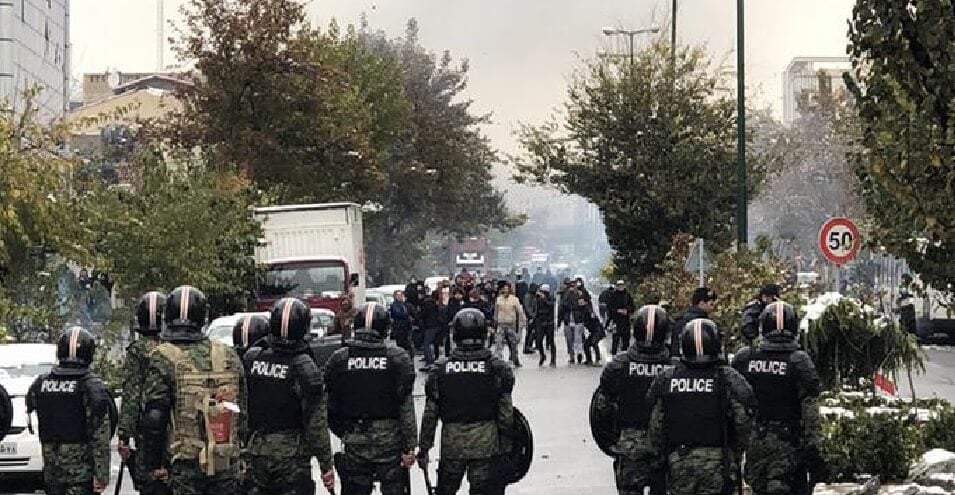
The US Treasury Department has added 8 Iranian individuals and 4 Iranian entities to its sanctions list due to suppression of protesters and human rights violations. The NAJA Special Unit and the Revolutionary Guards Special Forces of the Guardianship have been sanctioned.
The US Treasury Department announced in a statement that it has sanctioned 15 individuals and four entities in Iran, Syria, and Uganda for human rights violations and suppression of protesters.
According to Reuters, 8 Iranian individuals and 4 Iranian entities have been added to the sanctions list of the Office of Foreign Assets Control (OFAC), a subsidiary office of the Treasury Department, due to human rights violations.
The US Treasury Department stated on its website that these sanctions include the NAJA Special Unit and the Special Anti-Terrorism Forces (NOPPO), also known as the Special Forces for Counter-Extremism (Revolutionary Guards Special Forces of the Guardianship), as well as Gholamreza Soleimani, the head of the Basij Organization.
Central Prison of Isfahan and Zahedan Prison have also been added to OFAC’s sanctions list.
According to the report, Reza Mousavi Azemi, commander of the NAJA Special Unit, and Mohsen Ebrahimi, commander of NOPPO, are among the sanctioned individuals.
Leila Vatheghi, the governor of the city of Qods (Ghale Hassan Khan), who ordered gunfire against protesters during the November 2019 protests, has been placed on the US blacklist.
Ali Hamitian and Masoud Safdari from the Revolutionary Guards, Hassan Karami, commander of the Police Special Unit, Saghari Khadadadi, head of Qarchak Prison, and Mohammad Karami, commander of the Southeast Qods Base of the Ground Forces of the Revolutionary Guards, are among other individuals targeted by the new US sanctions.
These individuals and entities have been placed on the US sanctions list based on the Magnitsky and CAATSA laws.
Under the Magnitsky Act, approved by the US Congress in 2012, the US government can impose restrictive measures against foreign violators of human rights in America, even if the victim is not a US citizen or if the human rights violation has not been reported in US territory.
The CAATSA law was approved during Donald Trump’s administration with the decisive vote of the US Congress and Senate against Iran, Russia, and North Korea, in order to counter what it described as dangerous and hostile actions by these countries toward the United States and its allies.
Source: DW