Continued Detention and Uncertainty for Amin Moradi, Imprisoned Poet in Evin

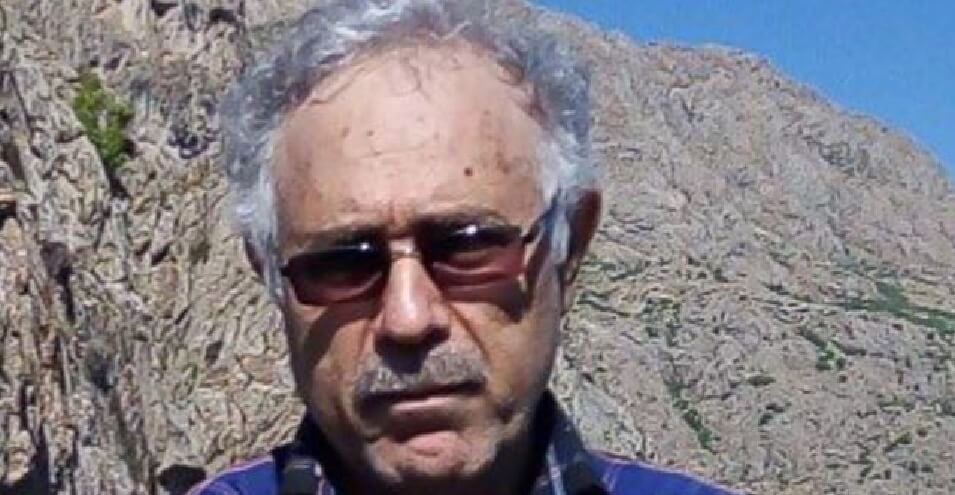
Naser Zarafshan, lawyer for the Iranian Writers’ Association: We should expect stereotypical charges to be brought against Amin Moradi
On Saturday, December 28, 2020, the Iranian Writers’ Association announced that one of its members, Amin Moradi, was arrested at his personal residence and transferred to Evin Prison.
According to this report, officials searched Amin Moradi’s house and confiscated some of his personal belongings, including two laptops, a computer, a mobile phone, and several books.
The Iranian Writers’ Association stated that it was concerned about Moradi’s health condition. Amin Moradi suffers from “lower back disc problems” and “lung disease.” The Iranian Writers’ Association has called for the immediate release of this poet.
Four days after his arrest, no information has been provided by judicial authorities regarding the status of his case or the reason for his detention as a poet and member of the Writers’ Association. Naser Zarafshan, lawyer for the Iranian Writers’ Association, referring to Amin Moradi’s arrest and noting that there is no accurate information about the status of his case to date, told the Iran Human Rights Campaign: “It is highly likely that Amin Moradi will soon face some stereotypical charges such as gathering with intent to breach national security.”
According to Naser Zarafshan, in such cases, which are referred to as “security cases” in the terminology of judicial authorities, there is no “material element of crime” to warrant a criminal verdict. Therefore, in such cases, judicial authorities based on “personal taste” and at the discretion of the decision-maker impose stereotypical charges against the detained person.
The lawyer for the Iranian Writers’ Association told the Iran Human Rights Campaign: “One of the stereotypical charges that is very common these days is Article 609, based on assembly and conspiracy to undermine the system, which has been brought against another of my clients, Mr. Arash Ganji, another member of the Writers’ Association.”
The hearing of Arash Ganji’s case, translator and secretary of the Board of Trustees of the Iranian Writers’ Association, took place on Sunday at Tehran Revolutionary Court in the presence of Naser Zarafshan. According to Mr. Zarafshan, at this session we requested that the judicial officers appear in court to respond to our objections regarding the case documents.
Naser Zarafshan told the Iran Human Rights Campaign: “Some of the titles presented in the indictment were contrary to reality and had no evidence. We had requested that the judicial officers who prepared the case come to court and explain what their evidence is, but the officers were not present at this session, and moreover, Mr. Ganji had cold-related problems and did not come to court as a precaution.”
According to Naser Zarafshan, the charge of “gathering with intent to breach national security” is meaningless for my client because, based on this charge itself, an “assembly” must have taken place. But how can common sense say that he, alone, engaged in assembly?
Arash Ganji, a member of the Iranian Writers’ Association, was arrested at his personal residence on December 21, 2019, and eventually transferred to Evin Prison. Mr. Ganji was released from Evin Prison on January 19, 2020, after posting bail of 450 million tomans pending the completion of legal proceedings. The first court hearing on Mr. Ganji’s charges was held on Sunday, June 15, 2020, and after the judge’s order to increase the amount of bail and failure to provide this amount, Arash Ganji was detained and transferred to Evin Prison. Arash Ganji was ultimately released from Evin Prison on June 21, 2020, after posting bail.
In recent months, pressure on members of the Iranian Writers’ Association from the security and judicial authorities of the Islamic Republic has increased. The Iranian Writers’ Association announced on Saturday, September 26, that execution of prison sentences for three of its members has been carried out. Reza Khandan (Mahabadi), Baktash Abtin, and Keyvan Bazhjan are three members of the Writers’ Association who were previously sentenced to six years in prison each by Branch 28 of the Tehran Islamic Revolutionary Court under Judge Moghisseh.
The charges against the writers in court included “publishing the internal newsletter of the Writers’ Association,” “preparing a research book about the fifty-year history of the Writers’ Association,” and “visiting the graves of victims of the chain murders of Jafar Pouyandeh and Mohammad Mokhtari and participating in the annual ceremony for Ahmad Shamlou.”
Last year, PEN International expressed its “deep concern” in a statement regarding the sentences issued against Reza Khandan (Mahabadi), Baktash Abtin, and Keyvan Bazhjan. More than 900 writers, translators, and poets also signed a letter to executive and judicial authorities, calling the sentences issued for the three members of the Writers’ Association “unjust” and “a serious blow to the fundamental rights of each individual of the Iranian people.”
Naser Zarafshan, lawyer for the Iranian Writers’ Association, previously told the Iran Human Rights Campaign, referring to the treatment of writers and poets in other Iranian cities who do not necessarily have professional or institutional activities, that “writers and intellectuals have always written against censorship and defended freedom of speech, and it has been those in power who have always practiced censorship and hastened to confront writers, but the severity of this in the present era is unprecedented.”
The Iranian Writers’ Association is one of the most important independent and established institutions in Iran that, despite all pressures over the years, has continued its activities.
Source: Iran Human Rights Campaign