EU Court of Justice: Hungary’s refugee accommodation is a prison
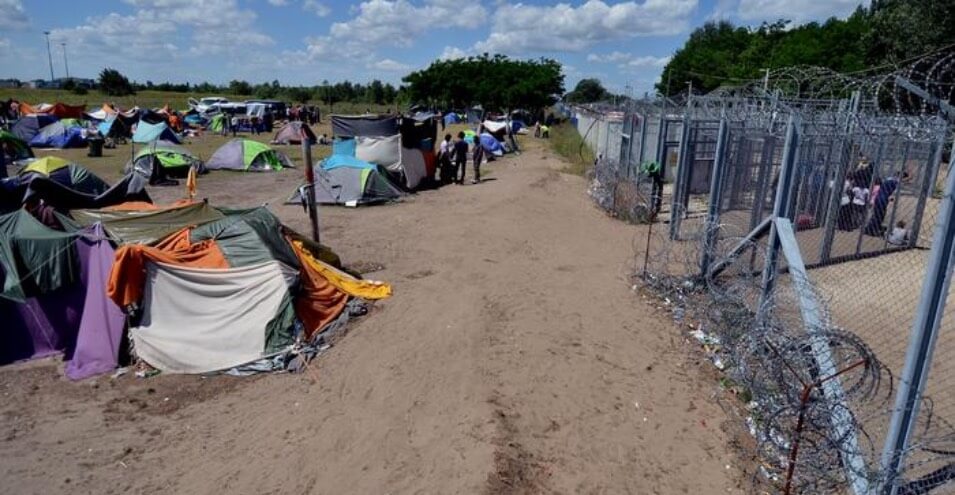
The highest judicial authority of the European Union condemned the conditions of refugee accommodation in Hungary in a ruling and called it a prison. The main criticism is directed at housing conditions at the Serbia border, where three Iranians and one Afghan are also being held.
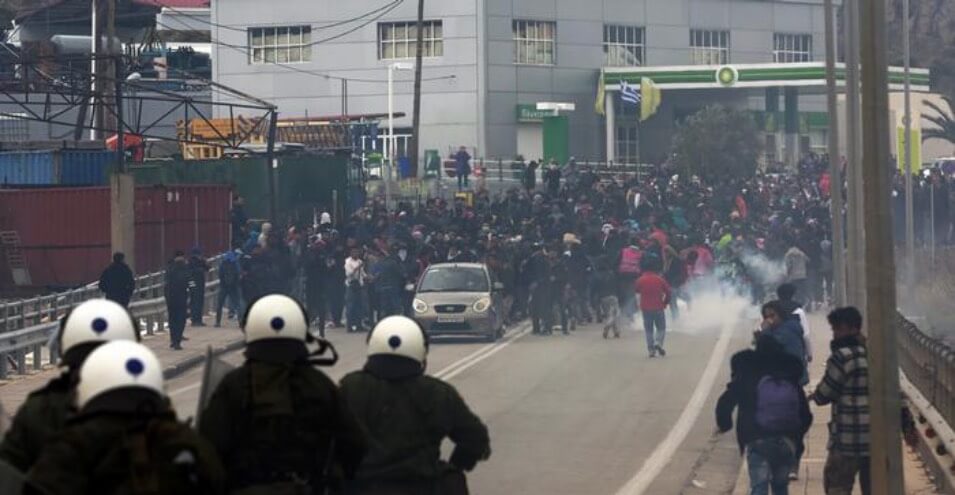
The Hungarian government has long faced severe criticism from human rights organizations and advocates for the rights of refugees and asylum seekers over the inhumane conditions at refugee detention centers located at the Serbia border.
The Court of Justice of the European Union (EuGH) based in Luxembourg ruled on Thursday, May 25 (May 14 on the Farsi calendar), that the conditions for holding refugees at the Röszke camp resemble a prison and accused Hungarian Prime Minister Viktor Orbán’s government of violating EU laws.
This camp is a temporary residential center consisting of several containers and surrounded by high fences and barbed wire. The space in this accommodation is very limited relative to the number of people being held there, and refugees do not have adequate freedom of movement.
While the EU Court of Justice ruling did not specifically mention this case, the background to the judicial review of the camp’s conditions, which have been compared to a prison, relates to the situation of four asylum seekers from Iran and Afghanistan.
Three Iranians and one Afghan in border accommodation
Three Iranian nationals and one Afghan national came to Hungary from Turkey through Bulgaria and Serbia months ago and applied for asylum in the country.
Hungarian authorities rejected these individuals’ asylum requests, arguing that they had entered the country from Serbia, which is not an EU member state. They claim that the refugees had not faced serious persecution or harassment in Serbia and therefore their entry into Hungary and asylum applications were not acceptable.
These officials also believe that the refugees in countries they passed through after leaving their home countries and before reaching Hungary enjoyed an acceptable level of security.
Hungary’s judiciary rejected the refugees’ complaints without review and, after Serbia refused to take them back, announced that it would return these four refugees to Iran and Afghanistan.
Viktor Orbán’s right-wing government adopted a harsh policy against migrants and refugees years ago and continues efforts to keep its borders closed to them by all means.
On one hand, Hungary has intensified control of its shared border with Serbia as the main route for migrant and refugee entry, and on the other hand, those who have previously crossed the border in some way are largely confined in two temporary accommodation sites near the Serbia border.
According to German news agency reports, the four Iranian and Afghan refugees held at the Röszke camp are only allowed to leave their accommodation in exceptional cases and under police escort. Visits with them are also only permitted in a container designated for that purpose with prior authorization.
Going to Serbia is the only way to leave the camp
The Hungarian government always claims that refugees are “voluntarily” present in the border camp, since they can leave their accommodation for Serbia whenever they wish.
The reality is that most refugees endure all difficulties to reach EU territory. Moreover, refugees who leave Hungary for Serbia automatically lose their “asylum applicant” status in that country.
Judges at the Court of Justice of the European Union emphasized in their Thursday ruling that holding refugees in border camps amounts to deprivation of their liberty.
They state that asylum seekers can only be detained if judicial authorities have previously issued a ruling in this regard and announced the reasons for detention.
Regarding Hungary’s temporary camps, another case is pending at the Court of Justice of the European Union. The plaintiff in this case is the European Commission, which assesses the refugee accommodation facilities in Hungary as violating EU laws and the obligations of member states.
Source: DW