The Role of the Islamic Republic in Pushing Half of Lebanon’s Population Below the Poverty Line
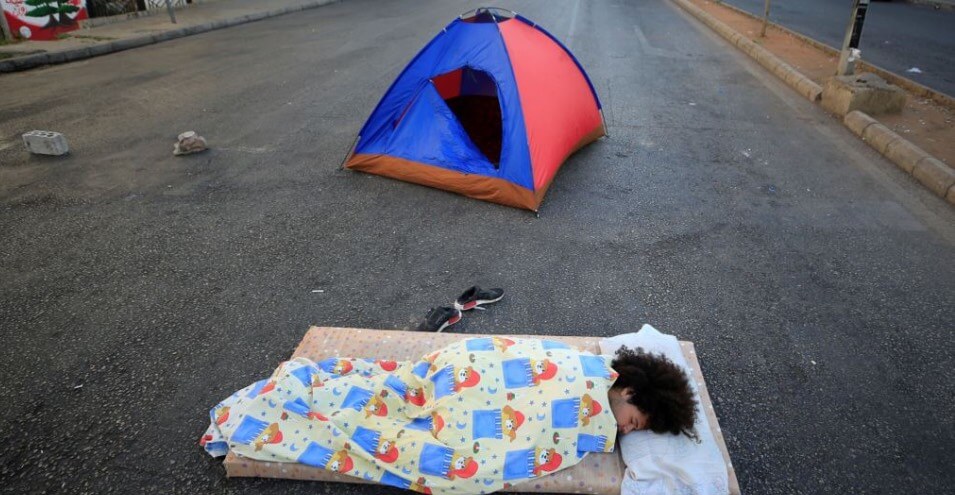
Protesters took to the streets of Beirut again this Saturday to protest the collapse of their country’s economy, and once again supporters of Hezbollah, a group backed by the Islamic Republic of Iran, clashed violently with them.
As Lebanon’s economic downturn continues, according to official government estimates, more than 35 percent of the country’s people are now unemployed, and 45 percent of the population has been pushed below the poverty line.
Lebanon is currently also one of the most indebted countries in the world. According to France’s news agency report last March, for the first time it was unable to repay its foreign debts.
The prices of almost all goods in this country have now risen to such levels that most citizens can no longer afford to buy many items. The country’s currency has also lost 83 percent of its value in recent months.
But why has this country reached such a dire situation?
Lebanon has always needed foreign investment to manage its economy, but as Hezbollah has gained increasing power in the country’s politics—a group that seeks a major war with the country’s southern neighbor, Israel—investors have packed their bags and left Lebanon.
Hezbollah’s recent military interventions in various countries worldwide, such as Syria, Iraq, and Yemen, have further compounded the problem and prevented any new foreign investment in Lebanon.
On the other hand, the Lebanese government, which previously received financial aid from the Arab countries of the Persian Gulf, has moved further toward the Iranian front and deprived its own people of this aid as well.
Anwar Gargash, the foreign minister of the UAE, said last week, on June 25th, to the CNBC network that part of Lebanon’s financial crisis is the cost of tensions it has had with Arab countries on the Persian Gulf in recent years.
The Emirati official emphasized that “what we have seen so far is an increase in Lebanon’s tensions with Arab governments and Arab countries in the Persian Gulf region, and Lebanon is now paying the price of the policy it has pursued.”
Source: Radio Farda