World Events

The Role of the Islamic Republic in Pushing Half of Lebanon’s Population Below the Poverty Line
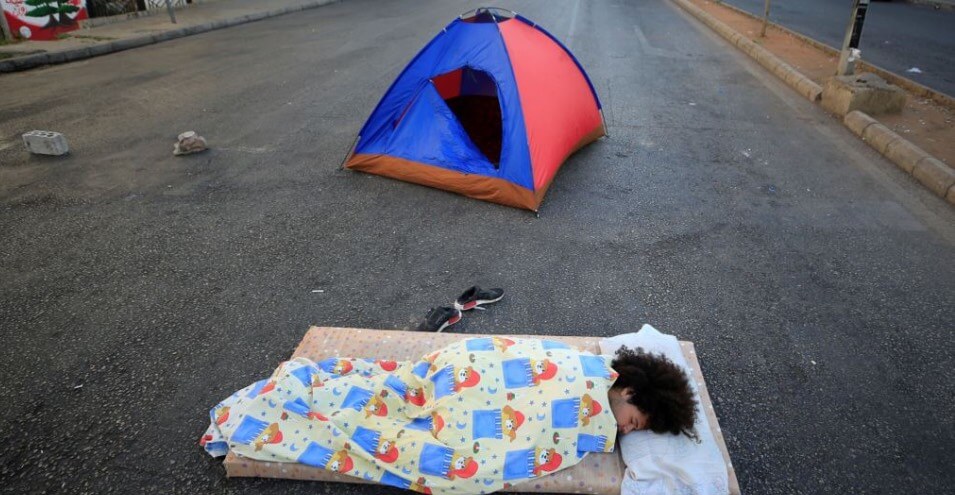
Protesters took to the streets of Beirut again this Saturday to protest the collapse of their country’s economy, and once again supporters of Hezbollah, a group backed by the Islamic Republic of Iran, clashed violently with them.

As Lebanon’s economic downturn continues, according to official government estimates, more than 35 percent of the country’s people are now unemployed, and 45 percent of the population has been pushed below the poverty line.

Lebanon is currently also one of the most indebted countries in the world. According to France’s news agency report last March, for the first time it was unable to repay its foreign debts.

The prices of almost all goods in this country have now risen to such levels that most citizens can no longer afford to buy many items. The country’s currency has also lost 83 percent of its value in recent months.

But why has this country reached such a dire situation?

Lebanon has always needed foreign investment to manage its economy, but as Hezbollah has gained increasing power in the country’s politics—a group that seeks a major war with the country’s southern neighbor, Israel—investors have packed their bags and left Lebanon.

Hezbollah’s recent military interventions in various countries worldwide, such as Syria, Iraq, and Yemen, have further compounded the problem and prevented any new foreign investment in Lebanon.

On the other hand, the Lebanese government, which previously received financial aid from the Arab countries of the Persian Gulf, has moved further toward the Iranian front and deprived its own people of this aid as well.

Anwar Gargash, the foreign minister of the UAE, said last week, on June 25th, to the CNBC network that part of Lebanon’s financial crisis is the cost of tensions it has had with Arab countries on the Persian Gulf in recent years.

The Emirati official emphasized that “what we have seen so far is an increase in Lebanon’s tensions with Arab governments and Arab countries in the Persian Gulf region, and Lebanon is now paying the price of the policy it has pursued.”

With various doors closed, it is now clear to all parties in Lebanon that the only way to save the country from complete economic collapse is to borrow billions of dollars from the International Monetary Fund.

The International Monetary Fund is willing to lend to Lebanon, but for this, it is demanding certain reforms that Hezbollah strongly opposes.

The reforms sought by the International Monetary Fund relate to transparency and fighting financial corruption, and since many of these corruptions occur within circles connected to Hezbollah, this group opposes any oversight of its financial networks.

Naim Qassem, deputy secretary-general of Hezbollah in Lebanon, said on February 25th (the sixth of Esfand) in a statement that “we will not submit to imperialist tools, meaning we will not surrender to the International Monetary Fund so it can come and take control of crisis management.”

Not borrowing from the International Monetary Fund means that the Lebanese government will be forced to collect higher taxes from citizens and further reduce the country’s public budget, which will add fuel to the fire of public discontent in the country.

However, any discontent with the economic situation in Lebanon is met with severe suppression by Hezbollah, and they have repeatedly set fire to the tents of protester encampments.

Hezbollah has also labeled all protesters as “agents of imperialist powers” and describes any discussion of the economic crisis as “an Israeli conspiracy.”

The Hezbollah group tells protesters that the country is preparing for a major war with Israel and the “destruction” of that country, and they should not complain about poverty in such a situation.

At every protest gathering, Hezbollah supporters, who also have the backing of the government and parliament, have always appeared in the frontline and shouted: “Shiite, Shiite.”

Violence, however, is not Hezbollah’s only tool to silence protests, and this group has also launched a propaganda campaign that attributes the root of all economic problems to American sanctions.

But the fact is that except for sanctions imposed by the counter-terrorism branch of the U.S. Treasury Department against several institutions and individuals related to Hezbollah, no other financial restrictions have been imposed by America against the Lebanese government or any other public or private institution in this country.

Nevertheless, Hezbollah’s propaganda campaign within the country has been somewhat successful, and now many people in this country blame America for their economic misery.

Meanwhile, the Islamic Republic of Iran’s agenda for Lebanon continues, and the Islamic Republic government increasingly supports Hezbollah in order to gain greater control over the banking system, markets, political system, and constitution of this country.

The sensitivity of the Islamic Republic and Hezbollah to silencing any voice of criticism and those seeking reform or accountability has increased because any transparency could expose the infrastructure of the corruption network in Beirut’s ruling elite and the framework of Hezbollah’s power.

At the same time, protests in Lebanon have had a negative impact on Iran’s other ally in the region, Syria. Syria’s economy, due to Western sanctions, is financially dependent on Lebanon, and Damascus needs this banking relationship to continue doing business and trade.

According to news agencies, the financial crisis in Lebanon has severely damaged the economy of its neighboring country, Syria, and has also strained vital sources of dollar supply for Syria.

Despite Hezbollah’s threats, there is no sign of an end to people’s protests against the economic situation in Lebanon. However, in the meantime, signs of rifts within the ranks of Hezbollah in Lebanon have emerged, meaning that some Hezbollah members are no longer willing to suppress their country’s starving people.


Source: Radio Farda

Related Articles

Back to top button