Nasrin Sotoudeh’s Lawyer Says His Client’s Demands Are Completely ‘Legitimate and Legal’ and the Government Must Meet Them
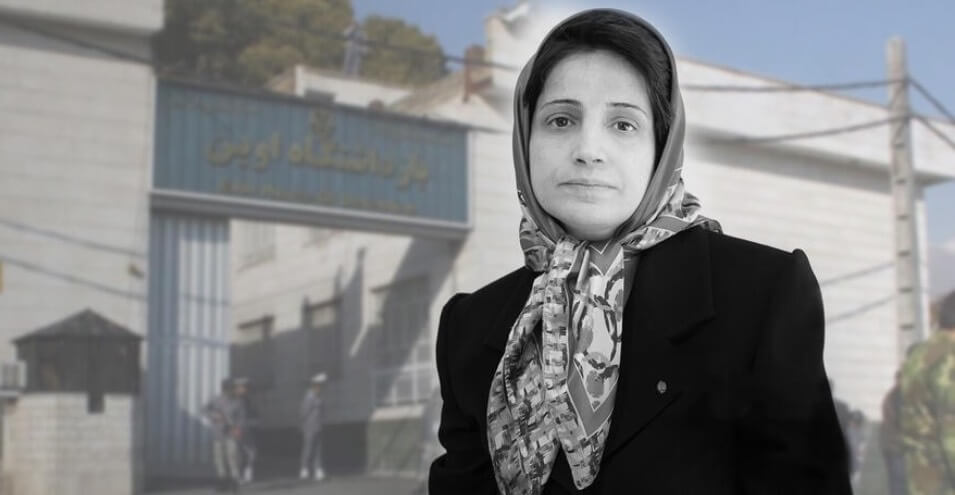
Nasrin Sotoudeh’s lawyer, stating that his client has gone on a hunger strike in protest of the non-observance of fair trial principles in the legal proceedings and the violation of political prisoners’ rights during their imprisonment, described these demands as “legitimate and legal” and said that authorities must be held accountable for them.
Mohammad Moghimi, Ms. Sotoudeh’s lawyer, said on Wednesday, August 22, in an interview with Voice of America regarding the hunger strike of this imprisoned lawyer and civil rights activist: “Ms. Sotoudeh had previously protested to the authorities about the situation of political prisoners, the deteriorating health conditions in Iran’s prisons, and the failure to release political prisoners despite the spread of coronavirus. She had written a letter demanding attention to the situation of these prisoners; however, these requests went unanswered and she ultimately resorted to a hunger strike.”
This legal attorney, referring to the pressure on political prisoners and their families, told Voice of America that this pressure from the Iranian government officials and authorities is increasing day by day, to the extent that recently Ms. Sotoudeh’s bank accounts were frozen without legal justification and in violation of the law. According to Mr. Moghimi, “this is a clear example of the violation of Nasrin Sotoudeh’s citizenship rights.”
Nasrin Sotoudeh’s defense lawyer, expressing concern about the health condition of this legal attorney and the dangerous consequences of hunger strikes, told Voice of America: “Given Ms. Sotoudeh’s physical condition, I am certainly concerned about her health and hope that the authorities will soon accede to her lawful and reasonable demands and meet these requests, which are not personal but for the entire Iranian society. These are legitimate and legal demands, and it is the Islamic Republic authorities who must be held accountable for them.”
Referring to concerns about the consequences of the hunger strike for Nasrin Sotoudeh, he added: “Certainly, a person going on a hunger strike will suffer severe physical and psychological harm. However, on the other hand, we must acknowledge the right of someone who goes on a hunger strike to decide for themselves what they should do.”
Nasrin Sotoudeh, an imprisoned lawyer and civil rights activist, announced on Tuesday, August 21, by releasing a letter, a copy of which was sent to Voice of America by Reza Khandan, Ms. Sotoudeh’s husband, that in protest of the failure to release political prisoners amid the coronavirus crisis and the “oppressive conditions” in Islamic Republic prisons, she has gone on a hunger strike.
This is not the first time Ms. Sotoudeh has gone on a hunger strike. On Monday, March 16, she was among political prisoners who, in response to the prevention of political prisoners’ release during the coronavirus outbreak, issued a statement announcing a hunger strike.
Referring to Ms. Sotoudeh’s March hunger strike, Mr. Moghimi told Voice of America that following Ms. Sotoudeh’s hunger strike, during a period when the judiciary temporarily suspended the execution of sentences due to the coronavirus spread under public pressure, and the Prison Organization released or furloughed a group of political and non-political prisoners. However, according to Mr. Moghimi, it appears that with the worsening of Iran’s political and economic situation, the prevailing atmosphere is becoming more security-focused and repression of opponents is intensifying.
Ms. Sotoudeh, who has been in detention since June 13, has been charged by Branch 28 of the Islamic Revolutionary Court with charges including assembly and conspiracy against national security, propaganda activity against the system, effective membership in the Human Rights Defenders Center, Legam (campaigns against execution), and the National Council of Peace, appearing without proper Islamic hijab in the investigation branch office, disruption of public order and peace, and publishing false information to disturb public opinion—charges that are very vague, with no specific instances, and what is termed “generic” charges that have a very long history in the Islamic Republic’s judicial system and have been attributed to many government opponents in various cases—totaling a sentence of 38 years imprisonment and enduring 148 lashes, of which, according to Islamic Penal Law, 12 years of this sentence will be carried out for her.
U.S. Secretary of State Mike Pompeo said recently at a press conference: “We have not only demanded of Syria, but also of the Islamic Republic of Iran, that it not only release American citizens, but also all those who have been unjustly imprisoned. This is a humanitarian action, and beyond the fact that these individuals have been illegally imprisoned, in these circumstances, humanitarian principle dictates that they be released from prison.”