Nuclear Waste and a Controversial Misunderstanding
The government spokesperson has rejected Mohammad Yazdi’s interpretation of the “Radioactive Waste Convention.” The head of the Atomic Energy Organization has asked the Guardian Council jurist to correct his statements. Conservative media outlets have called Yazdi’s remarks “nuclear disclosure.”
Ali Rabiei, the government spokesperson, says that remarks made about the Joint Convention on the Safety of Spent Fuel Management and on the Safety of Radioactive Waste Management are inaccurate. Denying the acceptance of burying atomic waste from other countries in Iran, he said: “The nuclear waste convention is protective in nature. It is not the case that approving it means accepting nuclear waste.”
The government spokesperson added that none of the provisions of this convention mentions any obligation for member states to accept waste from other countries. Rabiei expressed hope that parliament would clear up the ambiguity that has arisen.
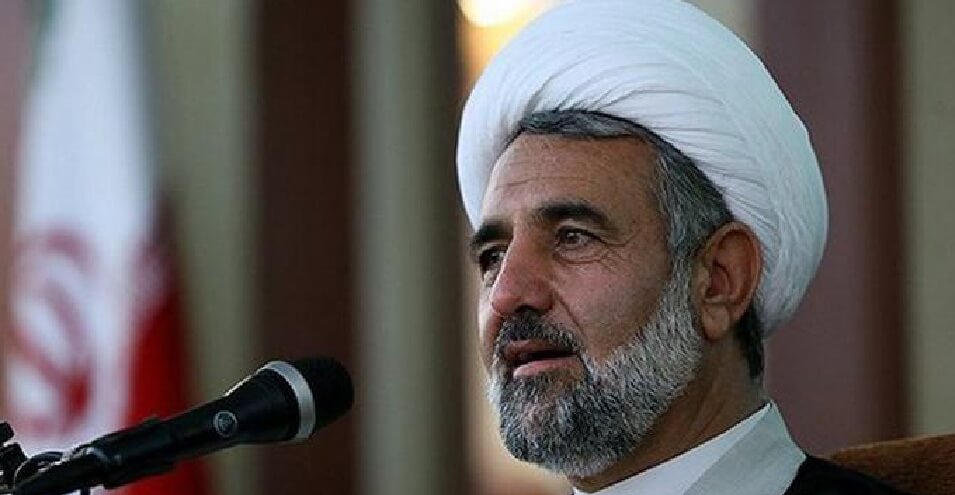
Ayatollah Mohammad Yazdi, a jurist on the Guardian Council, told a gathering of Iran’s prosecutors: “Parliament had approved that spent nuclear fuel could be buried in the country, but I announced that this is against religious law, against the law, and against national interest, and others also accepted this.”
Ali Akbar Salehi, head of the Atomic Energy Organization, rejecting Yazdi’s claim, attributed the issue to misunderstanding and called for Guardian Council members to conduct more careful study on the matter: “We spent two and a half years discussing this bill with experts and representatives of the Islamic Consultative Assembly, members of the National Security Commission, legal experts, and government officials, and the bill was easily approved in parliament, but we don’t know what happened that caused one article of this bill to be interpreted in exactly the opposite way.”
The “Joint Convention on the Safety of Spent Fuel Management and on the Safety of Radioactive Waste Management” was approved by the Iranian parliament on July 15. At the time of approval in parliament, it was emphasized that Iran’s volume of nuclear waste has increased and that it is necessary to have a suitable repository within the framework of international standards for burying and storing nuclear waste. The Guardian Council did not confirm the decision, arguing that it is unclear whether its conditions are mandatory or not.
Salehi recalled that Articles 11 and 12 of the bill’s preamble emphasize that no country can force another to dispose of waste that does not belong to that country. He said that immediately after Yazdi’s remarks, he contacted the Guardian Council spokesman and clarified the matter: “He also promised to correct the issue.”
Salehi called for Mohammad Yazdi to personally correct his statements: “Since this remark was made by him personally, it is necessary that he himself clarify the matter, as it has also had widespread coverage on social media.”
“There is no reason for concern”
Hashmatollah Falahatpisheh, a member of parliament’s National Security and Foreign Policy Commission, also responded to concerns in this regard, saying that the convention has no clause based on political commitment by governments and is necessary to reduce the risk of storing nuclear waste in the country.
Falahatpisheh said after Ayatollah Yazdi’s remarks: “Nuclear club countries must clarify their position and responsibility for managing nuclear waste. The Islamic Republic of Iran is a well-regarded nation regarding the implementation of the International Atomic Energy Agency’s safety regulations, and naturally we must implement the necessary measures in this regard.”
Bahrouz Kamalvandi, spokesman for the Atomic Energy Organization, also said in an interview with the “Tabnak” website that perhaps the Guardian Council read the word “cannot” as “can”: “I immediately after Ayatollah Yazdi’s remarks at the gathering of the country’s chief prosecutors contacted Mr. Kadkhodaee, the Guardian Council spokesman, and explained the matter, saying that it is likely that a misinterpretation has occurred, and he also promised to correct the issue.”
The government spokesperson, the head of the Atomic Energy Organization, and its spokesman have called Mohammad Yazdi’s statements incorrect and a misinterpretation, while some media outlets covered the remarks of this Guardian Council jurist under the title “Ayatollah Yazdi’s Nuclear Disclosure.” Yazdi had also said in a gathering of the country’s prosecutors: “Our executive officials must bear in mind that hegemonic plans are analyzed in the enemy’s think tank and presented to us in the guise of good and humanitarian plans, therefore we must always be vigilant about the backstories of commissions and conventions that propose cooperation with us.”
Bahrouz Bayat, a nuclear affairs expert, told Deutsche Welle that he finds it unlikely that Iran’s goal in joining the relevant convention is to open the door for other countries to transfer nuclear waste. This expert, while emphasizing the very large problem of nuclear waste, said: “Perhaps one could argue in some countries about the cost-effectiveness of nuclear energy. But regarding Iran, it can certainly be said that this country, given its abundant renewable energy resources, absolutely has no need to bear heavy costs for nuclear energy. This energy is neither useful nor cheap for Iran.”
Source: DW