What Does the US State Department Report on Religious Freedom Say About Iran?
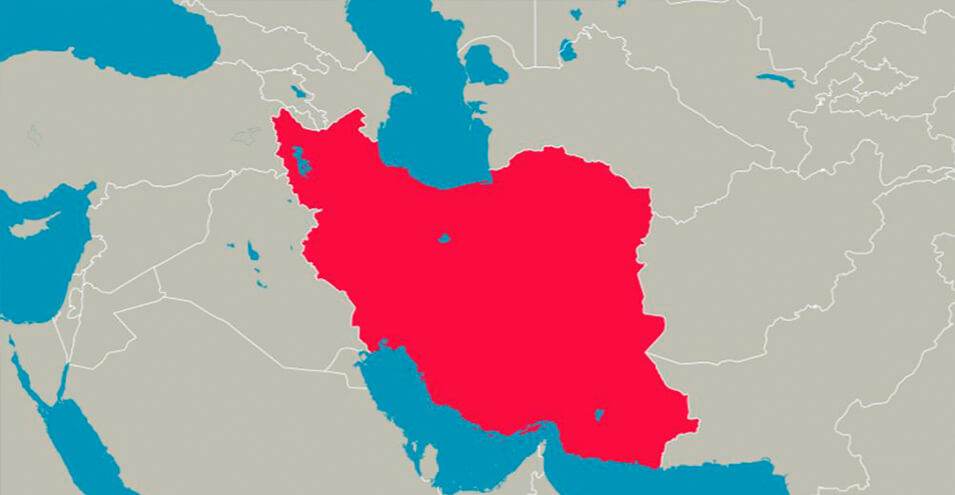
The U.S. State Department released its annual International Religious Freedom Report on Tuesday. The report states that the state of religious freedom in the Islamic Republic of Iran has worsened for both officially recognized religions and religions that the Islamic Republic does not recognize.
Overall Situation
The report says the Iranian government discriminates against its citizens based on their religion and beliefs, and all laws and regulations are based on the principles of Twelver Shia Islam. In Iran’s Penal Code, “moharebeh” (waging war against God) has a vague and unclear definition and is usually used for the government’s political purposes.
Apostasy is not mentioned as a crime in Iran’s Penal Code, but individuals are still tried under the charge of apostasy because the constitution states that Sharia law applies to matters not covered by law. The UN Special Rapporteur on the situation of human rights in Iran and the UN Secretary-General have stated that such crimes are inherently vague and have very broad definitions, leading to arbitrary interpretation and enforcement of these laws against different individuals.
Since the 1979 Revolution in Iran, many individuals from Iran’s religious minorities have been arrested or executed, and many others have fled Iran out of fear of government persecution.
Iran’s Situation in 2017
In Iran, the state of religious freedom has worsened, and particularly Baha’is and those who have converted to Christianity have become targets of government persecution.
In August 2017, Hassan Rouhani, Iran’s President, appointed Shahindokht Molaverdi as his advisor on civil rights, but persecutions have continued.
During last winter’s nationwide protests, the head of the Tehran Revolutionary Court said that detained citizens could be tried under the charge of moharebeh, which carries the death penalty.
Regarding religious reformers, the report states that Shias seeking religious reform have faced long prison sentences and even the possibility of execution.
Christian converts and leaders of house churches have faced sentences of at least ten years in prison for religious activities, and their situation is increasingly worsening.
The report states that in a concerning new development, an elected Zoroastrian member of Yazd City Council had his membership suspended, which led to a national debate about restricting the political rights of religious minorities in Iran.
The report states that while the Rouhani government has indicated it wants to address violations of religious freedoms, this has remained only a promise, and the number of people imprisoned in Iran for their religious beliefs is increasing.
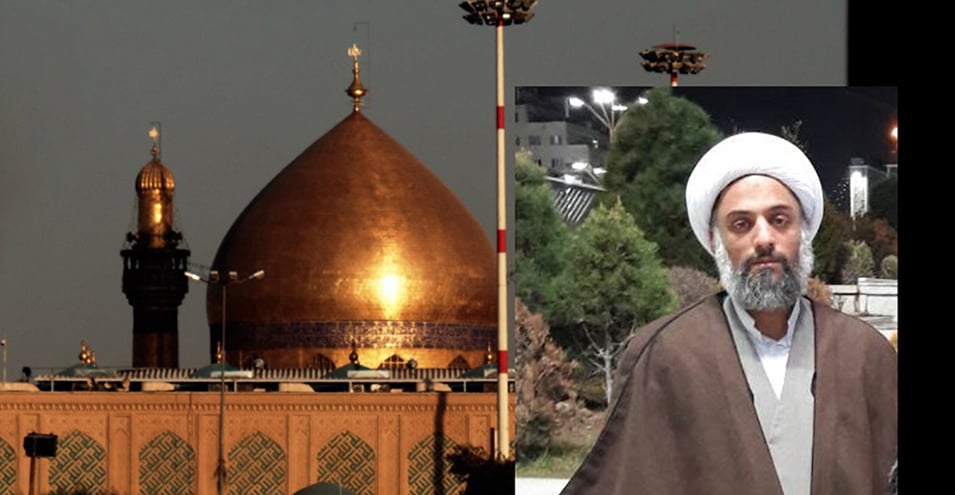
The report recommends that Iran be placed again in 2018 on the list of “Countries of Particular Concern.” The report states that Ayatollah Mohammad Kazem Kharazi Boroujerdi, who was arrested in 2006, was released from prison in January 2017 following physical and psychological torture during his detention, but he has effectively been under house arrest and has been summoned for questioning multiple times. The government has also banned visitors from seeing him.
The report states that Sunni Muslims in Iran are present in underdeveloped areas and face discrimination in employment and political leadership positions. Many Sunni activists have reported very violent behavior by the government because of their religious activities. The report states that at least 140 Sunni prisoners are imprisoned for activities related to religious practices and beliefs. According to human rights groups, since the ISIS attack on Tehran in 2017, the situation of arrested Sunnis has also worsened. Sunnis’ request to build an official mosque in Tehran has been rejected, and they have been restricted to praying in smaller halls called “prayer rooms.”
In September 2017, Mullah Abdolhamid, a prominent Sunni leader, and Ayatollah Khamenei, the leader of the Islamic Republic, exchanged letters in which they addressed discrimination against Sunnis in employment and mosque construction. Khamenei wrote that such discrimination in Islamic Republic institutions is prohibited. However, the U.S. State Department’s annual report states that this claim by the Islamic Republic’s leader is in clear contradiction with the current reality of Sunni communities.
In 2017, dozens of Dervishes were arrested in Iran, and many of them were sentenced to prison, fines, and flogging. Iranian television regularly broadcasts programs that portray Dervishes as demonic. Many administrators of a popular Dervish website are imprisoned under charges such as membership in a group that endangers national security.
In December 2017, as protests escalated, security forces arrested five Gonabadi Dervishes who had gone to visit the administrator of the Sufi website at a hospital.
The Bahai population in Iran is over 300,000, making them the largest non-Muslim religious minority in Iran. However, the government has labeled them a “deviant sect” and considers Baha’is as infidels. As a result, Baha’is face the most severe government persecution among all religious minorities in Iran; the government does not recognize them and has deprived them of their political, economic, cultural, and religious rights. Despite Hassan Rouhani’s promises in 2013 to end religious discrimination, propaganda against Baha’is through official Iranian channels has increased. Since 2014, approximately 26,000 official or semi-official Iranian channels have broadcast media propaganda against Baha’is.
Over the past ten years, more than 1,000 Baha’is have been arbitrarily arrested. In April 2017, a UN working group said that long-term sentences for 24 Baha’is of Iran issued in 2016 were solely because of Baha’i religious beliefs and described it as a “violation of their rights as a religious minority.”
In October, on the 200th anniversary of the birth of the founder of the Bahai faith, Islamic Republic authorities arrested approximately 20 Baha’is and raided the homes of 25 people. By the end of the period mentioned, more than 90 Baha’is were in prison solely because of their religious beliefs.
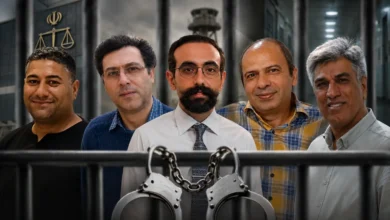
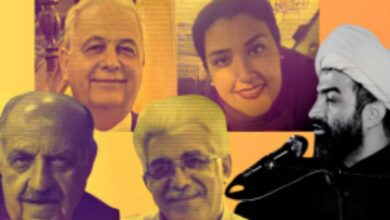
Among imprisoned Baha’is, four were part of the seven prominent leaders of the Baha’i faith who are referred to as the “Friends of Iran” or “Yaran.” Three of these individuals, Mahvash Sabet, Fariba Kamalabadi, and Behrouz Tavakkoli, were released from prison in September, October, and December 2017 after completing their 10-year sentences, sentences that were based on false charges of espionage and propaganda. Four others, Jamal Eddine Khanjani, Afif Naeimi, Saeed Rezaei, and Vahid Tizfahm, remained in prison by the end of the mentioned period.
Two Bahai teachers who had been imprisoned for working at a Bahai educational institution for higher education were released from prison in 2017 after completing 5 years of imprisonment. The Islamic Republic has declared Bahai educational institutions illegal. However, five other Bahai teachers remained in prison by the end of the year, and two other teachers were summoned in November and December 2017 to begin their prison sentences.
In April, July, and October 2017, Islamic Republic authorities closed dozens of Bahai stores because they were closed in accordance with Bahai practices. Authorities temporarily closed some stores, but many stores that were closed in 2016 remained closed through the end of 2017 despite legal requests for them to reopen. Since 2014, over 600 Bahai stores have been closed by authorities. In November 2017, Shahindokht Molaverdi, the Iranian President’s advisor on civil rights, said the government is pursuing this matter legally.
Although government officials say Baha’is in Iran are free to attend university, in practice the government’s policy is to prevent Baha’is from accessing higher education. Since 2013, over 50 Bahai students have been expelled from universities despite having good grades in academic years.
In November 2017, three Bahai students wrote a letter to the government protesting why they are prevented from attending university; each of these Bahai students was sentenced to five years in prison for “membership in the anti-government Bahai sect.”
In September 2016, Farhan Omari, a Bahai citizen, was killed by knife attacks by two brothers outside his home in Yazd. The two later confessed to killing Farhan Omari because they considered him an infidel and believed his murder guaranteed their entry to paradise. In July 2017, the older brother was sentenced to 11 years in prison and two years of exile, and the younger brother was sentenced to 5.5 years in prison for murder.
Under Islamic Republic law, the punishment for killing a Muslim is execution, but killing a Bahai or followers of other religions that the government does not recognize carries much lighter punishments.
Christians in Iran, members of traditional churches, are under strict government surveillance and construction or renovation of their places of worship faces legal restrictions. However, the government particularly suppresses Evangelical Christians and those who have converted to Christianity. Christian preachers and pastors of house churches are usually tried under baseless charges related to national security, apostasy, or illegal house churches. The government also specifically publishes propaganda against them throughout Iran through online and print media. While Iranian authorities have been raiding house churches and arresting hundreds of Christians engaged in worship and church leaders for several decades, they have also increased punishments against them in recent years.
In May 2017, four evangelical Christians, three of whom were citizens of the Republic of Azerbaijan, were each sentenced to 10 years in prison for activities related to evangelical Christianity and house churches.
The following month, Pastor Youssef Nadarkhani, who had previously served a prison sentence for apostasy, was tried along with three others for their activities in a house church. Each of these four Christians was sentenced to 10 years in prison. Nadarkhani also received a 2-year exile sentence.
In July 2017, Victor Bet Tamraz, pastor of the Assyrian Pentecostal Church, was tried along with three other fellow believers and each was sentenced to 10 to 15 years in prison.
In December, two members of “Iran’s Church” were each sentenced to eight years in prison on false security charges. They were initially arrested in 2012 during a security force raid on a Christian worship service.
In August 2017, Maryam Naghash Zargaran, a Christian convert, was released from prison after completing her four-year sentence. However, as she was leaving prison, she was sentenced to pay 50 million tomans in fines for allegedly insulting hospital staff, and it was reported that she also faced a 6-month travel ban following her release.
The U.S. State Department’s religious freedom report states that the Islamic Republic continued in 2017 propaganda against the Jewish community because they are close to Israel, or are perceived to be close to Israel, although this propaganda was not as intense as in previous years. Senior clergy continued to make antisemitic statements in mosques, and Iranian state television also broadcast multiple programs against Jews.
In December 2017, two synagogues of Jews in the city of Shiraz were attacked and sacred texts were vandalized. Discrimination against Iran’s Jewish community of 15,000 to 20,000 has created a threatening atmosphere against them.
In recent years, members of the Zoroastrian community, whose population is estimated between 30,000 to 35,000, have also faced increased pressure and discrimination. Following municipal council elections in May 2017, pressure on Zoroastrians increased, and the membership of a Zoroastrian citizen in Yazd City Council was suspended by order of the Guardian Council and based on remarks by Ayatollah Ahmad Jannati, stating that non-Muslims cannot be candidates in cities where the majority are Muslim. The Iranian Parliament passed a bill in 2017 that specifically confirmed that religious minorities could hold positions, but the Guardian Council rejected it, and the debate continued into 2018.
Although the Iranian government considers followers of the Yarsan religion (Ahl-e Haq) as Shias, it applies widespread discrimination against them in educational, employment matters, and participation in elections. Their population is estimated to be over 1 million.
In the May 2017 elections, of 30 Yarsan candidates competing in the Hashtgerd City Council elections, 28 were barred. A month later, they wrote a letter to Hassan Rouhani asking him to clarify their status under the constitution, but like previous letters, they received no response.
By the end of 2017, Mohammad Ali Taheri, a university professor and founder of a spiritual movement called Erfan Halgheh, remained in prison after 5 years. Dozens of his supporters were also arrested in July and August 2017, and human rights organizations estimate that more than 300 people have been arrested since 2010. Many of them were released after a period of interrogation.
The Islamic Republic has imprisoned a number of lawyers who have defended Baha’is and Christians in courts in recent years, or they have fled the country.
Golrokh Ebrahimi Iraee, a writer and human rights activist who was convicted in 2016 for writing an unpublished story, allegedly insulting sacred values, was briefly released from prison in February 2017 but was quickly re-arrested for failing to return to prison in a timely manner. She remained in Evin Prison by the end of the report period.
In October 2017, a poet and human rights activist named Reza Akbari was sentenced to three years in prison and 40 lashes for allegedly insulting the Twelfth Imam in his poems.
The Islamic Republic government strictly controls freedom of expression on matters related to religious beliefs and extensively censors it.
Throughout 2017, many young people were convicted of insulting sacred values in cyberspace.
In February 2017, courts in Iran convicted Sina Dehghan and Mohammad Nouri of publishing anti-Islamic content on social networks with the death penalty.
In April, three young men were each sentenced to 12 years in prison for their political beliefs and posting religious opinions on Telegram social network.
In June of the same year, Iranian authorities announced that they had reached an agreement with Telegram to block “anti-religious” content.
According to multiple reports, leaders of religious minorities, particularly Baha’is, have been subject to attacks by hackers supporting the government.
Regarding women, Iran’s Penal Code has worsened conditions protecting against violence against women, including honor killings. The diyya (blood money) for killing a Muslim woman is half that of a Muslim man. According to this law, killing a woman by her father or paternal grandfather carries light punishment.
Islamic Republic authorities also continue to strictly enforce women’s dress code; regardless of what beliefs or religion women have, they must be covered from head to toe or face prison and fines.
The U.S. State Department repeatedly condemned violations of human rights and religious freedom in Iran in 2017.
Source: Voice of America