The 4,200 Toman Dollar: From Creating Rent to Importing Dog and Cat Food
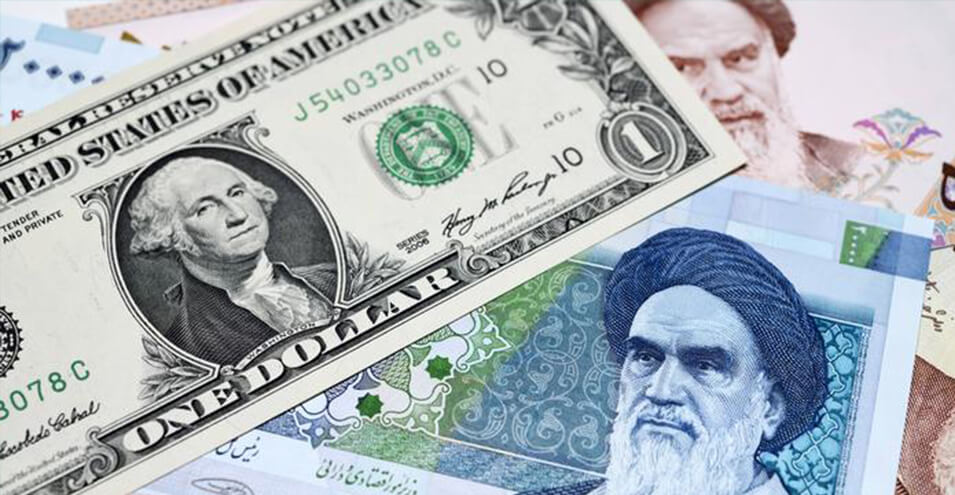
Iran’s chief prosecutor stated that “the enemy is seeking to enter into all-out economic warfare” with the Islamic Republic. According to him, dog and cat food has been imported into the country using the 4,200 toman dollar rate. Rouhani had previously stated that he was not in favor of the 4,200 toman dollar rate.
Mohammad Jafar Montazeri, Iran’s chief prosecutor, announced on Thursday, 11 Esfand (January 31) the intention of what he called the “enemy” to enter into “all-out economic warfare” with the Islamic Republic.
The chief prosecutor of Iran, speaking at a meeting with economic activists in Chabahar Free Zone, simultaneously emphasized: “The judicial system and 350 prosecutors stand alongside the government with complete unity in economic warfare against the enemy and are actively monitoring market regulation, price supervision, and the import and export of goods.”
According to IRNA, Montazeri also stated that “no organization has the right to shut down production units due to bank debts,” and asked officials, particularly governors and county administrators, to “resolve problems” in various meetings with banks and economic actors.
Iran’s chief prosecutor also said: “All goods that were imported to Chabahar before the 27th of Dey of the current year must have their customs problems resolved quickly, and officials should not cause harm and losses to the people.”
One Circular Every 16 Hours
Abdolrahim Kordi, CEO of Chabahar Free Zone, also announced at this meeting that “certain laws, regulations, and multiple circulars have hindered development and increased production.”
He added: “Unfortunately, changes in management and the issuance of circulars, footnotes, laws, and regulations have hindered free zones from reaching their designated goals to the point that in the past year alone, 320 circulars have been issued by customs to free zones, which means one circular has been issued every 16 hours throughout the year.”
The CEO of Chabahar Free Zone continued by saying that “the problems created for manufacturers have caused many of them to shut down, and rice factories have become idle.”
At this meeting, a number of economic activists, including criticism of “customs strictness in clearing goods and cumbersome laws and regulations,” also spoke.
Iran’s economic activists have long warned about the “disruption” of the country’s economy. Masoud Khansari, head of Tehran Chamber of Commerce, on the 25th of Dey last month attributed this disruption more to “internal problems” than to American sanctions against Iran and reported numerous complaints from economic activists about “obstacles to production and business.”
Khansari also, referring to correspondence between Tehran Chamber of Commerce and Iran’s Minister of Industry, warned that the problems of “many industries and manufacturers” had led to “momentum” in workforce adjustments and production units facing the risk of shutdown. At the same time, Asadollah Asgaroladi, one of Iran’s most prominent economic activists, referring to “serious challenges” facing exporters, said that “after 64 years of export activities,” he had stopped his activities in this field two months ago.
Arash Mohbinezad, secretary of Iran’s Homogeneous Industries and Parts Manufacturing Association, had previously noted that “today 400 parts manufacturing units are in a state of complete or partial shutdown” and said: “Since the beginning of this year, 280,000 parts manufacturing workers have been laid off, of which 130,000 have been terminated, meaning they have either been fired or have not been re-employed after their contracts ended; 150,000 are also in a state of suspension.”
One of the problems facing Iranian exporters and importers of raw materials to the country is cited as the 4,200 toman government-rate currency and the problems arising from the stages of order registration in the “NIMA system.” Economic activists emphasize the necessity of “conducting imports without currency transfer.” Khansari had said: “Manufacturing units face many problems in securing their raw and intermediate materials, so if order registration and its lengthy processes in the NIMA system must also be completed, it will create many problems, and therefore it is suggested that raw material imports be conducted without currency transfer.”
Exporters have faced problems in a different way. Asgaroladi had said: “Foreign buyers request from exporters to introduce a bank to them for depositing funds from the sale of Iranian goods so that it is approved, while the NIMA system is not a bank but only the currency exchange structure of the central bank, which has created serious problems for exporters and many of them are forced to shut down their operations.”
Currently, in Iran’s currency market, there are effectively three dollar rates: the government rate of 4,200 toman for essential goods and medicine, the fluctuating rate in the secondary market or the rate set in the “NIMA system,” and finally the dollar rate in the free market, which two days ago reached more than 12,000 toman.
NIMA (Integrated Foreign Exchange Transaction System) determines the exchange rate in the secondary market, and SANA (Currency Surveillance System), in which authorized money changers’ foreign exchange transactions are registered, determines the third exchange rate in Iran’s free market.
Importing “Dog and Cat Food” with Government Currency
The determination of the 4,200 toman government rate for the dollar faced many criticisms from the very beginning. Iran’s chief prosecutor also referred to this issue in another part of his remarks today and said: “Some people imported goods such as dog and cat food with the 4,200 toman dollar rate, which is not needed at all, and this is an injustice to the country.”
Hassan Rouhani, Iran’s president, also on the 25th of Dey last month, while explaining the process of “single-rate” pricing for currency, said that he opposed the 4,200 toman dollar rate, but agreed with it because of the opinion of “all economists.” Stating that “it was a good plan, but what did some speculators do,” he added: “Some registered orders and took money from the central bank, coordinated with a team of foreign speculators, took 100 million dollars, imported 50 million dollars worth of goods, and brought the rest into the market.”
Rouhani then, referring to the fact that “the government was forced to change the plan,” added: “We now give the 4,200 toman exchange rate for essential goods. There is not a week that I do not speak, shout, and cry in the government, and our ministers and deputy ministers cannot match us.”
Although Iran’s president said “there are betrayals that cannot even be described,” he nonetheless emphasized that “no one can say we stand against the enemy and do not give martyrs and wounded.” Rouhani said that the country’s conditions are “not normal and natural” and America has launched “economic warfare” with the help of Israel and “reactionary countries in the region” against Iran.
Despite the emphasis of many experts and economic activists on “mismanagement” and “internal problems,” Rouhani again yesterday, referring to the fact that “we are facing the greatest economic pressure since the revolution,” said: “Today our problems are mainly due to American pressure and its agents, and we should not blame the government or the great Islamic system instead of condemning America.”
Mohammad Jafar Montazeri, Iran’s chief prosecutor, also repeated similar themes in his remarks today and said: “The enemy has tried different ways to strike the Islamic system but has failed with the vigilance of the people and government, and is now seeking to enter into all-out economic warfare, and we must all help each other so that the enemy becomes more frustrated than before.”
The Unclear “Behind the Scenes” of the 4,200 Toman Dollar
The decision to set the government rate of 4,200 toman for the dollar, which became known as the “Jahangiri dollar” because of the announcement of the news by the First Vice President of Iran, was made in late Farvardin of the current year (1397) following severe currency turbulence in the country.
Many critics of setting the government currency rate, such as Mohsen Jalalpour, former head of Iran’s Chamber of Commerce, while emphasizing that “the 4,200 toman dollar does not reach the people and only creates rent for some,” are calling for liberalizing the economy and allowing the market-based economy to naturally determine the exchange rate.
According to the “Economic World” newspaper on the 22nd of Azar, Hassan Rouhani, Eshaq Jahangiri, Mohammad Baqer Nobakht, Mahmoud Vaezi, Vali-Allah Seif, Bijan Zanganeh, Masoud Karbassian, Abdolreza Rahmani Fazli, Hossam-al-Din Eshna, Mojtaba Khosrotaj, Majid Takht-Ravanchi, Morteza Bank, Mohammad Nahavandian, Mahmoud Hejjati, Masoud Nili, Mohammad Shariatmadari, Ahmad Araghchi, and Reza Viseh were participants in an “urgent meeting” of the government’s economic headquarters on the evening of the 20th of Farvardin last. The most important decision of this meeting was to set the 4,200 toman dollar rate for all currency uses and to declare any rate other than that as smuggling.
Hossam-al-Din Eshna, advisor to Iran’s president, claimed at the time that Hassan Rouhani was the only one opposed to the plan. In response to this claim, however, Masoud Nili, Rouhani’s former special assistant, called for the release of the audio file of that meeting and, referring to the “inaccuracy” of most of what had been reported from the said meeting by that time, said: “How good it would have been if the audio file of this meeting, given the importance of the comments and the fact that it is unlikely to have any confidential matters, had been made public. This would have corrected misunderstandings.”
According to the “Economic World” report, Nili’s proposal could have helped “clarify the background” of this decision; an important decision with “heavy consequences” whose “effects” on the currency market, commercial sector, and macroeconomy cannot “be forgotten so soon.” However, Masoud Nili, who was remembered as one of the influential figures supporting free-market economics in Rouhani’s government, resigned from his position, and Iran’s president approved his resignation on the 22nd of Aban last.
Source: DW