Before Islam: When the Arabian Peninsula Was a Jewish Royal Kingdom
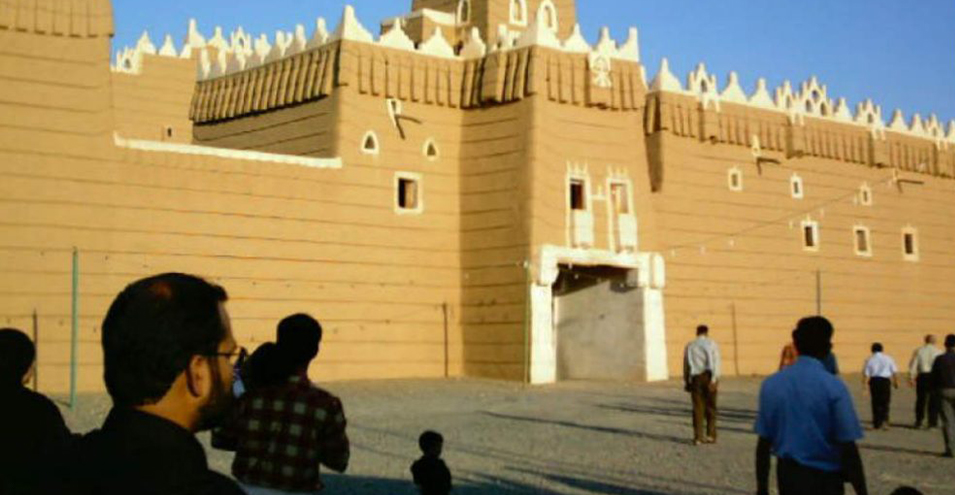
The discovery of the oldest inscriptions found in Saudi Arabia, dating back to 470 AD and revealing their Christian and Jewish context, has been surprising.
The Haaretz newspaper recently reported on the results of a fascinating archaeological study conducted in 2014 by researchers from a Saudi and French team after studying inscriptions discovered in southern Saudi Arabia.
They announced that they had made a discovery that is likely the oldest text in Arabic alphabetic script. Dozens of stone inscriptions found around Birahma, in an area 100 kilometers north of the city of Najran. In this site there are thousands of inscriptions that apparently travelers, voyagers, and officials of that era carved. At least two of these inscriptions date back to ancient times, and experts estimated that the oldest of them dates to 469 or 470 AD.
This remarkable discovery was striking: the oldest known ancient inscriptions using this pre-Islamic Arabic script date back at least half a century after these inscriptions found in Syria.
Nevertheless, attempts were made to keep this news from gaining much attention. Several Arab and French-language media outlets published very brief reports on the news and considered these inscriptions as a “missing link” between Arabic alphabet and an older alphabet that had previously been used in that region. Most of the published reports used archival photos or photos of other ancient inscriptions.
Thoban ibn Malik was Christian
Based on a 100-page report published in December by the French Academy of Inscriptions, named “Thoban (son of) Malik.” The beginning of this inscription shows a Christian cross that is also seen on other pillars discovered from that period.
Saudis had varied reactions to the discovery of these artifacts, as it showed that the alphabet used in writing their holy book, the Quran, traces back to a Christian heritage, and only 150 years before the emergence of Islam.
The surprise will be even greater when we learn that these inscriptions not only reflect the heritage of a Christian community but also trace back to the history of a Jewish royal family in ancient times that once ruled in Arabia and present-day Yemen.
The Quran and Muslim narratives acknowledge the presence of Jewish and Christian communities throughout the peninsula during Muhammad’s time, but the overall picture of pre-Islamic Arabia is vague and confused. The image presented of that region in pre-Islamic times is that it was under the dominance of savage tribes and afflicted by lawlessness, illiteracy, and sectarianism, which Islamic narratives call the “Age of Ignorance.”
Now it appears that the descriptions that have been given of pre-Islamic Arabia so far were not any more accurate than those stories that were fabricated and developed to emphasize the power and role of Muhammad’s enlightening message.
A review of the cultural survival of Christians and Muslims in recent years and evidence found in Saudi Arabia paints a much more complex picture and has forced researchers to uncover the rich and complicated history of this region before the emergence of Islam.
One of the key, but forgotten points of that time is the period of Himyarite rule.
In a recent article titled “What Kind of Judaism Existed in Arabia,” Christian Robin, a French historian who also led the archaeological mission in the Birahma region, writes that most scholars now agree that around 380 AD, the elites of the Himyarite kingdom embraced Judaism.
The Himyarite rulers probably saw Judaism as a unifying force for their newly established kingdom, which was culturally diverse, in order to resist with a unified identity against the creeping dominance of Byzantine Christians, Abyssinians, and Persian Zoroastrians.
In the Sabaean language, God, “Rahman,” “Lord of the heavens and earth,” “Lord of the Jews” is called, and prayers end with “Shalom” and “Amen.”
The Himyarites in the following century expanded their kingdom to central Arabia, the Persian Gulf, and the Hijaz (Mecca and Medina). The inscriptions of Himyarite kings are seen not only in Birahma but also in northern Yemen.
The Saudi and French team says that in the Arabic text discovered in Birahma, the name Thoban ibn Malik appears in eight inscriptions along with Christians, which is likely some kind of memorial to them.
The Haaretz report also states that Christians living near Najran at that time were persecuted by the Himyarites and it is likely they were killed along with Thoban.
The pre-Islamic Arabic alphabet was called Nabataean because the Nabataeans, who were once a powerful nation, used it. But this alphabet stands in stark contrast to the Himyarite inscriptions in the Sabaean language.
French researchers in their report wrote: “The new versions show a distance from Himyar and reconciliation with other Arabs. The Hima inscriptions show a powerful cultural movement of Arabs from the Euphrates to Najran, which manifested itself in the use of a uniform script.”
Gradually, pressures on Himyar intensified and around 500 AD, it ended at the hands of Christian invaders from the Aksumite kingdom in Ethiopia.
In 522, a Jewish Himyarite king named Yusuf Asaar Yathaar revolted against the rulers appointed by the Negus and put the Aksumite king to the sword. He then besieged Najran and massacred part of the Christian population. This sparked anger among Yusuf’s enemies and hastened revenge from Ethiopia.
Saudi and French researchers in Birahma found a writing from Yusuf in which it stated that after the massacre of Najran, he went with 12,000 people to the Arab desert to make the rest of that kingdom his own. After that there is no trace of him, but Christian researchers say that around 525 AD the Ethiopians defeated him.
It is said that the last Jewish king of Arabia was either killed in the conflicts or rode his horse into the Red Sea and killed himself. Throughout the following century, Himyar was a Christian kingdom.
The big question is: what kind of Jews were the Himyarite Jews? Did they observe the Sabbath (the weekly day of rest, Saturday) and keep the rules of Kosher (permissible food)?
Some researchers, including Joseph Halévy, a 19th-century Jewish-French Orientalist, believe that a Jewish kingdom could not have persecuted and killed Christians, and the Himyarites were likely one of the Christian sects of that time.
Robin, a French thinker in his article, writes that the official religion of Himyar was likely “Monotheistic Jews,” which is considered “one of the types of minimalist Judaism” that only observed some of the basic principles of this religion.
The fact is that no documents allow researchers to obtain a clear picture of the religion of the people in the kingdom of the Arabian Peninsula.
It should also be noted that during the rule of Christians and Muslims, Jews continued to have a presence in the Arabian Peninsula. This is evident both in Muhammad’s relations and his conflicts with them, and from the influence Judaism had on Islamic religious practices and prohibitions (daily prayer, circumcision, pilgrimage, charity, prohibition of images, and the prohibition of pork).
Until just a few decades ago, the community of Jews in Yemen, which was the center of the Himyarite people, lived under persecution and torture until 1949-1950 when they were sent to Israel. They had their own particular customs and traditions that differed from Ashkenazi and Sephardic Jews. Apparently there is no doubt that they were really the last generation of Jews from the extinct Himyarite royal family.
Source: Kayhan London