Iranian Parliament Approves: ‘Failure to Report Child Abuse is a Crime’
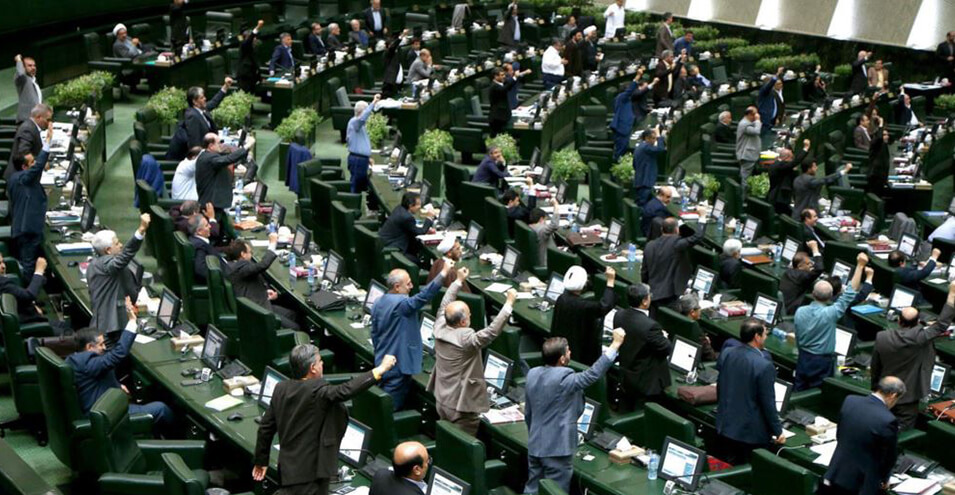
The Iranian Parliament on Sunday, the seventh of Mordad, approved other sections of the bill titled “Protection of Children and Adolescents,” which, if confirmed by the Guardian Council, will make failure to report child abuse a criminal offense.
According to the Iranian Parliament’s resolution, anyone who is aware of child abuse “or severe and imminent danger against a child or adolescent” and fails to report it to “competent authorities and relevant bodies” will be sentenced to a “sixth-degree” punishment.
Imprisonment from six months to two years, a monetary fine from two to eight million tomans, flogging from 31 to 99 lashes, and deprivation of social rights from six to five years are considered “sixth-degree” punishments.
According to this resolution, if the person “cannot access these authorities and bodies or their intervention fails to avert the violation and danger” and if their action “does not pose a similar or more severe risk” to themselves or others, they must prevent child abuse or “its intensification.”
If the person “refuses” to take this action, they will be sentenced to a “sixth-degree” punishment.
According to the Iranian Parliament’s resolution, officials who are responsible for reporting or preventing child abuse, if they fail to perform this duty, will be sentenced to two or all three “sixth-degree” punishments and, in some cases, to temporary suspension from government or public service or deprivation from working in that profession from six months to two years.
The bill titled “Protection of Children and Adolescents” was presented in 51 articles with the aim of preventing “exploitation, mistreatment, and violence” against children and adolescents.
Parliamentary representatives on the second of Mordad and approximately seven years after the bill was introduced, agreed with its general principles.
Massoumeh Ebtekar, Vice President for Women and Family Affairs, in the parliament session to review this bill and without referring to details, said that “statistics on child abuse and exploitation of children are alarming.”
Parliamentary representatives also approved on Sunday that disclosing the identity of those who report child abuse without their consent is a crime.
Also, disclosing the “identity or information and secrets” of an abused child or adolescent or disclosing “details of the crime committed by or against a child or adolescent … in a way that encourages others, teaches the method of committing it, or causes any damage or harm to the child, adolescent, or their family,” is a crime.
In the parliament’s resolution, for “contact sexual harassment” of children by “relatives or by force (coercion),” “fifth-degree” imprisonment punishment and for “other contact sexual harassment,” “sixth-degree” punishment are specified.
If approved by the Guardian Council, “non-contact sexual harassment by relatives” will be subject to “seventh-degree” punishment and “other non-contact sexual harassment” will be subject to “eighth-degree” punishment.
Thus, in the parliament’s resolution, the punishment for sexual abuse of children by “relatives” is more severe than sexual abuse by other individuals.
According to religious rules, close relatives such as father, mother, sister, brother, grandmother, grandfather, uncle, aunt, and aunt on mother’s side are considered “mahram.”
In this resolution, punishments for “sexual exploitation” and establishing contact in cyberspace with children and adolescents for the purpose of “sexual harassment or unlawful sexual contact” have also been approved.
Imprisonment from two to five years and a monetary fine are “fifth-degree” punishment and imprisonment from three to six months, flogging from 11 to 30 lashes, and a monetary fine are “seventh-degree” punishment.
Imprisonment up to three months, a monetary fine, and flogging up to 10 lashes are “eighth-degree” punishments.
Reza Jafari, head of Iran’s Social Emergency Organization, announced that until the end of last year, 27,500 cases of various types of child abuse—sexual, physical, emotional, and neglect—had been reported to the Social Emergency Organization.
Based on statistics announced by Hossein Asadbeigi, the former head of Iran’s Social Emergency Organization, typically 60 percent of child abuse is perpetrated by the father and, in total, 86 percent by parents, and only 1.5 percent of child abuse cases are perpetrated by strangers.
Meanwhile, on Sunday, Saeed Hajian, the governor of Shadegan in Khuzestan Province, announced that a girl’s uncle had been arrested for “assault” and “torture” of her.
According to Mr. Hajian, the girl’s father passed away some time ago, and the child’s mother filed a complaint against her uncle.
Several murder and child sexual abuse cases have made headlines in recent years. These include the sexual abuse and murder cases of Neda, a six-year-old girl in Mashhad, Atena Aslani in Paarsabad, Ahoura, a three-year-old child in Rasht, and Setayesh Qureshi, a six-year-old Afghan girl in Varamin.
Source: Radio Farda