136,000 Out-of-School Children Identified in Iran
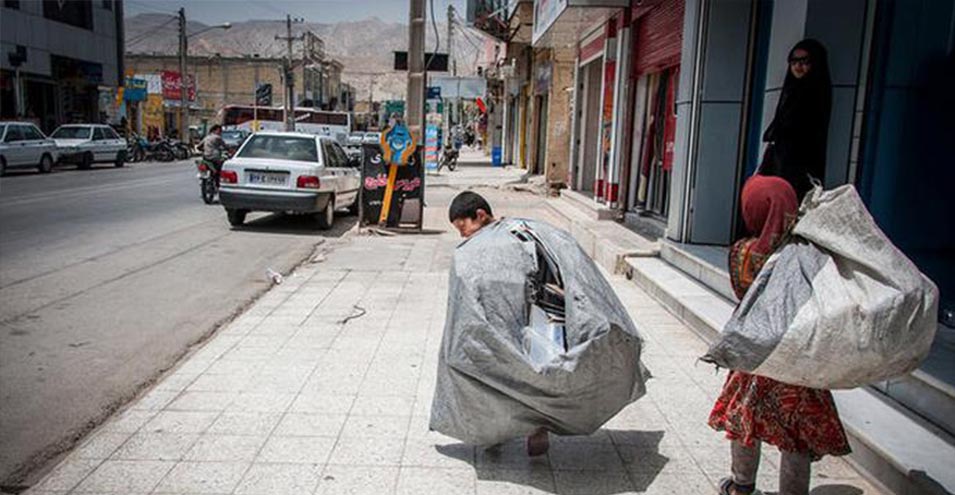
A senior official at Iran’s Ministry of Cooperative Affairs, Labor and Social Welfare says 136,000 out-of-school children have been identified across the country. The share of out-of-school children in urban areas is higher than in rural areas.
The statistics on out-of-school children were announced at a scientific meeting titled “Identifying Out-of-School Children in Iran.” The meeting was held on Tuesday, June 13, 2017, at the building of the “Ministry of Cooperative Affairs, Labor and Social Welfare” in Tehran. In addition to officials from the Ministry of Labor and Cooperative Affairs, a number of child rights activists also participated in the meeting.
According to the Labor News Agency (ILNA), Ahmad Midri, Deputy Minister of Social Welfare at the Ministry of Labor, said at the beginning of the meeting that the creation of urban margins with populations of 10 to 12 million in the country and demographic changes from rural to urban areas have created complications in the country, and it is necessary for organizations to take special measures alongside their work.
The Ministry of Labor official announced the number of out-of-school children as 136,000 people. According to him, the education ministry has provided the national ID codes of these children to the Ministry of Labor.
Midri added that a council called “Blocking the Sources of Illiteracy” began work during Hassan Rouhani’s government to provide a clear picture of why children do not attend school. According to him: “In the summer of 2016, we came to the conclusion of how to identify children. Finally, it became clear that 136,000 children are out of school.”
The Deputy Minister of Social Welfare then explained the difficulties in reaching these children and said that through the subsidy system, we obtained their phone numbers so that we could contact them through welfare, but the phone numbers provided by the subsidy targeting organization were incorrect, and that is why Dr. Rouhani contacted the Minister of Communications to provide us with the phone numbers of these people.
He continued: “The operators initially resisted providing the numbers and declared it contrary to law, but with the cooperation of Dr. Firoozabadi (Acting Deputy of the Ministry of Labor), this became possible.”
Ahmad Midri further emphasized: “The information of 92,393 children and their guardians has been completed and determined that 55,000 of these children are covered by support institutions of the Imam Khomeini Relief Committee and Social Welfare, with approximately 38,000 children covered by Social Welfare, 25,000 covered by the Relief Committee, and 8,000 covered by both institutions.”
Among out-of-school children, 49 percent are boys and 51 percent are girls, and most children are in the age group of 10 to 12 years old. According to Midri, the share of school dropouts in urban areas is higher than among rural children.
The Deputy Minister of Labor explained the reasons for children dropping out of school: “With the help of the Raad al-Ghadir charitable organization, which is equipped with a centralized telephone contact system and call recording, contact with these children began, and the result of these contacts was that 30 percent of these children dropped out of school due to poverty, 27 percent due to disability, 14 percent due to living outside the country, and 6 percent due to distance from school.”
According to Ahmad Midri, the largest number of out-of-school children belong to Sistan and Baluchestan, Khuzestan, Tehran, and Kerman provinces. He also announced that these children are scheduled to be referred to the Education Ministry for enrollment in the new academic year.
Source: DW