Washington on the Hard Option Path: From Sharing Classified Information to Pinpoint Attack Scenario on Iran
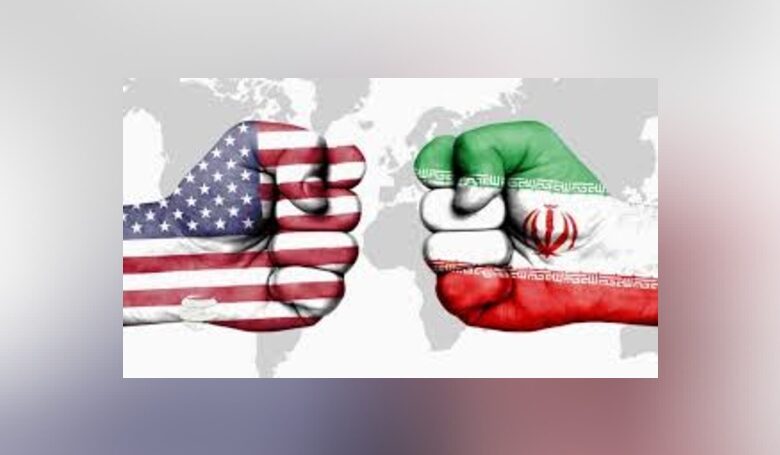
Washington’s hard option, Europe’s classified information, and the threat of pinpoint strikes have placed Iran at the center of a multifaceted crisis.
Amid intensified suppression of nationwide protests in Iran and an unprecedented rise in death tolls, clear signs of a shift in American policy phase from political pressure to operational readiness are evident. Reports published in credible Western media outlets indicate that the Donald Trump administration, while simultaneously sending supportive messages to Iranian protesters, is preparing informational and military groundwork for direct action.
Based on information provided to media by two European officials, the U.S. government asked several European countries on Monday to share their classified information and data about potential targets within Iran with Washington. According to informed sources, this request signals the crisis entering a phase beyond verbal warnings.
According to the Washington Post, these moves coincided with a meeting at the level of senior White House officials to review military options; a meeting held amid complete blockade of diplomatic channels and continued violence against protesters. One European official, explaining the nature of potential targets, stated: “We have no indication that President Trump intends to attack nuclear facilities again. Most likely, he will target leaders of organizations and forces responsible for and involved in killing protesters.”
Within this framework, Donald Trump on Tuesday morning, January 13, by announcing the cancellation of all meetings with Iranian officials, essentially declared an end to any political dialogue. By posting a message containing the phrase “help is on the way” and using the abbreviated slogan “Make Iran Great Again,” he indirectly supported the request of Republican Senator “Lindsey Graham” for intervention; a message that quickly garnered global attention.
The White House also attempted to link these threats to Trump’s practical track record. Anna Kelly, White House spokesperson, said in this regard: “The President has made his position clear and demonstrated he means business with Operation Midnight Hammer (bombing of Iranian nuclear facilities) and absolute will (arrest of Maduro).”
However, the American political atmosphere is not unified. Within Trump’s own camp, serious concerns about the consequences of entering a new Middle Eastern conflict have been raised. Some figures close to the President have warned that such action could entail both heavy economic costs and contradict the “America First” slogan. Steve Bannon, Trump’s former advisor, openly stated: “We don’t care whether Iran becomes great again or not. The presence of Israel and America there only prolongs the problem.”
At the decision-making level, informed sources say “J.D. Vance,” Vice President, and “Marco Rubio,” Secretary of State, have presented Trump with a set of operational options. Vance, who previously supported attacks on Iranian nuclear facilities, is now more cautious about the risk of America becoming entangled in an exhausting conflict.
Simultaneously, unconventional options are also on the table. According to a former American official, the President has been presented with scenarios including cyberattacks on government infrastructure, targeted measures to counter internet shutdowns, and strikes on centers related to the repression apparatus. Nevertheless, the Pentagon is concerned about Tehran’s retaliatory response. An informed source told the Washington Post: “We currently do not have sufficient equipment in the region to conduct a full-scale attack without retaliation risk, as we have removed many of our assets from Central Command (CENTCOM) for operations in Venezuela.”
Despite these limitations, American military capability remains intact; from missile-equipped destroyers to B-2 bombers that have previously been used in operations with 36-hour flights against Iran.
Meanwhile, a European official warned that Tehran might exploit Trump’s hesitation and, by proposing negotiations, merely be trying to buy time. He stated: “If President Trump backs down from pressure and enters negotiations while protesters are being killed, the regime will not only escape this calamity, but will become bolder and act with greater impunity and brutality.”
Inside Iran, protests have entered their third week, and according to human rights reports, the death toll has exceeded two thousand. Meanwhile, a senior Iranian official told Reuters that Tehran has warned regional countries that in case of allowing the U.S. to use their territory or airspace for an attack, Iran will respond militarily. He clarified: “We have clearly communicated through diplomatic channels that any country that provides its land or sky to the United States for an aggressive action against Iran will be considered a legitimate target by our armed forces.”
This official also emphasized: “Our response will not be limited only to the source of the attack; rather, it will encompass any regional host that facilitates such interference. Stability in the region is in everyone’s interest, but we will not hesitate in defending our national security.”
On the other side, as death tolls rise, the Trump administration is more seriously considering a scenario called “surgical strikes”; a strategy based on precise and limited strikes against command centers, drone infrastructure, and communication networks of security agencies. According to a Wall Street Journal report, the Pentagon has prepared a plan titled “Command Silencing” aimed at disabling wireless and communication networks of special units and plainclothes forces in major Iranian cities.
These developments are occurring under conditions where access to independent information has become severely limited due to widespread internet and telephone line shutdowns. Reuters, citing an Iranian official, confirmed the deaths of over two thousand and 600 people, while human rights organizations and some international media outlets cite much higher figures. American CBS News estimated death toll at around 12,000 and reported the possibility of it rising to 20,000. Reza Pahlavi also stated in an interview that the death toll was at least 12,000, a figure that is difficult to verify due to communication limitations.
What is now taking shape is not a classical “war or negotiation” equation; but rather a multi-layered scenario in which domestic repression, external pressure, and geopolitical calculations are intertwined. America seeks to change the balance of domestic power in Iran by paralyzing tools of repression without entering a full-scale war. In contrast, the Islamic Republic, by threatening to expand the crisis to the entire region, attempts to raise the cost of any action significantly.
In the meantime, the decisive factor is not only the White House’s decision, but the continuation of protests and Iran’s streets’ response. The longer repression continues, the greater the likelihood of the crisis moving beyond the political pressure phase into a hard confrontation phase; a path whose consequences may be determining not only for Iran, but for the entire Middle East.