Secret Execution of Two Citizens Accused of “Spying for Israel”
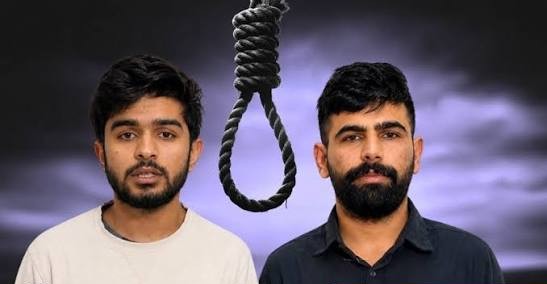
Continuing a wave of political executions in Iran, the Islamic Republic has secretly executed two citizens named Omid Behzad and Pouriya Safavat, who had been arrested on charges of “spying for Israel.” Ambiguity in legal proceedings, lack of access to lawyers, and the publication of forced confessions have once again raised concerns about the government’s use of executions for suppression.
The Islamic Republic of Iran, continuing its process of carrying out death sentences against those charged in security cases, secretly executed the death sentences of two citizens named Omid Behzad and Pouriya Safavat on the morning of Monday, August 3, 2025, corresponding to Mordad 12. This action has faced widespread criticism from human rights activists due to the lack of transparency in the arrest, trial, and execution processes.
News of the execution of these two individuals was first released by the official news agency of the judiciary (Mizan), but the agency did not disclose the location of the execution, their place of detention, or details of the legal proceedings. According to published reports, prior to the announcement of the executions, no official information had been released regarding the arrest, issuance of the death sentence, or the trial of these two citizens.
Government media outlets have claimed that Omid Behzad and Pouriya Safavat transmitted information and images of Iranian military and security centers to Israel’s intelligence organization (Mossad) and the television network “Iran International” during the recent war. It has also been alleged that one of them transferred the coordinates of these centers through location software. However, no independent documents or evidence have been released to prove these allegations, and the case details have not been made available to independent lawyers or media outlets.
Human rights activists view this official narrative with serious skepticism, since during a significant portion of the war period, the internet in Iran faced widespread outages and restrictions, and judicial authorities have provided no evidence to substantiate the allegations made.
Based on a video released by Mizan news agency containing forced confessions by these two detainees, there is a likelihood that Omid Behzad and Pouriya Safavat are Kurdish citizens who were arrested during widespread detention sweeps following the war.
According to Hengaw reports, these two prisoners were held at an unknown location from the time of their arrest until the execution of their sentence and were deprived of the right to access a lawyer of their choice, family visits, and a fair and open trial. It is also reported that their televised confessions were obtained under torture and pressure during their detention.
This case is being reported at a time when human rights organizations have repeatedly warned in recent months about the increase in executions in Iran, particularly in security and political cases. International reports show that the Islamic Republic has accelerated the pace of executing death sentences following nationwide protests and in the context of the war, and judicial authorities have declared that there will be “no leniency” in dealing with those charged in security cases.
Human rights organizations, including Amnesty International, have repeatedly stated in their reports that in many of Iran’s security cases, defendants have been sentenced to death in courts that do not respect fair trial standards after torture, mistreatment, and forced confessions. These organizations have emphasized that the use of such confessions, combined with deprivation of access to an independent lawyer, violates the Islamic Republic’s international obligations under the International Covenant on Civil and Political Rights.
The execution of Omid Behzad and Pouriya Safavat has taken place at a time when many human rights observers regard the use of capital punishment in cases related to espionage or protests as part of a policy of creating fear in society; a policy that, according to them, by keeping judicial proceedings confidential and carrying out executions in secret, also eliminates the possibility of independent oversight of the judiciary’s performance.