Military Service or Ideological Training? When Quran Memorization Becomes the Price of Exemption from Extended Service in Iran
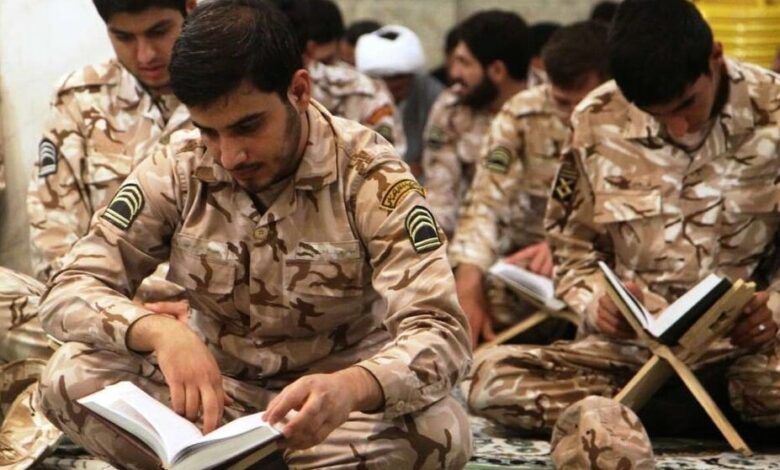
In Iran, even military service exemptions have become tied to a religious criterion; the head of the Faraja Organization for Political-Ideological Affairs announced that soldiers who memorize one chapter of the Quran or learn certain religious rulings will be eligible for exemption from extended service—a decision that once again raises questions about the boundary between public duty and the imposition of the government’s ideological values on citizens.
The head of the Political-Ideological Organization of the Islamic Republic of Iran’s law enforcement command has announced that soldiers who successfully memorize one chapter of the Holy Quran or learn “the essential rulings of life” can be granted exemption from extended military service.
This news, published in Iranian domestic media, demonstrates that even within a structure where military service is mandatory for many citizens, a benefit related to service status can be tied to the performance of religious activities approved by the government. According to reports, the implementation details of this plan will be announced in the future.
On the surface, the government may present such a scheme as a measure to “promote Quranic culture”; however, the fundamental issue is: what will be the status of citizens who do not believe in this or follow another religion when a public administrative benefit is made dependent on a specific religious activity?
Mandatory military service is in itself a matter related to civic duty and law. But when reducing a soldier’s punishment or extended service is tied to Quran memorization or learning Islamic rulings, a serious question arises about the equality of citizens: should the enjoyment of a benefit in a public institution depend on the extent to which an individual adheres to the government’s religious ideology?
This issue becomes even more significant for Christian, Jewish, Zoroastrian, Bahai, Sunni Muslim citizens, and those who identify themselves as atheists or non-believers.
The Constitution of the Islamic Republic designates Islam and Twelver Shia Islam as the official religion of the country and simultaneously grants rights to Zoroastrians, Jews, and Christians—recognized as religious minorities—to perform religious ceremonies within the framework of law.
However, critics of Islamic Republic policies say the gap between “recognizing” a minority on paper and treating citizens equally in practice is considerable.
Freedom House, in its 2026 report, assessed Iran as an “unfree” country and states that the government restricts individuals’ freedom to express and practice religious beliefs or even non-belief. This organization has also emphasized that non-Shia religious minorities face discrimination in both law and practice.
The main criticism of such a scheme is not merely about one chapter of the Quran or a few religious rulings; the larger issue is the government’s approach to its citizens. In a free society, the state can offer public education or even cultural and religious programs, but the enjoyment of legal rights and benefits should not depend on the acceptance of a particular religious belief.
In this case, the government not only promotes a religious activity but also links it to a specific benefit during the military service period. The result of such an approach can create the impression that a citizen, to enjoy better benefits, must align themselves with the government-approved religious values.
Under such circumstances, personal choice and individual belief gradually transform from a personal right into a matter under the supervision of the state structure. This issue is also not disconnected from broader realities for Iran’s Christian community.
The British government’s report on Christians and Christian citizens in Iran, published in June 2026, states that Islamic Republic authorities continue to arrest and prosecute newly converted Christians, using charges such as “propaganda against the system” and crimes related to national security. The report also mentions punishments including lengthy prison sentences, fines, and social deprivations.
Human Rights Watch, in its 2026 World Report, has also documented the continuation of discrimination against various religious groups in Iran, including Christians, Jews, Bahais, Sunnis, and Gonabadi Dervishes.
In such a context, a decision that ties an Islamic religious activity to a service benefit does not appear to be merely a simple administrative order; rather, it is part of a larger question about the government’s relationship with freedom of conscience in Iran.
The fundamental problem is that the Islamic Republic, on one hand, presents itself as the representative of a religious system and, on the other hand, places citizens with diverse beliefs within the framework of this system; but citizenship should not mean accepting the government’s ideology.
If a Christian, Jewish, Zoroastrian, Sunni, or non-believing soldier wants to receive the same benefit, can they perform an equivalent action based on their own beliefs? If the answer is no, the question of discrimination becomes more serious. If the answer is yes, there should be equal and transparent criteria for all beliefs.
The essence of the matter is not whether Quran memorization or learning religious rulings is good or bad. The issue is whether the government has the right to make a specific religious belief the criterion for enjoying a public benefit.
This plan should also be viewed within a broader framework of Islamic Republic policies on belief and dissent. Freedom House states that ultimate power in Iran rests with the Supreme Leader of the Islamic Republic and institutions appointed under his control, and security forces and the judiciary play an important role in suppressing opponents and restricting civil liberties.
In the realm of religious freedom as well, international reports document dealings with those who operate outside the government’s official framework. The U.S. Commission on International Religious Freedom (USCIRF), in its report on Iran, has criticized the continuous violation of freedom of religion and belief and the targeting of religious minorities, including Christians, Jews, and Bahais.
From this perspective, the issue is not merely that the government offers soldiers the suggestion to memorize the Quran; the issue is that in an ideological system, even the structure of rewards and punishments can serve to draw citizens closer to the government’s preferred model. This is the point where the boundary between “religious encouragement” and “ideological pressure” becomes contentious.
No citizen should be compelled to accept the government’s religious belief or even appear to move closer to it in order to enjoy equal rights and benefits.
Quran memorization can be a personal and valuable choice for a Muslim; just as reading the Bible can be for a Christian or studying religious texts can be part of the spiritual life of followers of other religions. But when the government transforms one of these choices into an official benefit in a public institution, the matter moves beyond the realm of personal faith.
What matters here is neither opposition to the Quran nor opposition to religion; rather, it is the defense of the human right to choose one’s own beliefs.
A government that considers itself obligated to guide people toward a particular form of faith and life will ultimately face a fundamental question: should citizens think like the government in order to enjoy equal rights? If the answer is yes, it will become difficult to speak of freedom of conscience, and if the answer is no, legal and administrative criteria should also be the same for all citizens, regardless of their religion, sect, or lack of belief.