New Wave of Arbitrary Detentions in Iran; From Tabriz to Boukan and Marivan
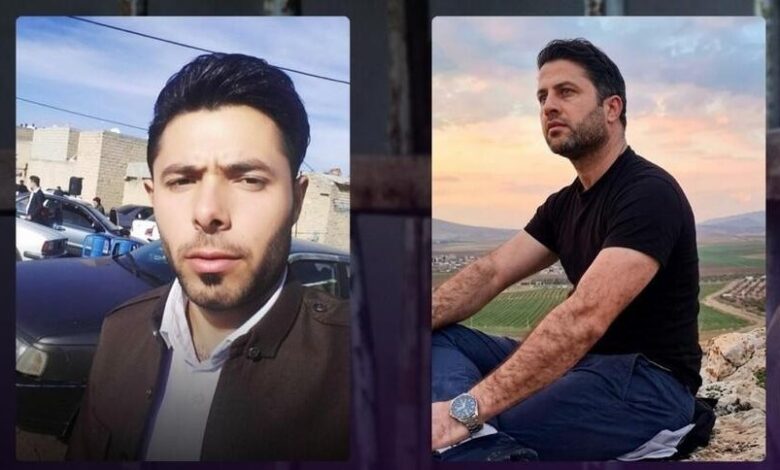
In continuation of a wave of security detentions in Iran, “Milad Balsini,” a Turkic civil activist in Tabriz, and three Kurdish citizens in Marivan and Boukan have been detained and transferred to unknown locations; while in some of these cases, no specific charges have yet been announced and families remain without information about the fate of their loved ones. International human rights reports also indicate the continuation of arbitrary detentions, forced disappearances, deprivation of effective access to lawyers, and intensified pressure on ethnic minorities in Iran.
In recent days, reports have been published about the detention of at least four citizens in Tabriz, Marivan, and Boukan; four cases that share a common feature, based on published reports: ambiguity regarding the reason for detention and the absence of clear information about the place of detention and the legal status of the individuals.
According to a report by the human rights organization Hengaw, Milad Balsini, a Turkic civil activist from Tabriz, was detained on Tuesday, August 18, 2026, after appearing at Branch 15 of the General and Revolutionary Prosecutor’s Office in Tabriz. He had previously been summoned to this branch after receiving a notice to submit his defense statement, but after the interrogation session ended, Ministry of Intelligence forces detained him and transferred him to an unknown location.
As of the publication of this report, no precise information is available about his place of detention, health status, and the charges brought against Balsini, but published reports on his judicial record also show that this civil activist had previously faced security cases.
This case is notable in that Balsini’s detention, according to available reports, occurred after he approached the judicial system and attended an interrogation session to present his defense; however, no transparent information has been released about his fate after leaving the prosecutor’s office.
Meanwhile, in Marivan, “Shakhewan Khavari,” a 21-year-old citizen from the village of “Ni” in this county, has also been detained. According to reports, on the evening of Monday, August 17, forces from the Ministry of Intelligence of the Islamic Republic raided Khavari’s family home in the village of Ni without presenting a court order and detained him.
As of the publication of this report, the reason for detention, possible charges, and the place where this citizen is being held remain unclear, and the family’s efforts to obtain information about his condition have been unsuccessful.
In Boukan, the names “Hymen Manijeh” and “Hossein Yousefi” also appear in reports related to the recent wave of detentions. Hymen Manijeh was also detained early morning on August 17 by Ministry of Intelligence forces and without presenting a court document, and transferred to an unknown location.
Hossein Yousefi was also detained on August 15 during a raid by Ministry of Intelligence forces on his home in the village of “Miraouva” in Boukan county. These two citizens have so far been deprived of access to a lawyer, visits, and contact with their families, and attempts by their families to obtain information about their condition have been unsuccessful.
The human rights organization Hengaw has also announced that so far, no precise information is available regarding the reasons for detention, charges, place of detention, and the fate of these two individuals.
This report was published at a time when reports of other cases of detention of Kurdish citizens in Boukan, Miandoab, Oshnaviye, and Mahabad in recent days have also been released; a matter that indicates that these four recent cases cannot necessarily be considered completely isolated incidents.
The main concern in these cases is not merely the detention of individuals; but the method of detention and the period that follows; when the family does not know where the detainee is being held, what charge is against them, and whether they have access to a lawyer or not. This issue has also been extensively documented in reports by international human rights organizations.
Human Rights Watch reported in February 2026 that Islamic Republic officials have pursued widespread and arbitrary arrests, torture, and enforced disappearances in an attempt to suppress protests. The organization reported that authorities in many cases have refrained from providing information to families about the fate and place of detention of detainees.
Human Rights Watch also stated that detainees have in some cases been held in unofficial or secret detention centers, and during the investigation phase, their access to lawyers has been limited or blocked.
In its report on detention conditions in Iran, the organization cited a relative of detainees saying that when families ask prosecutors about their loved ones, they receive general answers and even no clear explanation is provided regarding the specific charge against the person.
Amnesty International also reported in a report released on May 28, 2026, on the intensification of repression in Iran, stating that since the beginning of military attacks on February 28, Iranian authorities have arbitrarily detained more than 6,000 people.
According to the organization, among the detainees are protesters, journalists, lawyers, human rights defenders, government opponents, and members of ethnic and religious minorities. Amnesty International has also warned about cases of enforced disappearance, torture, mistreatment, and the use of forced confessions in unjust judicial proceedings.
“Erika Guevara Rosas,” senior director of research, policy, advocacy and campaigns at Amnesty International, said regarding this situation: “Iranian authorities are using the crisis to intensify the erosion of the rights of the Iranian people; people who have already been suffering from the devastating consequences of unlawful air attacks by American and Israeli forces and decades of crimes under international law by the Islamic Republic.”
She emphasized in another part of her remarks: “Iranian authorities have launched an all-out attack against the Iranian people to maintain their power, and anyone who dares to criticize the Islamic Republic, share information about American or Israeli attacks or human rights violations with the outside world, or simply tries to stay in contact with their loved ones and access independent information beyond internet restrictions, becomes a target.”
Amnesty International has also called for the release of individuals who have been arbitrarily detained and has asked Iranian authorities to disclose the fate and place of detention of those who have been victims of enforced disappearance.
Concerns about the situation of ethnic minorities are not limited only to reports by non-governmental organizations. UN human rights experts called on Islamic Republic authorities on August 6, 2026, to end the increasing pattern of arbitrary arrests and enforced disappearances and the targeting of ethnic minorities.
The placement of Kurdish and Turkic citizens among the recent cases gains greater significance; especially since human rights reports in recent months have repeatedly reported on the detention of activists and citizens belonging to ethnic minorities in Iran.
Human Rights Watch also reported in its report on the continued detention of individuals who, from the perspective of security authorities, are considered opponents or critics of the government, and among the targeted groups, also listed members of ethnic and religious minorities.
One of the serious concerns in Iran’s security cases is the use of vague and ambiguous titles in judicial treatment of activists and critics. Charges such as “propaganda against the system” and titles related to national security have been brought in recent years against a number of civil activists, political activists, journalists, and citizens who have engaged in protest activities or expressed their views.
Of course, in the recent case of Milad Balsini, no new formal charge has been announced as of the time of drafting this report, so no specific charge can be attributed to him without judicial confirmation. However, the history of his security cases and published reports on previous charges show a pattern in which civil activity can lead to a judicial case with security titles.
The problem becomes more serious when the family of a detainee cannot even receive a clear answer about their place of detention and the charge against them.
Human Rights Watch has stated in its report that Iranian authorities have, in many cases during the investigation phase, restricted the access of detainees to independent lawyers. The organization also says that in some cases, families and lawyers have been deprived of information regarding the fate and place of detention of individuals.
The cases of Milad Balsini, Shakhewan Khavari, Hymen Manijeh, and Hossein Yousefi converge at one point: “Families still do not have clear answers about the fate of their loved ones.”
In such circumstances, the demand for transparent disclosure of the place of detention, health status, and possible charges against detainees is not a political or factional demand; but rather a matter related to the most basic human rights and principles of fair judicial proceedings.
No family should wait for weeks or months for a short phone call, an official statement, or even information about the place of detention of their loved one.
International human rights organizations have also repeatedly emphasized this issue. Amnesty International has called for disclosure of the fate and place of detention of victims of enforced disappearance, and Human Rights Watch has asked Iranian authorities to clarify the fate of missing individuals and provide independent access to detention centers.
In Iran, the detention of a citizen should not mean his or her disappearance from the reach of family, lawyers, and public opinion. The right to be informed of charges, access to a lawyer, contact with family, and access to fair judicial proceedings are rights that cannot be stripped from a person based on ethnicity, language, religious belief, or political ideology.
Until official and verifiable information is released about the place of detention and charges against these four citizens, concerns about their condition and the possibility of violation of their fundamental rights will remain.