Five-Year Prison Sentence of Sociologist Mostafa Mehraiyan Enforced Over Critical Letters to Islamic Republic Leader
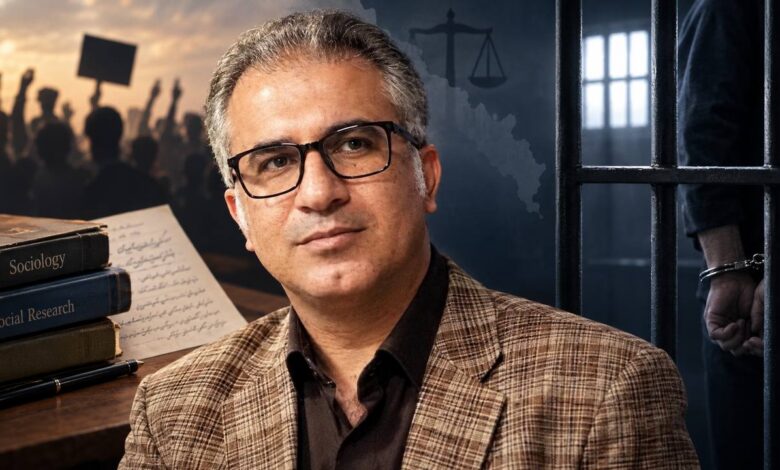
Mostafa Mehraiyan, a sociologist and former university professor, was arrested to serve a five-year prison sentence; a verdict issued following the publication of his open letters and explicit criticisms of Islamic Republic policies. The case of this researcher once again raises concerns about judicial treatment of critics and restrictions on freedom of expression in Iran.
According to reports from the human rights organization Hengaw and Iran Wire, Mostafa Mehraiyan, a sociologist and social science researcher from Bushehr province and resident of Tehran, was arrested on Saturday, October 18, 2025 (Mehr 18, 1404 in the Persian calendar), to serve his prison sentence and was transferred to jail.
Mehraiyan had previously been sentenced by Tehran’s Revolutionary Court to five years in prison on charges of “assembly and conspiracy with intent to commit crimes against national security,” two years for “insulting the leadership,” and one year for “anti-system propaganda activities.” The total sentences issued against him amounted to eight years in prison; however, according to Article 134 of the Islamic Penal Code, the most severe punishment—five years imprisonment—was designated for execution.
According to published reports, Mehraiyan’s conviction resulted from writing open letters addressed to Ali Khamenei and criticizing major policies of the Islamic Republic. In these letters, he called for a change in the country’s political direction, an end to war and a move toward peace, the withdrawal of the Islamic Republic’s leader from power, and the holding of a referendum.
Mehraiyan had previously been arrested on June 15, 2025 (Khordad 25, 1404), hours after publishing one of his open letters, and was temporarily released on bail after some time. His initial verdict was issued in November 2024 (Azar 1404) and was upheld in appellate court in late December 2024 (late Dey 1404).
The security and propaganda charges raised in Mehraiyan’s case reflect the official position of the judiciary regarding his case; however, published reports identify his critical letters and political positions as the fundamental grounds for his legal prosecution.
His arrest raises once again the question of under what circumstances criticism of government policies, calls for the leader to step down, and demands for a referendum can result in lengthy prison sentences. Freedom of expression and the ability to criticize those in power are fundamental components of public participation and governmental accountability.
The case of Mostafa Mehraiyan, alongside cases of other critics and civil activists, draws attention to the state of freedom of expression and the independence of judicial proceedings in Iran; particularly when political criticism is met with security charges.