Marco Rubio: Islamic Republic on the Brink of Worst Economic Crisis in Modern Iranian History
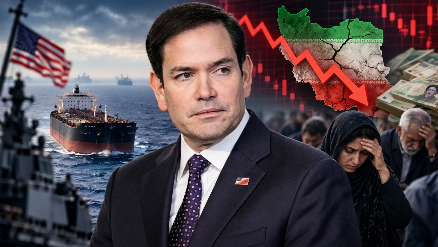
U.S. Secretary of State Marco Rubio warned that the Islamic Republic will face unprecedented economic pressure in the coming weeks, a pressure that he said will be intensified by the halt in oil revenues and the continuation of a naval blockade. Meanwhile, economic data shows a collapse in the rial’s value, inflation nearing 70 percent, and forecasts of economic contraction in Iran—a crisis whose cost weighs heavily above all on the Iranian people.
Marco Rubio, U.S. Secretary of State, in an exclusive interview with Greek newspaper Kathimerini, said the ultimate objective of U.S. military operations against the Islamic Republic is to prevent Tehran from obtaining nuclear weapons, and that Iran’s government will face severe economic pressure in the coming weeks.
Referring to Iran’s economic situation, Rubio said the Islamic Republic is on the brink of what he described as “the most catastrophic economic crisis in modern Iranian history,” and he attributed responsibility to the religious leaders of the Islamic Republic.
He also claimed that the situation of transit through the Strait of Hormuz has changed and that Iran no longer controls this strategic waterway. According to Rubio, the southern route of the strait, which U.S. forces have swept of mines, is now seeing oil passage at approximately 80 percent of pre-conflict levels.
However, the situation in the Strait of Hormuz remains complex and tense. New Reuters data shows that while oil exports from regional countries, except Iran, had returned to over 80 percent of pre-war levels in September, attacks on tankers continue, and the week ending October 5 recorded the highest number of tanker attacks since the start of the conflict.
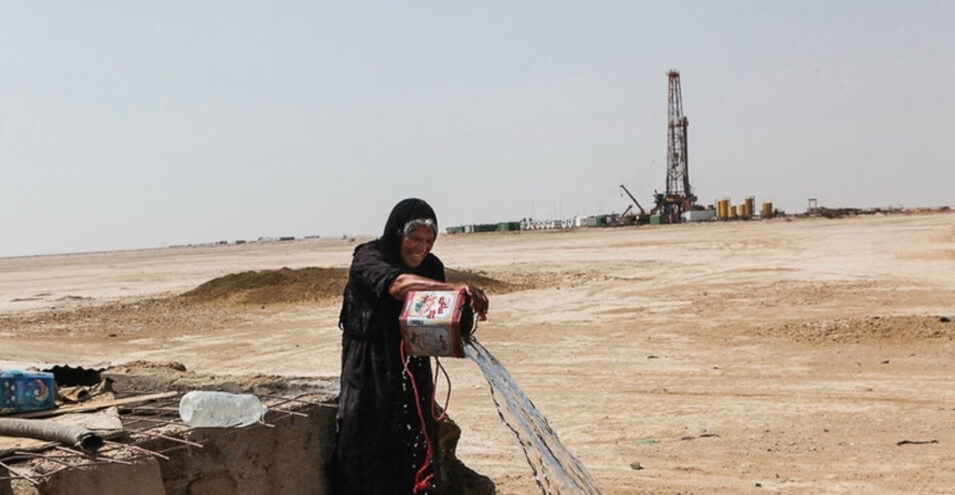
Rubio also told Kathimerini: “The oil that Iran was able to export during its agreement period with America is now mostly located in the Pacific Ocean, and Tehran is on the verge of selling its last consignments.” He claimed that after these reserves are exhausted, the Islamic Republic will no longer have a reliable source of oil revenue.
This part of the U.S. Secretary of State’s remarks is consistent with independent reports about the collapse of Iran’s oil exports. Reuters reported in September that the U.S. naval blockade has severely reduced Iran’s crude oil exports, with Iranian oil loading falling from approximately two million barrels per day in March to around 220,000 to 255,000 barrels per day in August.
Iran’s economic crisis is not merely a political claim from Washington. The International Monetary Fund has forecast a 5.4 percent economic contraction for Iran in 2026 and consumer inflation of 68.9 percent. Meanwhile, Reuters reported that the rial’s value reached its lowest level in early October, and inflation rates have exceeded 70 percent.
In another part of his remarks, Rubio described the Islamic Republic’s missile and drone programs as part of Tehran’s strategy to create a “conventional shield,” meaning that Iran’s government sought to advance its nuclear program behind these military capabilities.
He emphasized: “The ultimate goal is that they cannot have nuclear weapons. The Iranian regime can never have nuclear weapons; this has been clear from the very beginning.”
The U.S. Secretary of State also said that the Donald Trump administration has for this reason targeted the Islamic Republic’s missile programs, drone production factories, navy, and air force.
Rubio called the Islamic Republic “the world’s largest state sponsor of terrorism” and said Iran’s oil revenues during its agreement period with America were used not for reconstruction and improving the country’s economic conditions, but rather to support armed groups in the region and develop missile and drone programs.
In this regard, recent reports also show that economic pressure on the Islamic Republic continues simultaneously with Tehran’s ongoing support for its regional allies. Reuters reported on October 7 that sources indicated approximately $200 million was transferred from Iran to Hezbollah in Lebanon to help displaced families; however, this transfer was not confirmed by Iranian officials, and the U.S. State Department also denied the existence of such a payment.
Rubio also, when asked about the future of Iran’s government after the end of the war, said: “There is already a military regime in power there now.”
Finally, the U.S. Secretary of State reiterated Washington’s position on Iran’s nuclear program, saying that as long as Donald Trump is president of the United States, the Islamic Republic will not obtain nuclear weapons.
However, behind this confrontation between Tehran and Washington lies an important reality that should not be overlooked: the more economic pressure and war intensify, the more the cost does not necessarily fall on the leaders of the Islamic Republic; a large portion of this cost can be directly transferred to the lives of the Iranian people.
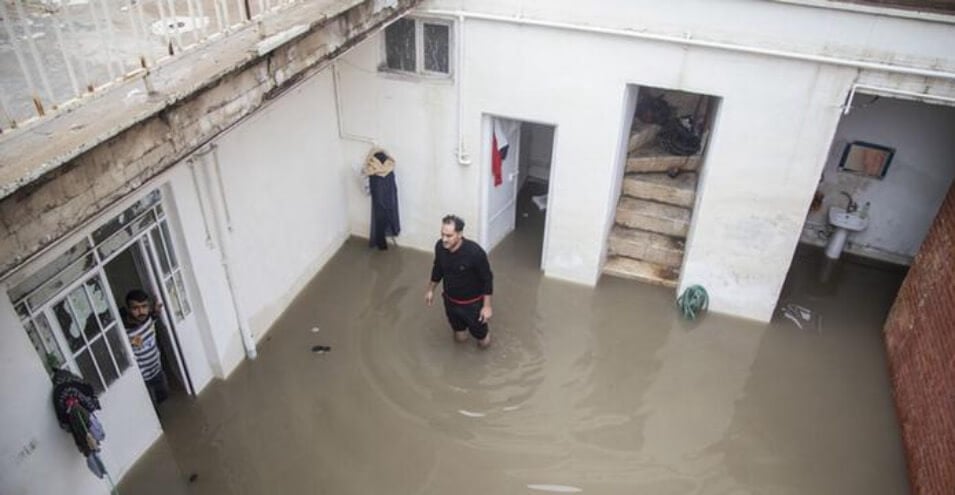
The collapse of the national currency’s value, heavy inflation, reduced purchasing power, disruption in trade, and limitations on oil revenues are pressures that directly target Iranian families’ tables. Even international economic reports that speak of the intensifying crisis show that the issue is not merely the government’s fiscal balance; rather, we are facing a livelihood crisis for millions of Iranian citizens.
On the other hand, the continuation of the Islamic Republic’s regional and military policies, at a time when the country’s economy struggles with such pressures, has raised an important question about the priorities of Iran’s government: should the country’s limited resources be spent on the welfare and future of the Iranian people, or should they continue to be spent on military programs and networks of armed groups in the region?
For Iranians who have lived for years with inflation, currency depreciation, unemployment, and reduced purchasing power, the intensification of this crisis is not merely a report about American foreign policy; rather, it can mean further increases in living costs and smaller family tables.
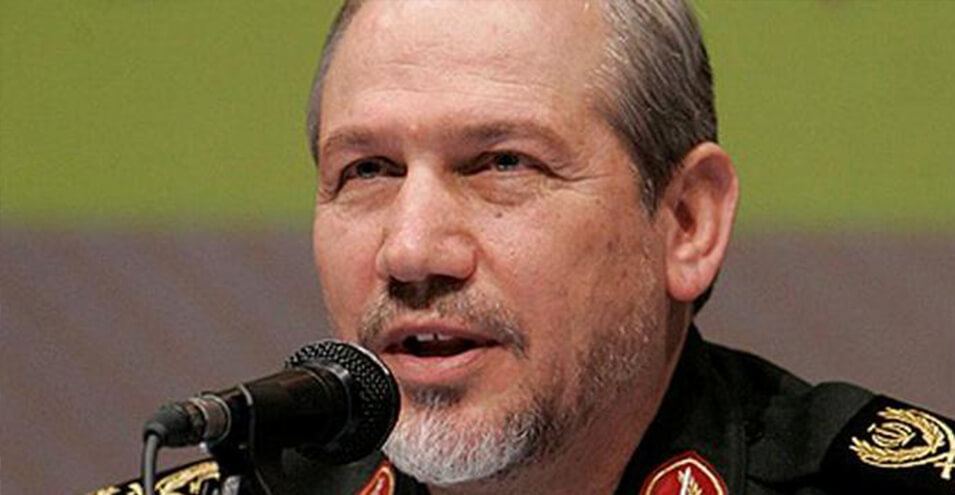
Meanwhile, the dispute between Washington and Tehran’s claims about the Strait of Hormuz continues. While Rubio says Iran has lost control of the strait, a Revolutionary Guards-related official yesterday emphasized that the Islamic Republic still maintains complete control of this waterway and threatened to close routes that Tehran considers “illegal.”
What is ultimately clear is that war, sanctions, and the collapse of oil revenues can deepen Iran’s economic crisis; however, the responsibility to protect the lives and livelihoods of the people should not be forgotten amid geopolitical disputes. Iran’s future is not solely dependent on the fate of its nuclear program or the Strait of Hormuz; rather, it is also tied to the question of whether the country’s resources will ultimately be spent on the Iranian people or on the continuation of the Islamic Republic’s security and military policies.