Mohammad-Hossein Moeini, Iran’s Ambassador to Vatican, Asks Pope Leo for Diplomatic Action Against U.S. Sanctions
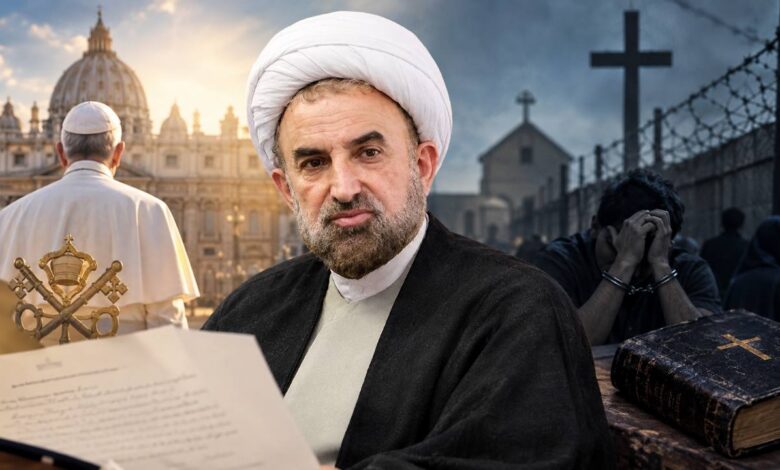
Mohammad-Hossein Moeini, Iran’s ambassador to the Vatican, in a recent letter to Pope Leo XIV, called for diplomatic action to counter the humanitarian consequences of U.S. sanctions and spoke of human dignity and the right to travel for treatment, family reunification, and religious observance. However, this request comes at a time when Christians in Iran face heavy prison sentences, deprivation of access to the Bible, and restrictions on freely practicing their religious rites—a contradiction that raises serious questions about the Iranian government’s commitment to the very rights it now asks the Vatican to defend.
Mohammad-Hossein Moeini, Iran’s ambassador to the Vatican, in a letter to Pope Leo XIV, leader of the world’s Catholics, criticized U.S. sanctions and flight restrictions, calling on the Vatican to use its moral and diplomatic capacities to reduce harm to ordinary people.
According to a report published by Press TV on October 9, Moeini argued in the letter that travel restrictions are not merely political or economic issues and can impede patients’ access to treatment, students’ access to education, families’ access to one another, and believers’ access to sacred sites. He asked the Pope to take action to preserve humanitarian pathways and prevent harm to civilians.
Moeini wrote in part of his letter: “Do not close the heavens to ordinary people, for the heavens, before being a field of power, are the path of human connection.”
He also called on religious leaders to work together to defend the rights of people suffering under political decisions.
Concern about the humanitarian consequences of sanctions is a real and legitimate issue. Financial restrictions and transportation limitations can affect ordinary citizens’ lives and make access to services, medicine, or necessary travel more difficult. However, the extent and nature of these consequences depend on the type of restrictions, how they are implemented, and whether humanitarian exemption channels exist.
On the other hand, raising these concerns by a representative of the Islamic Republic poses an important question: Does the Iranian government recognize these same standards for its own citizens? Does human dignity, freedom of conscience, and the right to access religious beliefs only matter when Tehran wants to speak of them in the realm of foreign diplomacy, or should these rights be respected equally within Iran as well?
One clear example of this contradiction is the case of Ghazal Marzban, a Catholic Christian citizen imprisoned in Evin Prison. According to reports by Hrana and Hengaw, she was sentenced in June 2026 to 9 years and 8 months in prison. The charges stated in her case include “propaganda against the system” and “assembly and conspiracy to undermine national security.”
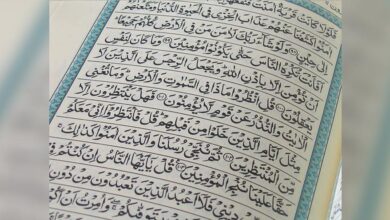
Published reports also indicate that Marzban, in protest of being deprived of access to the Bible and Catholic prayers, as well as restrictions on family visits, has gone on hunger strike. Hrana reported in September 2026 of the continuation of this protest.
This case raises a fundamental question about freedom of religion and belief in Iran: if access to religious rites and texts is part of a human being’s spiritual needs, why should a Christian prisoner face obstacles in obtaining a Bible and religious prayers? This is the same human and spiritual dimension that Iran’s ambassador asked the Pope to work to protect in his letter.
The issue of religious restrictions is not limited to prisoners of conscience. In July 2026, reports emerged about the enforcement of a confiscation order for Saint Peter’s Church complex in Tehran and orders to evacuate the residence of approximately 20 Armenian and Assyrian families. Beyond its historical and religious significance, this complex has been home to families from Iran’s Christian community.
Reports by Radio Farda, IranWire, and Hengaw have examined this issue within the framework of broader concerns about the status of Christian properties and religious sites. The legal details and proceedings of the case must be separated from the claims raised in the reports; however, the fundamental concern about property security, preservation of religious heritage, and the ability of these families to continue their social and religious lives remains important.
Alongside the case of Ghazal Marzban and reports related to Saint Peter’s Church, these cases show that the discussion of religious freedom in Iran is not limited to issuing formal permits for restricted worship; access to the Bible, security of religious sites, the right to assembly, and access to fair justice are also part of it.
Moeini’s request to the Pope emphasizes concepts that hold important places in Christian and Islamic traditions: human dignity, compassion for the vulnerable, and support for those harmed by political decisions. These concepts should not merely be instruments of diplomatic competition; their credibility depends on applying them equally to all human beings.
If the Iranian government seeks to defend the rights of patients, families, and believers who may be harmed by sanctions, it is expected to show the same sensitivity toward Christian citizens, Bahá’ís, Sunnis, and other religious minorities within the country. Freedom of conscience and religion is a universal right and should not be dependent on religious affiliation, political views, or the degree to which an individual aligns with the government.
At the same time, criticism of Islamic Republic policies should not cause us to overlook the suffering of Iranian citizens as a result of sanctions. Ordinary people should not be deprived of treatment, contact with family, or religious observance because of disputes between governments; just as they should not face imprisonment, discrimination, or deprivation of fundamental rights within the country because of their religious beliefs.
Iran’s ambassador’s letter to the Pope ultimately provides a clear standard for measuring a moral claim: if human dignity and religious freedom are universal values, defending them must transcend political boundaries and translate into real rights for citizens within Iran as well. Support for people against the consequences of sanctions and ending discrimination against religious minorities are not contradictory demands; both stem from respect for human dignity.