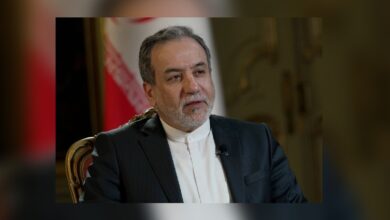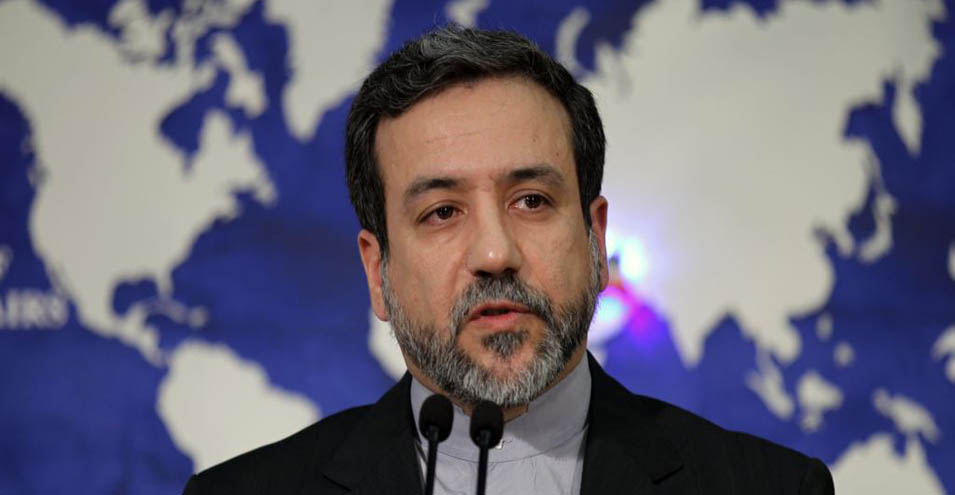
Iran’s Deputy Foreign Minister stated that if Iran’s interests in the nuclear agreement are not secured, “there is no reason to abide by it.” According to this senior Foreign Ministry official, Iran can violate the JCPOA if it “chooses to.”
Seyyed Abbas Araghchi, Iran’s Deputy Foreign Minister and senior member of the nuclear negotiating team, said Tuesday morning in Iran’s “Coordination Council for Legal Affairs and Executive Bodies” that Western parties concluded as a result of “the insistence of the Iranian nation” that “there is no way but negotiation,” and Iran managed to “impose” its “will” on the other side during the negotiations.
Referring to Iran’s defensive capabilities, he stated: “If our enemies could destroy the country’s nuclear capability through military means and were not concerned about the consequences, do not doubt they would do it. We owe this to the capability of our armed forces and our missile capability, which are such that even now they cannot even think about a military attack on Iran.”
Mr. Araghchi, describing the practical effects of lifting sanctions over the past 50 days, said: “We have entered the international market for nuclear materials; we have purchased 140 tons of yellow cake from Russia and 60 tons of yellow cake from Kazakhstan, and we have sold approximately 10 tons of 3.5 percent enriched material to Russia. In fact, we have entered the international market as an exporter of nuclear materials. We have also sold 32 tons of heavy water to the United States.”
According to him, currently “all of Iran’s money abroad has been released” and the Iran Central Bank has the authority to spend it, but whether the money enters the country or not is “a secondary matter.”
Iran’s Deputy Foreign Minister considered the implementation of “U.S. Congressional sanctions” to mean “violation of the JCPOA” and said that “the necessary orders have been issued by the U.S. President in this regard.”
According to this senior government official, “the export of some Iranian goods to the United States has begun to some extent, and recently the first shipment of Iranian carpets has arrived in the United States.”
Mr. Araghchi’s remarks came concurrent with the Revolutionary Guards’ missile test and after the International Atomic Energy Agency announced that it has established a new office to verify Iran’s nuclear program.
Yukiya Amano, Head of the International Atomic Energy Agency, on Monday in the regular session of the Board of Governors of this United Nations-affiliated body, cited the beginning of implementation of the “Comprehensive Joint Plan of Action” and described the establishment of this office as a necessity; because, according to him, Iran has commitments for many years that must be fulfilled, and the Agency must verify and monitor those activities.
On Tuesday, a U.S. official said the Revolutionary Guards’ missile test on that day does not violate the comprehensive nuclear agreement with Iran, but “there are strong indications” that they contradict United Nations Security Council resolutions.