The destruction of Iranians' "human dignity" under the shadow of ineffective governance
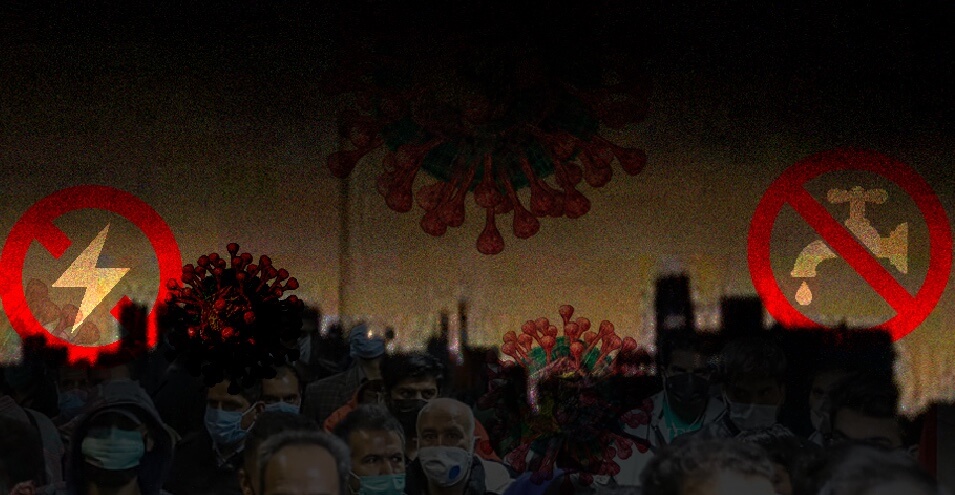
The scope of the crises in Iran has expanded more than ever; from the continuing worrying situation of the spread of the Corona virus in most cities of the country to the crisis of water and electricity shortages in the hot summer of Iran. The intensification of these crises has led to the formation of protest rallies in some cities. The frequent power outages and the lack of easy access to water for a large number of Iranians and the government's confrontation with these crises and its inability to provide basic rights to citizens are clear examples of the government's disregard for the "human dignity" of the nation.
On the other hand, the government's inefficiency in combating the coronavirus, both in providing vaccines and in advancing the public vaccination plan, has led to a sharp increase in Iranians traveling to neighboring countries, including Armenia, to receive the coronavirus vaccine in recent months. This issue, according to many, is another example of the destruction of Iranians' "human dignity" under the shadow of the government's inefficiency in running the country.
“The dignity and high value of the human person” is emphasized as a statement in Article 6 of Article 2 of the Iranian Constitution, and the government is committed to guaranteeing it. In addition, human dignity, as a vital principle in international human rights instruments, is based on principles such as equality, freedom, and the right to development, security, and protection of the fundamental rights of individuals to life, quality of life, and economic and social well-being. Human dignity and basic human rights such as equality, in addition to Article 1 of the Universal Declaration of Human Rights, have also been emphasized in other human rights instruments such as the International Covenant on Economic, Social, and Cultural Rights.
Human dignity; equal enjoyment of fundamental rights and freedoms by all.
Recognizing the dignity and worth of human beings, or in other words, recognizing human dignity regardless of any affiliation, is one of the most important and key concepts in international human rights treaties. The concept of human dignity has been repeatedly emphasized, from the United Nations Charter and the Universal Declaration of Human Rights to the two international covenants on economic, social and civil, and political rights; covenants to which the Iranian government is also a signatory and has full responsibility for ensuring and guaranteeing this primary legal obligation.
"Human dignity" in international human rights documents emphasizes the equality of human beings in enjoying fundamental rights and freedoms - regardless of race, color, language, belief, religion, social status, origin of birth, ethnicity, etc.
On the other hand, the second article of the Iranian Constitution, as an expression of the foundations of the system of the "Islamic Republic of Iran", has stated six foundations and infrastructures, the last of which is "human dignity"; the dignity and high value of man, and freedom combined with his responsibility before God.
The third article of the Constitution also obligates the government to provide citizens with matters that are specifically related to the concept of "human dignity." Paragraph 9 of this article states: "Eliminating unjust discrimination and creating fair opportunities for all, in all material and spiritual fields."
The uncontrollable spread of poverty in Iran and its consequences, such as marginalization and the increasing number of addictions, the ineffectiveness of the government in protecting natural resources and the environment, and the destruction of the country's capital, have been plaguing Iranian society for years, making it difficult for many to endure the current situation. The increase in acute problems and crises in recent months, such as "water shortages" and "power outages" in many cities in the country, on the one hand, and the daily complexity of the Corona crisis, on the other, have led to what is heard in the literature governing society these days, emphasizing the "destruction of human dignity" of Iranians in the shadow of the ineffectiveness of rulers who do not value the lives and reputations of the people.
After a widespread power outage in some cities of the country, many patients who needed electrical devices for treatment faced many problems. The repeated power outages in Iranian cities continued for several days, drawing a group of citizens to the streets to chant slogans against the authorities and officials. The protests, which threatened to spread, caused some government officials to react, and some media outlets close to the government also claimed that they were connected to the “counter-revolution.” Although government officials claimed that the power crisis in the country would soon be resolved, the reaction of some influential figures in the government and close to Ebrahim Raisi has been to impose a different narrative on the issue of power outages. Ahmad Alam-ul-Huda, the representative of the Leader of the Islamic Republic of Iran in Khorasan Razavi and the father-in-law of Ebrahim Raisi, stated that “some villages around Mashhad do not have water due to the power outages and blackouts,” adding that “in the vicinity of them, people are filling pools with water in their villas and gardens.” He has requested that "the Basij should be mobilized, and that military and law enforcement agencies should control villas and garden halls so that people do not pump up underground water for their swimming pools."
Such comments and the government's insistence on forceful approaches to resolve all existing crises in the country on the one hand, and Ebrahim Raisi's accession to the presidency and his record of confronting the basic rights of citizens, including "human dignity" as head of the judiciary, on the other hand, reflect the government's broad view of the concept of the human dignity and worth of Iranians, which today deprives individuals of the most obvious human rights and is unable to meet the basic needs of the society under its rule.
Human dignity and the "right to health" of citizens
The right to health is part of the fundamental rights of citizens in every political society. After the global COVID-19 pandemic, paying attention to this fundamental right, which is also emphasized in the Statute of the World Health Organization and the Covenant on Economic, Social and Cultural Rights, has become more important than ever. The political decisions of the leaders of the Islamic Republic of Iran in combating COVID-19, led by Ali Khamenei's order to ban the import and use of "American" and "British" vaccines, have slowed down the process of combating this widespread disease in Iran. The repeated promises of the authorities to provide the necessary vaccines and advance the process of public vaccination have not been fulfilled, and this project has faced many challenges.
As stated in Article 12, paragraph 2, of the Covenant on Economic, Social and Cultural Rights, States Parties to this Covenant are obligated to "prevent and treat communicable, endemic, occupational and other diseases, as well as to combat them."
The Iranian Constitution also specifically mentioned the right to health of individuals and the government's duty to ensure this fundamental right; Article 29 of the Constitution stipulates that the need for health services and medical care in the form of insurance is a universal right. Article 12 of Article 3 also emphasized the elimination of any deprivation in the field of health and the extension of insurance. However, what has been observed during the difficult period of the Corona pandemic by the government and responsible authorities in the fight against this deadly virus, more than anything else, was an indication of the inefficiency of the government in resolving this crisis and the disregard for the fundamental rights of individuals in society.
Not long ago, a report was published about blatant discrimination in the coronavirus vaccination process in Iran, according to which American vaccines are being sold in the country for very high prices.
The rapid increase in the number of vaccinated people in some neighboring countries and the clear inefficiency of the authorities in Iran have led many travelers from Iran to these countries, especially Armenia, to receive free coronavirus vaccines there.
The large number of Iranian travelers in Armenia, who have accepted the travel costs and hardships of the distance to receive the free vaccine, has caused another side of the feeling of destruction of "human dignity" among Iranians; an issue that has caused a negative reaction from many social media users and even the country's health authorities.
Mohammad Reza Hashemian, an ICU specialist at Masih Daneshvari Hospital, one of the most important specialized hospitals in Iran, said in an Instagram live that vaccinating Iranian people in Armenia is a historical shame.
The dark history of the rulers of the Islamic Republic of Iran in recognizing "human dignity" and respecting the "dignity" of individuals in aspects such as restricting individual and social freedoms and depriving people of equal rights because of their beliefs is no secret to anyone. The list of the Islamic Republic of Iran in blatant violations of the fundamental rights of individuals is very long and lengthy, and the combination of the people's deep livelihood crises with the government's inability to provide for their basic needs has brought the foundations of "human dignity" as the most fundamental human right to the brink of destruction more than ever before.
Source: Iran Human Rights Campaign