Thousands of Seafarers Trapped in Hormuz Strait Amid War and Tensions with Islamic Republic
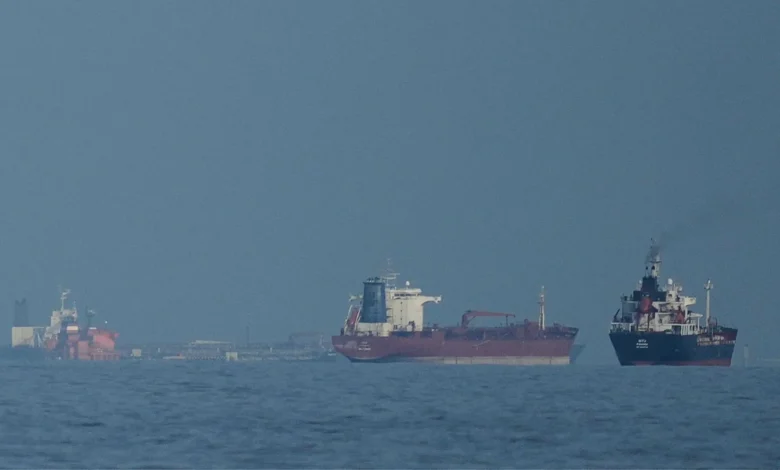
As the Strait of Hormuz remains closed following escalating confrontations between the Islamic Republic, the United States, and Israel, the International Maritime Organization has warned that approximately 20,000 sailors and nearly 1,500 ships are stranded in the Persian Gulf waters. The increase in attacks on oil tankers has raised global concerns about maritime trade security, energy, and the safety of ship crews to unprecedented levels, with many observers describing the current situation as one of the most dangerous maritime crises in recent decades.
Coinciding with escalating military tensions in the Middle East, the crisis in the Strait of Hormuz has taken on new dimensions, and the United Nations International Maritime Organization (IMO) has reported thousands of seafarers and hundreds of commercial vessels trapped in the region. This situation developed after the Islamic Republic, in response to recent military confrontations, effectively disrupted passage through this vital world energy corridor.
Arsenio Dominguez, Secretary-General of the International Maritime Organization, announced at a meeting of the Maritime Convention of the Americas in Panama that approximately 1,500 ships and more than 20,000 maritime crew members are currently stranded in the Persian Gulf waters and around the Strait of Hormuz. He warned that the continuation of this situation could have far-reaching humanitarian and economic consequences for the world.
Dominguez, referring to the vital role of maritime transport in the global economy, said: “Maritime transport moves more than 80 percent of global consumer goods.” He also commented on the situation of trapped sailors: “These are innocent people who work every day for the benefit of other countries, but have become trapped due to geopolitical circumstances beyond their control.”
The IMO Secretary-General also confirmed that at least 10 sailors have so far lost their lives during recent attacks and security incidents. Some maritime security sources have reported that more than 30 attacks or security incidents against ships in the region have been recorded in recent weeks; a matter that has increased concerns among shipping companies and international insurance firms.
According to international media reports, many major maritime shipping companies have altered their ships’ routes or limited operations in the Persian Gulf. Analysts warn that continued disruption in the Strait of Hormuz could confront the global oil market and global supply chains with fresh shocks; as approximately one-fifth of the world’s oil passes through this route.
Meanwhile, China’s Foreign Ministry has also confirmed that an oil tanker linked to Chinese companies near the Strait of Hormuz came under attack. A spokesperson for China’s Foreign Ministry announced that the ship’s crew consisted of Chinese citizens and the tanker was carrying chemical materials.
Chinese media have reported that the damaged vessel was likely the chemical carrier “GW Innovation” under the Marshall Islands flag, which sent an emergency distress call after an explosion and fire on deck. This incident occurred near the coasts of the United Arab Emirates and in the vicinity of the Mina Saqr port.
The report of this attack was released only hours before “Wang Yi,” China’s Foreign Minister, met with “Abbas Araghchi,” the Islamic Republic’s Foreign Minister, in Beijing; a meeting in which an important part was devoted to the Strait of Hormuz crisis and maritime security.
China, which remains the largest buyer of Iranian oil, has called on all parties to create the necessary conditions for the return of “normal navigation” in the Strait of Hormuz. A spokesperson for China’s Foreign Ministry emphasized: “We call on all parties to ensure the return of normal navigation through the Strait of Hormuz.”
In recent weeks, several international maritime and security institutions have warned of the danger of crisis escalation. Maritime insurance companies have also significantly increased insurance costs for passage through the Persian Gulf, and some shipping lines are refraining from entering the region. Experts believe that if the crisis continues, the global economy will face a new wave of energy price increases, trade disruptions, and commodity shortages.