Why don't religious minorities have the right to run for president?
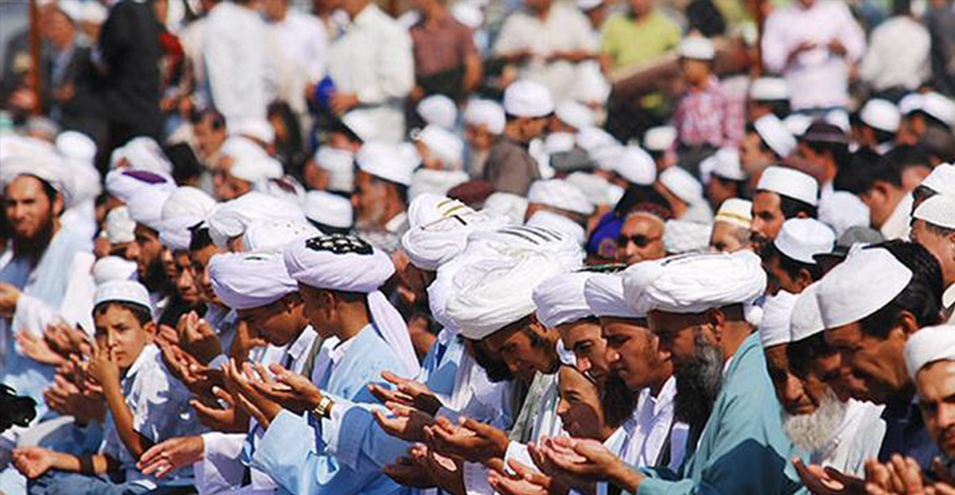
Sunni candidates have not been granted the right to run in Iran's presidential elections so far. Followers of other religions are not exempt from this practice and have been excluded from the competition by the laws of the Islamic Republic.
This exclusion, of course, took on broader dimensions when Ahmad Jannati, the Secretary of the Guardian Council, issued a notice that included the opinion of the council's jurists, asking the "relevant authorities" to prevent the approval of candidates from religious minorities in council elections in Muslim-majority areas.
The International Campaign for Human Rights in Iran spoke to Hasel Dase, a former member of parliament, about the exclusion of religious minorities from political power. Hasel Dase believes that the exclusion of these minorities from political competition, especially for high-ranking government positions, is rooted in the Islamic Republic’s constitution and should be reviewed.
The conversation referred to Article 12 of the Iranian Constitution. This article states that the official religion in Iran is the Ja'fari Twelver (Shi'a) school, and that "other Islamic schools, including Hanafi, Shafi'i, Maliki, Hanbali, and Zaidi, are fully respected, and followers of these schools are free to perform religious ceremonies according to their own jurisprudence."
Article 115: A barrier against religious minorities and women
According to Article 115 of the Iranian Constitution, "the president must be elected from among religious and political figures who meet the following conditions: Iranian in origin, subject to Iran, administrator and resourceful, with a good record, honesty and piety, faithful and believing in the foundations of the Islamic Republic of Iran and the official religion of the country."
As such, many, those who are not considered "men" and non-Shiite Muslims, are barred from volunteering in the presidential elections and cannot become the president of this country.
Hasel Dase, a representative of Sardasht and Piranshahr in the sixth parliament, told the International Campaign for Human Rights in Iran about his and other Sunnis' objections to this clause: "I, political activists, and those who have worked hard for the revolution all object. A Sunni who has paid for this system is deprived, and this causes discouragement and division, and this national unity and cohesion cannot achieve anything in practice."
He also said: "These protests are raised in all political meetings and gatherings and meetings of Sunni and Kurdish elites."
Dase expressed hope that the authorities will make the removal of this exclusion a major concern and not just ignore it. He told the Human Rights Campaign: “This is one of the things we talk about in private meetings. We can’t even make it public so as not to create sensitivity. We are protesting and we hope that the first-class scholars of Qom will intervene for the sake of national unity and resolve this issue once and for all. At least 20 million Iranian Sunnis and other religious minorities are currently deprived of this participation. If the presidency is good for them, that is, for Shiites, why can’t it be good for me, a Sunni? This is the main question and it will have a negative impact on the future generation.”
The consequences of discrimination and inequality
The provinces where the majority of the population is Sunni are already deprived of many facilities, and this deprivation has fueled deep dissatisfaction among the people of these regions for years. In addition to economic deprivation, social and political deprivation has also cast a heavy shadow on the lives of Sunnis in Iran.
The former MP has warned: "If this discrimination and inequality leads to frustration, it may turn into other issues that we see in neighboring countries. I hope Iran never goes in this direction. Rationality will replace this, so that these issues are addressed with compassion and in practice, people will see the results of this."
The Sunni minority in Iran is denied access to many high-ranking government positions. The highest position a Sunni has held in the Iranian government was deputy minister or ambassador to Vietnam and Cambodia during Hassan Rouhani's term.
Representatives from the Sunni minority and Kurdish provinces of Iran have only 21 seats in the parliament. The International Campaign for Human Rights has written that Mohammad Qasim Osmani, a representative from Bukan and a member of the Omid faction, is the first Sunni representative to be elected to the parliament’s presidium in 38 years.
Source: DW