Corona in Iran; “Incompetent government” and “power institutions engaged in hoarding”
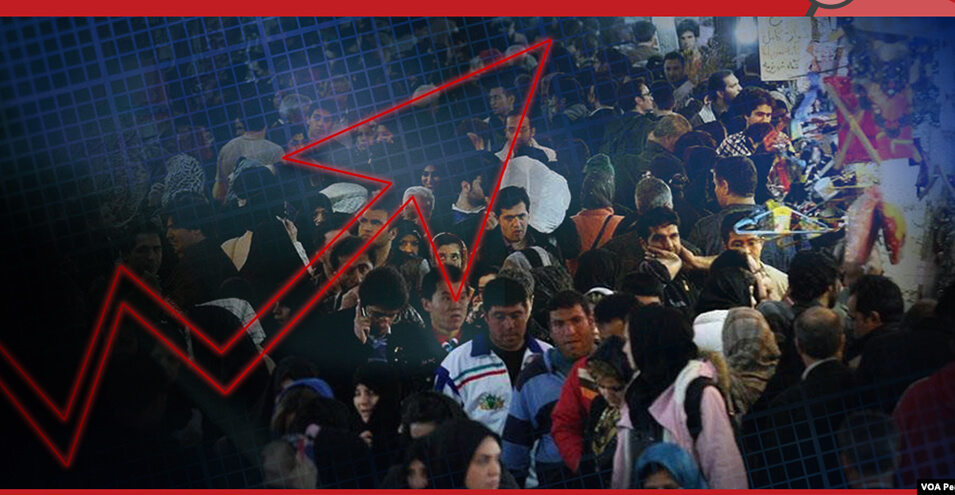
The latest number of people infected with the coronavirus in Iran was announced as 7,161 and the number of victims was 237. A member of the 11th parliament said that the government is incapable of controlling the crisis and that matters should be left to the “jihadists.” However, the “jihadists” themselves are accused of hoarding and profiteering.
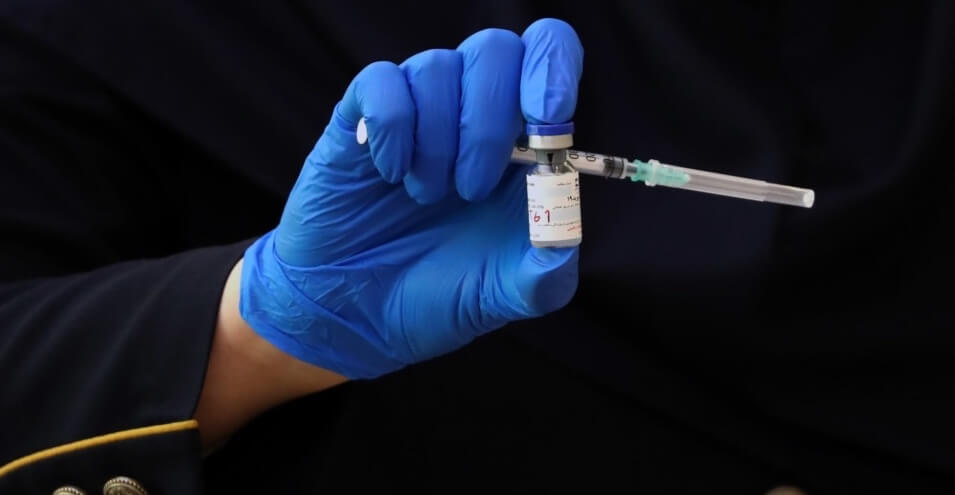
According to Kianoush Jahanpour, spokesman for the Ministry of Health, official statistics show that 7,161 people have been confirmed to have contracted COVID-19 (the coronavirus) and 237 have died. He told ISNA news agency on Monday, March 9, about the new deaths from COVID-19, saying that 595 new confirmed cases of COVID-19 had been registered as of Monday afternoon.
According to Jahanpour, 43 new COVID-19 cases have died in the past 24 hours alone. The Health Ministry spokesperson also announced a list of patients in different provinces, which shows that the number of cases of the disease is higher in Tehran, Qom, Isfahan, and the provinces of Gilan and Mazandaran than in other places: “1945 in Tehran, 712 in Qom, 524 in Gilan, 601 in Isfahan, 307 in Alborz, and 633 in Mazandaran,” is a part of the statistics mentioned in the ISNA report.
The government is accused of disorganization and lack of planning.
The Iranian government is accused of having caused catastrophic consequences for the country by not providing timely and accurate information to the public. The accusation is that the Iranian government was aware of the arrival of the virus and the risk of people contracting it weeks before the official announcement of the spread of the coronavirus, and even took the necessary precautions to prevent Ayatollah Khamenei from becoming infected, but they refused to tell the people the truth in order to encourage people to participate in the elections.
But now that the scale of the disease and its victims has expanded, the level of criticism of Rouhani's government and the Iranian president has also increased significantly. Ardeshir Motahari, an elected member of the 11th parliament, has asked Rouhani in a letter to him to review the containment of the coronavirus in the Supreme National Security Council and appoint "a real, efficient, and jihadi command" "so that it can stop the crisis from progressing with full authority, otherwise everything will soon be too late."
The 11th parliamentarian has cited numerous examples of the government's inability to make decisions and lack of planning, "from changing office hours to closures and ultimately, the fundamental disorganization and lack of planning in the travel ban," which he referred to as a gross managerial mistake.
According to Ardeshir Motahari, "It seems as if there is no single center for making decisive and final decisions, and everything has been left to its own devices." He has also criticized the Ministry of Industry, Mines and Trade for being incapable of producing and distributing the items needed by the people.
What is the function of the Jihadi command at the top of affairs?
The incoming MP's criticism of the government is why the government has given command to the Ministry of Health. He has advised the president to give command of the fight against the coronavirus crisis, "which requires coordination between several ministries, governors, and military and law enforcement forces," to a force that "has the courage and determination to make centralized and unified decisions, can coordinate institutions and organizations, form centralized and unified information, and have continuous, decisive, and efficient supervision over the implementation of decisions."
But how concerned are the institutions that hold real power in Iran about supporting and protecting citizens from this disease?
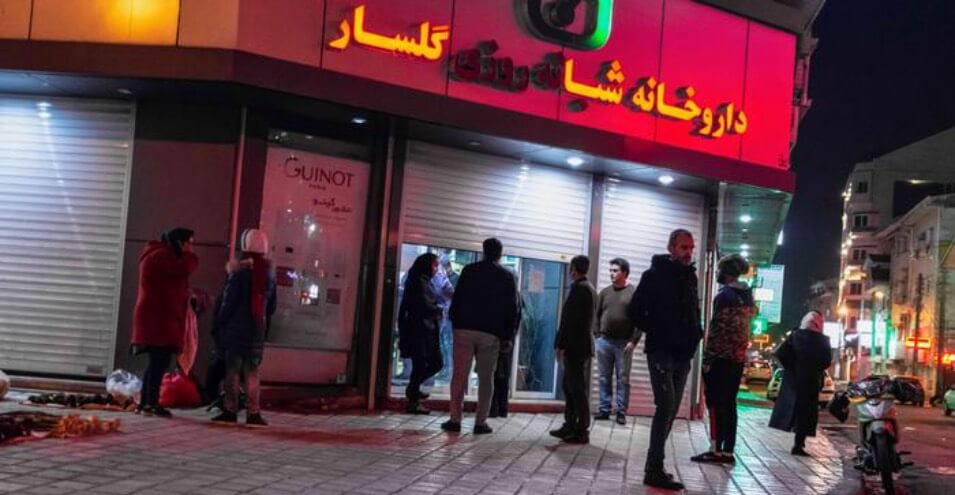
On Monday, March 9, Mohammad Mirzabeigi, head of the Iranian Nursing System Organization, told IRNA: "The shortage of protective equipment against the coronavirus, such as masks, gloves, gowns, and face shields, continues in some medical centers, and the nurses and medical staff of these centers are carrying out the work of caring for and treating patients with great difficulty."
Where does this shortage come from? Part of the shortage is due to the concern of citizens who are trying to obtain the disinfectants they need by any means possible. But the more important part of this shortage has another cause.
Last week, news was published in Iranian media that the export of two million sanitary gloves was prevented before they were loaded at Bandar Abbas. The Director General of Customs, Shahid Rajaee, revealed that the shipment was returned and delivered to the Ministry of Health.
But what he called a "worrying issue" was "that in these difficult circumstances, some people are putting human lives at risk by hoarding these goods. We expect the judiciary to deal severely with these people and to consider the most severe punishments for these people as soon as possible. How many casualties do we really have to take among the people and medical staff to fill their pockets?"
On March 1, Health Minister Saeed Namaki wrote to the president asking that the export and export of masks be banned until further notice. He wrote in the letter: “Unfortunately, despite extensive follow-up, a small amount was purchased and the rest of the country’s production was sold on the black market.”
The Minister of Health wrote elsewhere in the letter: "Unfortunately, after about 10 days, only one million masks have been delivered, and I don't know where the rest have been stored. Due to compulsion, my colleagues are buying them from smugglers at exorbitant prices in various markets around the clock, acting as intermediaries and brokers."
Saeed Namaki had asked: "Where does this unfair opportunistic network have the collective conscience to stand so boldly before the people and officials and easily announce that it can supply 200 million masks 24 hours a day at such and such a price in such and such a place?"
In this regard, Mohammad Mohajeri, a conservative media activist, wrote in a tweet, referring to the Health Minister's letter to Information Minister Mahmoud Alavi, that someone who can deliver 200 million masks within 48 hours "is definitely a tough guy who is sure he won't be found out. Should we wait for his details to be revealed?"
Khabar Online also published the Minister of Intelligence's response to him on March 3, in which he said: "Of course, we are fulfilling our duty to uncover organized smuggling and are also following up on the Minister of Health's subject, but you should ask the Minister to send the details of that businessman."
A week has passed since this tweet and response. It is still unclear who the perpetrators of the export of two million sanitary gloves or the hoarding of 200 million masks are, and which institution are these “thick-tails” behind them? Institutions that former Iranian President Mahmoud Ahmadinejad once called “smuggling brothers,” and current President Hassan Rouhani once called them a force that controls money, weapons, the media, and the economy.
Public distrust is part of the inability to contain the coronavirus crisis.
In addition to concealing the time of the coronavirus' entry into Iran and hoarding and exporting materials needed by the people and hospitals, what made citizens even more distrustful of government institutions was the revelation of blatant discrimination in providing necessary facilities to "ordinary" citizens versus government officials.
Afshin Amirshahi, editor-in-chief of Hamshahri newspaper, wrote in this regard: "Containment of the coronavirus requires the support of public opinion, but currently people's trust in officials has reached its lowest point. In other words, even when an official announces that he has coronavirus, people still do not believe him."
This may be one of the reasons why government orders are not easily heeded by citizens. Despite the government's appeal to people to stay at home and not use the school closures for recreational trips, videos of people flocking to northern Iran are circulating on social media. Videos that also indicate the ignorance of a significant portion of citizens of the danger that threatens them.
According to Mohammad Hossein Ghorbani, the representative of the Minister of Health in Gilan Province, more than 200 people have died. Although this news was quickly removed from the “Young Journalists Club” website, it was etched in the memory of social networks and many media outlets.
In addition, on Monday, March 9, the supervising member of the Islamic Consultative Assembly in the National Committee for Combating Corona warned that "according to national surveys, the peak of this disease is in the next two weeks, and the provinces with the most traffic, including Khorasan, Isfahan, Fars, Tehran, and Khuzestan, are more likely to experience the peak of the disease than the rest of the country."
When did Corona really enter Iran?
There is a lot of conflicting news in response to this question. Some sources say that government officials were aware of the virus entering Iran even a month before the elections. There is no one among the officials who can speak clearly about the truth or falsehood of this news. But there are many comments in this regard that reveal part of the truth.
Among other things, Abolfazl Mousavi, a representative from Yazd, told IRNA on Monday about how the crisis was being managed: "When the coronavirus spread in China, because the officials did not think that the virus would reach Iran, they did not prevent it. However, China is one of Iran's trading partners. We have students and businessmen in China, and flights between them caused the transmission of this virus."
According to him, “Perhaps another reason why this issue was not taken seriously and was ignored was the coincidence of this crisis with the elections.” He called on the government to “establish communication with the people” and “be transparent in providing information, creating services, distributing and covering facilities.”
The Yazd representative also pointed out the shortage of masks and gloves, and in addition to that, the huge economic damage that the current conditions have had on the people's economic situation. Yazd is one of the most important tourist attractions in Iran, but there are no tourists in it these days. He told IRNA, quoting the Director General of the Yazd Tourism Heritage Organization, that tourism in Yazd has stopped, and this stop means a loss of 1000 billion tomans to Yazd province. The situation in other Iranian cities that were tourist attractions in the country is also not significantly different from Yazd. The Iranian economy, affected by sanctions, institutionalized corruption in the Islamic Republic, and the crisis in Iran's regional and international relations, has made life unbearable for the majority of people.
The Hamdali newspaper devoted its main article to these troubles and mismanagement, concluding: "The combination of these troubles, with the continuation of sanctions against Iran and the impact of these sanctions and the "no war, no dialogue" policy on the vulnerability of people's health, national economy, and businesses, has all led people to search for a different lifestyle. In other words, everyone realized that Iranian society needs to meet its needs as quickly as possible and to analyze the country's internal and external damages."
Source: DW