Agency: Iran’s Enriched Uranium Reserves Have Reached 18 Times JCPOA Limit
The International Atomic Energy Agency on Monday, June 30, announced in its new report to the Board of Governors that Iran’s enriched uranium reserves have exceeded 18 times the limit set in the JCPOA.
According to the IAEA’s estimates, Iran’s enriched uranium reserves reached 3,809 kilograms by May 15, 2022.
The Agency states that this increase comes while according to the JCPOA, Iran is only allowed to possess 202 kilograms of enriched uranium.
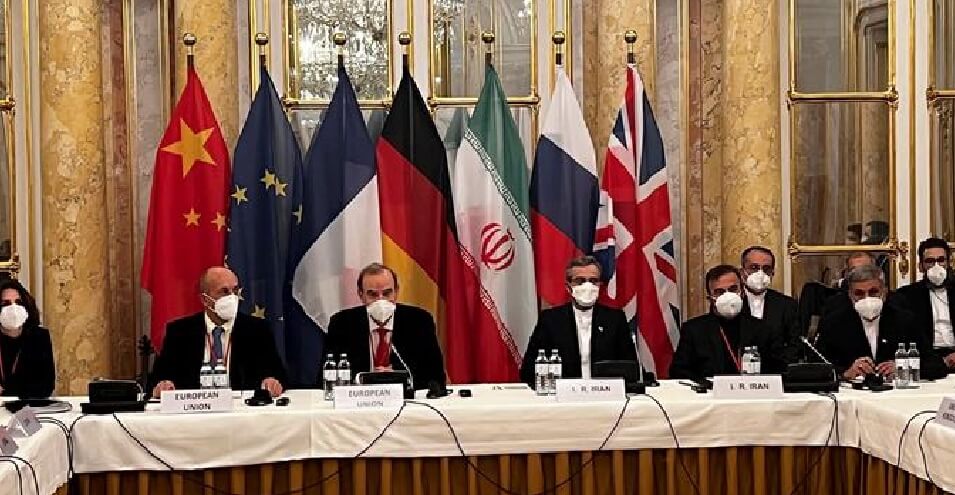
Iran and six world powers reached an agreement in June 2015 to resolve Tehran’s ambitious nuclear program, under which international sanctions were suspended or lifted in exchange for limiting Iran’s nuclear activities.
Following the Donald Trump administration’s withdrawal from the JCPOA in May 2018 and the imposition of severe sanctions against Iran, Tehran’s gradual reversal of the JCPOA began, as it not only stopped implementing the Additional Protocol but also operationalized 20 and 60 percent enrichment.
Based on the IAEA’s Monday report, Iran’s 60 percent enriched uranium reserves have increased from 9.9 kilograms to 43.1 kilograms.
Western powers are concerned that as Iran approaches uranium enrichment at the 90 percent level, it would possess the necessary materials for building an atomic bomb. Iran has rejected any such efforts.
Following the Biden administration taking office in January 2021, talks between Iran and JCPOA parties began to revive the agreement, but in recent months negotiations have stalled due to new demands presented by Tehran.
“Limited Progress” in Response to IAEA’s Old Questions
One of the challenges facing Iran and the IAEA, which will likely be an obstacle to reviving the JCPOA, is Tehran’s failure to answer this UN agency’s questions about its undeclared nuclear sites.
In its Monday report, the IAEA stated that Iran has provided only limited answers to this agency’s old questions regarding the origin of uranium particles found at three of its undeclared nuclear sites.
The IAEA added: “Iran has not provided explanations that are technically credible regarding the IAEA’s findings at those sites. Issues related to the past military dimensions of these three facilities remain unresolved.”
IAEA inspectors have so far identified three “suspect” locations in Iran, one of which is in Turquzabad, the outskirts of Tehran, and another in Isfahan, both of which were “likely destroyed in 2003 and 2004 to eliminate traces of uranium.”
Iran had agreed last year to provide clear answers to IAEA questions about the origin of uranium at its undeclared sites within a three-month period.
The IAEA’s new report shows that Iran has not fulfilled this commitment.
Reuters news agency writes in this regard that the lack of progress on Tehran’s responsiveness could lead to a new diplomatic clash between Iran and Western powers at next week’s IAEA Board of Governors meeting.
If Western powers seek to pass a critical resolution against Tehran, this would likely make the process of reviving the JCPOA more difficult.
Source: Radio Farda