Ali Khamenei in the Trap of Military Avoidance: IRGC as the Shield of Revolution Against Collapse
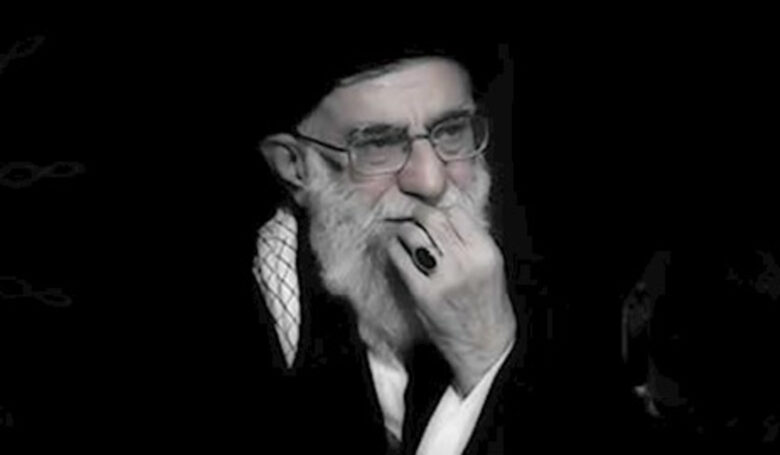
After losing confidence in the army and police forces, Ali Khamenei entrusted his fate to the IRGC and considered this force as the shield of the revolution against collapse.
At the height of widespread protests in Iran, according to British newspaper Telegraph, Ali Khamenei, the leader of the Islamic Republic, has ordered the Islamic Revolutionary Guards Corps (IRGC) to be placed on the highest level of alert, even higher than during the 12-day war with Israel.
According to internal sources, this decision represents the most critical security moment within the regime in recent years and reflects the Iranian leader’s deep perception of the collapse of his relationships with the country’s traditional security structures.
A senior Iranian security official, whose name is protected, regarding Khamenei’s alert declaration to the IRGC, told Telegraph: “Khamenei’s confidence in the army and police forces has decreased and he has now entrusted his fate to the IRGC’s hands, because he believes the Revolutionary Guards will never abandon him in critical moments.”
This development indicates deep doubts about the loyalty of forces such as the army and police, which in recent weeks in confronting public protests have reported cases of insubordination, hesitation, or even joining the protesters—issues the regime is trying to silence from becoming media topics, but which have simultaneously drawn the attention of international observers.
The IRGC, however, as an ideological institution loyal to the leadership of Khomeini and Khamenei, has since the 1979 revolution always prioritized the suppression of opponents and preservation of the system, and is now widely engaged in suppressing domestic protests, monitoring and pursuing security forces that have not resisted against the people, and maintaining political control in the country.
In another section of this security official’s report, reference was made to widespread internet cutoffs in Iran and the difficulty in obtaining accurate figures on casualties and arrests of protesters; a measure that demonstrates the regime, in addition to physical suppression of discontent, intends to bring the information and media space under complete control.
According to these reports, one of the government’s main concerns is not only domestic protests, but also threats from US President Donald Trump, who has particularly warned about possible intervention in case of bloody suppression of people.
Although some Iranian officials have tried to deny claims of Khamenei leaving the country, other officials have said that even if B-2 aircraft fly over Tehran’s sky, Khamenei will not leave Tehran.
But the question is what lies behind this shift in security orientation? It appears that the current crisis in Iran has simultaneously set in motion a chain of factors:
- Unprecedented pressure from public protests and the spread of disobedience among police forces and even parts of the army.
- Ali Khamenei’s lack of confidence in traditional security forces that are no longer capable of guaranteeing the system’s survival with the previous approach.
- Open and hidden support from the IRGC as the primary loyal force, which now has a decisive role in internal security and preservation of the regime.
Since its establishment in 1979, the IRGC has always been at the center of Iran’s political and military power, and in recent times, its influence in economic, political, and security spheres has increased—a subject that Western analysts have repeatedly warned about and described as one of the pillars of survival for the Islamic Republic.