An Iranian Parliament Member: What’s Wrong with Needy People Selling Their Kidneys?
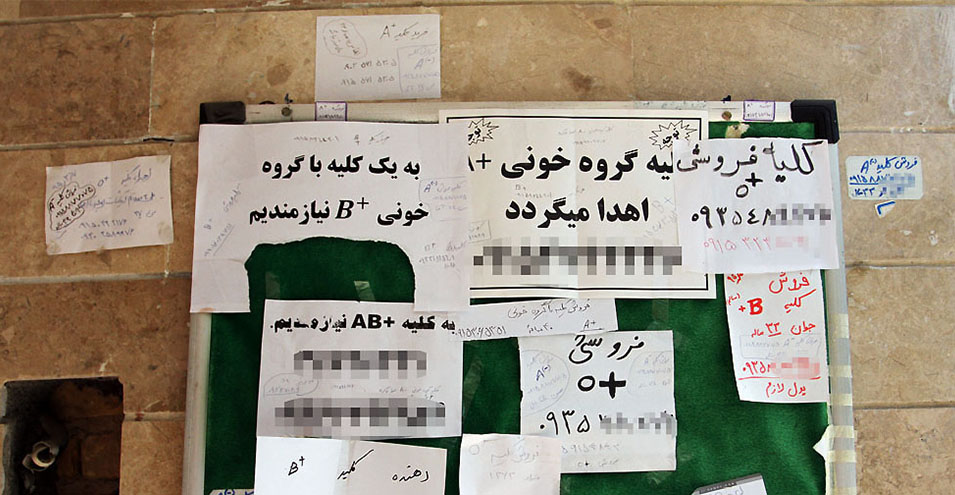
A member of Iran’s parliamentary health and medical affairs commission has stated that there is nothing wrong with a person living in poverty selling their kidney if receiving 20 to 30 million [toman] transforms their life.
Kidney buying and selling due to financial need by sellers has been prevalent in Iran for years, and kidney sale advertisements are frequently seen around hospitals.
Shafaonline website published an interview with Hosseinali Shahryari, representative from Zahedan and a member of the parliament’s health and medical affairs commission, in which he stated that some people benefit from the prohibition of kidney transplantation from living donor to living donor, and their profit comes from buying and importing dialysis machines and expensive related equipment.
With this reasoning, he said to think of the people not the interests of some: “It seems there are factors that want to prohibit kidney transplants from volunteer individuals. Although buying and selling does not always occur in this process, but in many cases organ donation takes place, yet some people want to stop living-to-living transplants because they profit from it and purchase and import dialysis machines and equipment.”
Mr. Shahryari, who is introduced as “Doctor,” in response to comments about the consequences of buying and selling kidneys, said that given that the government and officials have been able to almost eliminate waiting lists in kidney transplants and all people who need kidney transplants are transplanted in time, one cannot consider some of the criticisms raised as baseless: “I ask my friends, before thinking about the interests of a specific group to buy dialysis machines, think of the people and patients and do not create an atmosphere for it.”
This parliament member considered preventing kidney transplantation from a living person to another living person despite the donor’s consent as creating grounds for irreversible complications and said: “When we talk about resistance economy, the best action is kidney transplant because costs are reduced since dialysis has very high costs and many machines need to be purchased.”
Kidney transplant may, after several years, face the recipient with problems and in other words, in the common phrase among people, the patient’s body rejects the kidney. Despite this, Hosseinali Shahryari said that transplant has no special complications and many people live with one kidney: “On the other hand, many people are in need of kidneys, and if they do not receive a kidney, they will face complications and lose their lives.”
Hosseinali Shahryari, member of the parliament’s health and medical affairs commission:
“Organ transplants are not problematic from a religious perspective and are permitted, and His Eminence the Imam has permitted it and religious authorities have no objections. So in my opinion, everyone should pursue their own work and expertise because when specialized tasks are entrusted to specialists of that field, better results are obtained.”
The Iranian government gives an “Sacrifice Gift” to those who donate their kidney.
In response to the question that kidney buying and selling in Iran is considered immoral and inhumane by most countries, Shahryari said how they kill people and children and this is not inhumane: “Is it not inhumane that they bomb women, elderly men and women? These objections only serve the financial interests of a group seeking to buy dialysis machines.”
Tabnakwebsite, however, in response to this parliament member’s remarks published an article and called his comments unusual.
In this article, it was pointed out that there are also people who benefit financially from the heating up of the kidney buying and selling market: “People who play the role of mediator between the seller and the needy patient in this process and by acting as brokers gain considerable financial benefits.”
According to the author of this article, the important and concerning point in Hosseinali Shahryari’s remarks is a question that has been posed in a rhetorical manner:
“Shahryari asked: What is wrong if when a person lives in poverty and receiving 20 to 30 million transforms his life, he does this? This question, regardless of who raised it, is a painful confession that proves that in our country a number of people are forced to sell their body organs to escape poverty and economic pressure. More painful is that an official like a people’s representative in the Islamic Consultative Assembly, without considering the social and economic damages of this type of body-selling, calls it problemless and by resorting to the religious jurisprudence of sources of emulation, tries to present this social harm as problemless.”
This member of the parliament’s health and medical affairs commission failed to note that kidney selling, especially by people facing economic problems, not only cannot bring about a transformation in their lives, but due to economic and social constraints, will create numerous problems for them in the future. A person living with one kidney naturally must be more careful about their health in the course of their life and refrain from many heavy social activities.
Tabnak wrote, however, that it is even more bitter to see that he {Shahryari} instead of trying to promote the culture of sacrifice and organ donation, insists on calling kidney selling problemless (despite its social and economic damages), and in a way encourages the needy to do this, while it is expected that he would attempt to present a solution to the economic problems of needy individuals and seek a way to counter those greedy and profit-seeking people who look at dialysis patients as opportunities for profit.
Source: Radio Zamana