Approximately 40 percent of Iran’s urban population are slum dwellers and inadequately housed
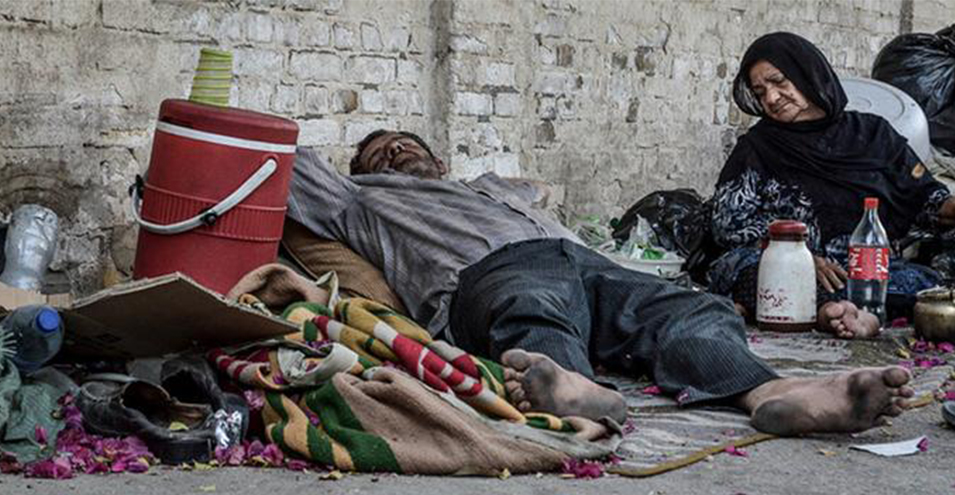
Rural-to-urban migration over the past four decades has reached significant proportions. This phenomenon has fueled the slum dwelling crisis in Iran. According to the Minister of Roads and Urban Development, 19 million people either live in slums or are inadequately housed. A catastrophe for society, a challenge for the government.
Abbas Akhondi, Iran’s Minister of Roads and Urban Development, announced new statistics on slum dwelling and inadequate housing in Iran on Thursday, July 5th. At the “Sustainable Urban Regeneration Conference of Sistan and Baluchestan,” he estimated Iran’s urban population at approximately 59 million people.
Many segments of the country’s urban population have been pushed to the outskirts of cities. According to the Minister of Roads and Urban Development’s statements, 19 million people in Iran are slum dwellers and inadequately housed.
The Mehr News Agency quotes Akhondi as saying: “Approximately 35 percent of the [urban] population of the country lives in deteriorating conditions, which can vary up to 41 percent.”
Continuous increase in migration
The Minister of Roads and Urban Development emphasized at the aforementioned conference that inadequate housing and living in dilapidated urban fabric are not limited to Sistan and Baluchestan and have become a widespread phenomenon throughout the country.
Abbas Akhondi has assessed rural-to-urban migration as a national phenomenon. A look at official statistics shows that over the past four decades, the rural population has continuously declined. A decline in rural population is not necessarily a negative phenomenon. What matters is the absorption of these people into urban life. This is occurring while the number of slum dwellers around major cities continues to increase.
The Minister of Roads and Urban Development reported that the decline in Iran’s rural population only between years 90 and 95 (2011-2016) was 2 percent.
Slum dwelling and urban fabric
The main problem with slum dwelling is that slum neighborhoods lack identity. The absence of streets and communication routes in slum areas prevents the “identification” of these areas and their connection to the urban transportation network.
Moreover, the basic living conditions in slum areas are not provided. The lack of these conditions, including government services such as education and health services, creates deprivation.
Abbas Akhondi called the “lack of identity” of slum fabrics a national challenge and said: “The Ministry of Roads and Urban Development’s approach is to define neighborhoods, and these neighborhoods need their own structure in terms of facilities including schools, mosques, markets, and social relationships, and it is not just on paper.”
The Minister of Roads and Urban Development spoke of the necessity of integrating slums into the city’s main fabric and based the principle on creating “public spaces and urban structure” in these areas, emphasizing that “a place lacking streets, social structure, and identity has no value.”
Source: DW