Britain Delivers Fresh Blow to Islamic Republic’s Security Apparatus by Placing IRGC on Terrorist Organizations List
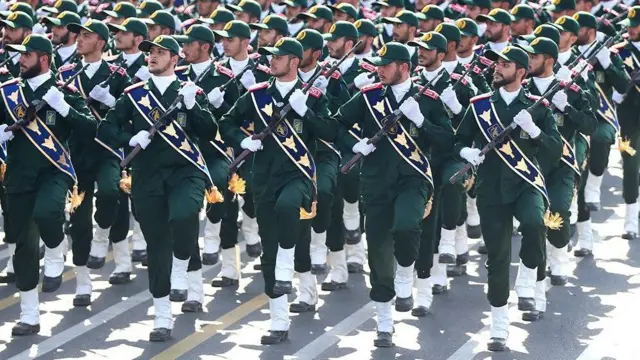
The British government announced on Monday that it will place the Islamic Revolutionary Guard Corps (IRGC) and another group affiliated with the Islamic Republic on the list of terrorist organizations under new national security powers; a measure that, if approved by Parliament, will criminalize any membership, support, promotion, or activity on behalf of these groups. This decision, made following a series of antisemitic attacks on British soil, represents one of London’s harshest stances against the Islamic Republic in recent years.
The British Labour government announced on Monday, July 13, that it will place the Islamic Revolutionary Guard Corps and the group “Harkat Ansar al-Yamin al-Islamiyah” on the terrorist organizations list using new security powers; a decision that will take effect following parliamentary approval and will significantly expand the scope of authority for British police and intelligence agencies to counter activities related to these groups.
According to British officials, this decision was made following a series of attacks on centers and sites related to the Jewish community in Britain. London has stated that security investigations have linked these actions to networks affiliated with the Islamic Republic, and this has provided the grounds for implementing new laws to counter threats attributed to Tehran.
Under the new regulations, membership in these groups, organizing or participating in their meetings, promotion or display of their symbols, and any material or moral support for them will be considered criminal offenses. The law also significantly increases the possibility of prosecuting individuals who operate on behalf of these organizations on British soil, with severe penalties, including long-term imprisonment for violators.
Keir Starmer also defended this decision, saying: “These new powers will make it easier to prosecute and imprison anyone who carries out the dirty work of these groups in Britain.”
London’s decision can be considered one of the most serious measures taken by the West against the IRGC in recent years. The IRGC, which has played a central role in the Islamic Republic’s security and military policies since its establishment, has been accused by Western governments for years of supporting proxy groups, orchestrating cross-border operations, threatening opponents of the Islamic Republic, and destabilizing the region. In recent years, British security agencies had also warned of increased activity by networks affiliated with Iran on British soil.
Last year, British lawmakers stated in a report that the Islamic Republic of Iran represents “a broad and significant threat” to this country’s national security; an assessment that now, with the Starmer government’s decision, has entered an operational phase.
In response, the embassy of the Islamic Republic of Iran in London rejected this measure and described the allegations as baseless, politically motivated, and hostile. However, the British government has emphasized that this decision was made based on security assessments and evidence obtained from investigations by intelligence agencies.
If approved by Parliament, the IRGC will effectively face limitations in Britain similar to those imposed on recognized terrorist organizations; a step that could further strain Tehran-London relations and send a clear message of Britain’s determination to counter activities attributed to the Islamic Republic on its own soil.