Child Marriage and the Silence of Law
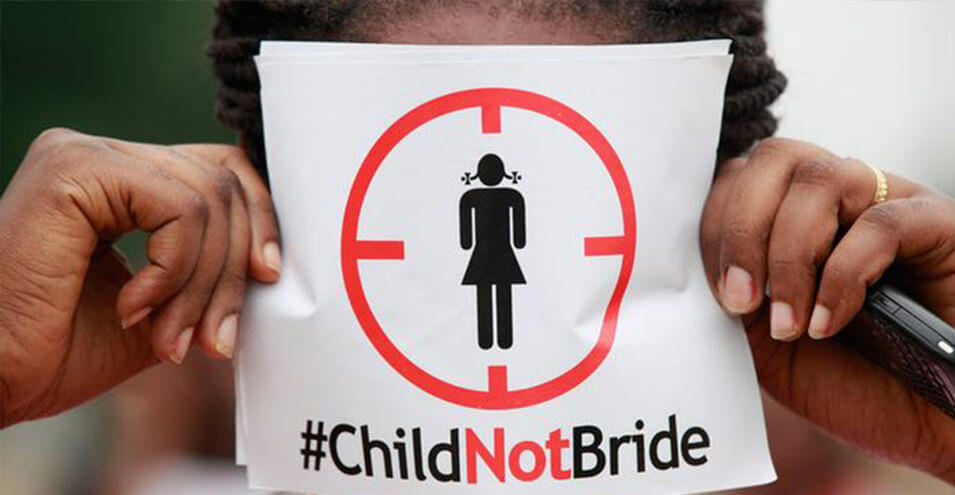
Marriage of girls under 13 years old still lacks legal prohibition, and a bill to increase this age to 16 years has reached a deadlock. A parliament representative says the registration of 43,000 marriages under 18 years of age is a sign of declining human indicators and poverty in public education.
September 2018: A single accident prevented a 9-year-old Afghan girl in Mashhad from becoming the wife of a 36-year-old man. The girl had no parents and the wedding had been initiated by relatives. Someone informed the social emergency services by phone. The Mashhad prosecutor’s deputy dissolved the marriage and ordered the bride to be handed over to the welfare organization: “This child was so small in stature that she appeared younger than her age and was terrified of her groom. Even though they had held a wedding for her with three to four hundred guests, nothing could ease her terror.”
February 2019: An 11-year-old girl from Ilam who had been married to a 44-year-old creditor due to her father’s debt was handed over to the welfare organization with the help of activists and the provincial prosecutor’s office. Her 13-year-old sister had also been married to one of the tribe members with her father’s permission. The fate of the two girls rested in the hands of an addicted guardian. The groom’s youngest child was two years older than the bride. The groom and the girl’s father were arrested.
How many other little girls have been married but nobody knows what happened to them?
……………
April 19, 2019: The representative from Ardabil and member of the Planning and Budget Commission, in an order of the day speech, called the 43,000 registered marriages in the age range of 10 to 15 years a decline in human indicators and a sign of poverty in public education and a decline in public welfare. Mohammad Faizi Zangir emphasized that society is sensitive about child marriage and seeks accountability: “We representatives, in addition to protecting children’s human rights, are also responsible for aligning laws with the spirit of the time.”
These remarks are the latest reminder to the parliament’s judicial commission to approve the plan to increase the marriage age; a plan that in winter 2018 reached a deadlock due to “not being comprehensive and complete” in an entirely male commission and was postponed. The spokesman of this commission, in justifying the marriage of little girls, referred to his grandmother who got married at 9 years old and had no problems.
Iran’s civil registry statistics for 2016 show that Razavi Khorasan, East Azerbaijan, Khuzestan, Zanjan, and North Khorasan are at the top of provinces where children aged 10 to 14 get married. The annual average of child marriage in Razavi Khorasan is said to be 6,000 cases, East Azerbaijan 4,000 cases, and Khuzestan 2,500 cases.
In 2017, Zanjan province with over 36,000 marriages under 14 years was the pioneer of child marriage. In border areas like Sistan and Baluchestan, children’s marriages are very common. The director general of civil registry in North Khorasan recently reported the marriage of 1,054 girls aged 10 to 14 in this province last year.
The representative from Ardabil, warning about the 17 percent statistic of marriages under 18 years, said: “How can a child who is not allowed to obtain a driver’s license, open a bank account, conduct transactions, or vote, be allowed to marry?”
Child Marriage or Child Abuse
Child marriage is usually seen among groups living on the margins of large cities, border residents, and lower and poor social classes. Some families marry girls aged 9 to 10 to men of much older age only for money, to reduce family expenses, and to meet living costs.
Poverty causes boys to marry at older ages, but poverty’s effect on girls is reversed. They often unwillingly and at the will of their parents enter married life at young ages so there is “one less mouth to feed” and perhaps the girl might find an opportunity to improve her economic or social status. In this manner and through this trade, girls at young ages marry men much older than themselves.
Hadi Shariati, member of the board of directors of the Association for the Protection of Children’s Rights, says: “Dropping out of school, threats to girls’ physical and sexual health, entering the black labor market for boys, dangers of childbirth at young ages, and abortion are consequences of child marriage.”
The feminization of poverty, increasing violence, infidelity, divorce, depression, dropping out of school, social isolation, and running away from home are direct consequences of child marriage. Sudden separation from the innocent world of childhood, early pregnancy problems, inability to manage life and care for children, and psychological and physical consequences are striking harms of child marriage.
Massoumeh Agha Pour Alishahi, representative from Shabestar in June 2018, said there are 24,000 widows under 18 years in Iran. In the age group under 14 years, out of 4,000 marriages, 1,000 divorces have been reported.
In summer 2018, the parliament’s research center reported, citing civil registry statistics, that most underage girls married men who were at least 10 years older than them. This report acknowledged that in 2016, three girls aged 10 to 14 married men aged 70, and 138 marriages with age gaps of 25 to 29 years took place. The research center described these age gaps as unnatural and harmful.
The mentioned report listed divorce, deprivation of education, deaths resulting from pregnancy, sexual dissatisfaction, domestic violence, violation of children’s rights, inability to manage life, lack of intellectual and social maturity as harms of such marriages, but stated that the situation is not so critical and acute as to necessitate complete changes in religious and legal rules.
According to Article 1041 of the Civil Code, marriage of a girl before reaching 13 years and a boy before reaching 15 years is possible with the permission of the father and consideration of interest and judgment. The parliamentary judicial commission did not agree with amending the current law and a bill that the women’s faction brought to parliament. In the “child marriage” plan, the marriage age for boys is set at 18 and for girls at 16 years.
Until 2000, the age of puberty for girls was 9 years, and in the sixth parliament, this ceiling was increased to 13 years. The necessity of obtaining court permission also entered Iranian law from 2002, and before that, only the guardian’s permission was sufficient.
Criminalizing Child Marriage
The “child marriage” plan, which had been under study since 2016 and was brought to parliament by children’s rights activists and the women’s faction representatives, was rejected in winter 2018 by the judicial commission with ten male members due to “not being comprehensive and complete.” Hassan Norouzi, the commission’s spokesman, announced that the age of puberty for young people in Iran has decreased and approving this plan would cause “an increase in moral corruption.” He even called for encouraging and facilitating marriage at young ages.
Global statistics show that 750 million girls have undergone early marriage. Nigeria, Central Africa, and Chad are at the top of countries with the highest statistics in this regard. In these countries too, the main factor is economic poverty.
Fatema Zolghadr, member of the cultural commission and the women’s faction of the tenth parliament, says: “Child marriage should be considered a crime. Parents or anyone who causes such a marriage should be prosecuted. Families should be frightened by the consequences of such actions so they remain vigilant and cautious.”
A report from the office of cultural studies of the parliament’s research center showed that between 2012 and 2016, between 4.9 to 5.6 percent of girls’ marriages were in the age group of 10 to 14 years, and the center of such marriages is in rural areas, nomadic areas, and city margins.
The parliament’s research center in this detailed report had suggested that the capacity and eligibility for marriage of underage individuals be determined in consultation with the Ministry of Health, the Organization of Psychologists, or law enforcement, and absolute prohibition of marriage with a girl who has not reached sexual maturity and its criminalization, criminalization of preventing education for married girls in day schools, and legal obligation to complete life skills courses as part of pre-marital counseling be considered.
Parvane Salehshori, head of the women’s faction in parliament, after the rejection of the bill to increase the marriage age, mentioned efforts to politicize the issue. Shahindokht Molaverdi, former deputy to the president for women and family affairs, called on Iranian families to support the plan to increase the marriage age.
Source: DW